Nurses Exhibition: A Profession of Care

A Profession of Care: A History of Oshawa General Hospital’s School of Nursing

During this global pandemic, nurses are needed more than ever. They are essential workers in our health care system whose courage and dedication should be celebrated during normal times, let alone in the midst of the current crisis. Created in partnership with the Oshawa Public Libraries and the Oshawa Museum, this exhibition looks back at Oshawa’s history of training nurses, through the Oshawa General Hospital School of Nursing, to salute healthcare workers everywhere and celebrate their exceptional skills.The Oshawa General Hospital School of Nursing was established shortly after the first hospital building opened in 1910.

During this time, hospital-based nursing schools were opening across Canada. Demand was high for new nurses and the brochures advertising the schools would specifically target young women, often outlining requirements for entry such as, “women of superior education and culture.”

The three-year program at Oshawa General Hospital had its first three graduates in 1913, with the graduation ceremony held at the Oshawa High School (today O’Neill Collegiate & Vocational Institute), a tradition that continued for many years. Life in the early years of the training program was arduous—twelve-hour shifts, seven days a week, with four hours of free time on Sundays. Since there were no tuition fees, students were expected to fully integrate into hospital life, supporting doctors and patients around the clock. Beginning with classroom training, students would then get hands-on experience working alongside doctors and nurses with patients from various departments such as maternity, surgical and pediatric.

The first students’ residence was composed of a few small rooms in the attic of the hospital. Later, a residence was built at 47 Alexandra Street that had a capacity to house forty nursing students. The school grew in the 1920s, which led to the need to fundraise for an addition to the residence. A campaign in 1922, led by the Women’s Auxiliary, raised $15,000 to build 10 more rooms.

In the 1940s, enrollment continued to increase, and the school was in desperate need of more space. Colonel and Mrs. R.S. McLaughlin donated the funds to build a new nurses’ residence. In November of 1947, McLaughlin Hall opened and was described as being among the finest of its kind in Canada. It was also during this period that new educational requirements for enrollment were established, including Secondary School Diploma credits in mathematics and sciences.More renovations were needed in the 1960s to further accommodate the growing school.

The basement of the Oshawa General Hospital, known as the “A Wing” became the new School of Nursing. In addition, the Minister of Health for Ontario changed all three-year nursing programs to two years in order to meet the demand for nursing professionals and began to experiment with standardized curriculum. Hospitals were reluctant to make changes to the programs as each hospital had individualized training programs, and were used to the reliable and inexpensive workers.

As healthcare technology advanced, nursing schools had to adapt. In 1973, the Ontario Government closed hospital-based nursing schools and shifted training to college or university-based programs. As a result of the changes, Oshawa General Hospital’s School of Nursing closed and the program was transferred to Durham College.

In its 60-year history, the Oshawa General Hospital School of Nursing had 1,198 graduates. Throughout the years, the school grew and evolved to keep up with the ever-changing healthcare system and contributed greatly to the community’s overall healthcare services. This exhibition celebrates our local history and is a small gesture to honour the incredible work our current healthcare workers do everyday.

Oshawa General Hospital, 1911
The Thomas Bouckley Collection
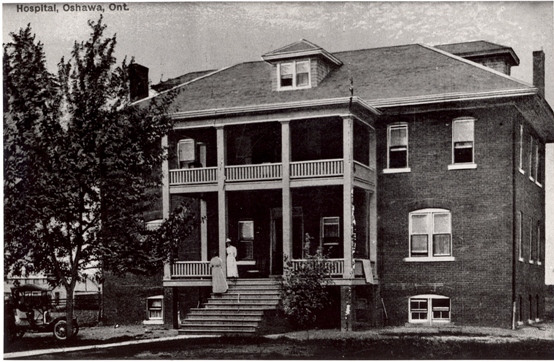
Oshawa General Hospital, 1911

Oshawa General Hospital, 1911
The Thomas Bouckley Collection

Two nurses are seen on the front steps of the first Oshawa General McKay is standing beside an automobile owned by Dr. Rundle.

Oshawa General Hospital Staff, 1912
The Thomas Bouckley Collection
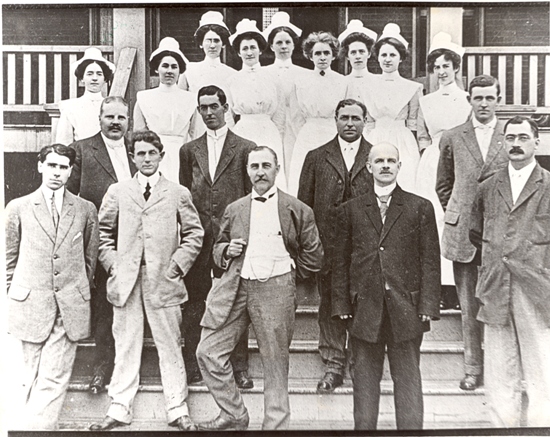
Oshawa General Hospital Staff, 1912

Oshawa General Hospital Staff, 1912
The Thomas Bouckley Collection

Photograph of the first Medical Board & Nursing Staff at the Oshawa General Hospital. All are identified.
Left to right, first card: Drs. Rundle, Hoig, Kaiser, Bolt, McKay
Second card: Drs. Ford, Finnigan, Walker, Carmichael
Third card: Nurses Drew, Selling, Scott, Oliver, Kett, MacWilliams (Lady Superintendent), Russell, Vernon, Cheesman

Oshawa General Hospital Nurses, 1912
The Thomas Bouckley Collection
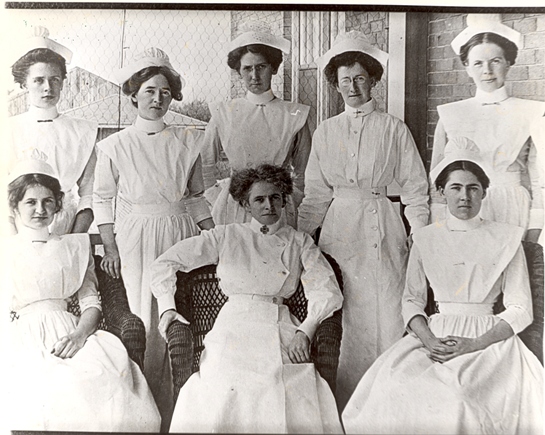
Oshawa General Hospital Nurses, 1912

Oshawa General Hospital Nurses, 1912
The Thomas Bouckley Collection

View of a group of nurses seated on the verandah at the Oshawa General Hospital. All are identified.
Back card, left to right: Misses Vernon, Drew, Scott, Oliver, Kett and Cheeseman.
Front card, left to right: Misses Vernon, McWilliams (Lady Superintendent), Seiling

What is a Student Nurse?

“Student nurses are to be found everywhere, underneath, on top of, running around, jumping over or slithering past patients’ beds…” – Unknown, 1963 Year Book

Student nurses are to be found everywhere, underneath, on top of, running around, jumping over or slithering past patients’ beds. Doctors overlook them, mothers worry about them and patients love them.

A student nurse is courage under a cap, a smile in snowy white, strength in starched skirts, energy that is endless, the best of young womanhood, a modern Florence Nightingale. Just when she is gaining poise and prestige, she drops a glass, breaks a syringe or steps on a doctor’s foot.

A student nurse is a composite. She eats like a team of hungry interns and works like the whole nursing staff put together. She has the speed of a gazelle, the strength of an ox, the quickness of a cat and the endurance of a flagpole sitter. To the head nurse she has the stability of mush, the fleetness of a snail, the mentality of a mule and is held together by starch, adhesive tape and strained nerves. To an alumnus, she will never work as hard, carry more trays, make more beds or scrub on more cases than her predecessors.

A student nurse likes days off, boys her own age, the O.R., affiliations, certain doctors, pretty clothes, her roommate and Mom and Dad. She is not much on working 3-11, days off with classes, alarm clocks, getting up for roll call or eating corned beef every Tuesday.

A student nurse is a wonderful creature. You can criticize her but you can’t make her quit. Might as well admit it, whether you are a head nurse, doctor, alumnus or patient, she is your personal representatives of the hospital, your living symbol of faith and sympathetic care.

Author Unknown, 1963 Year Book

Oshawa General Hospital Nursing Class of 1915
Collection of Oshawa Public Libraries, LH 2406
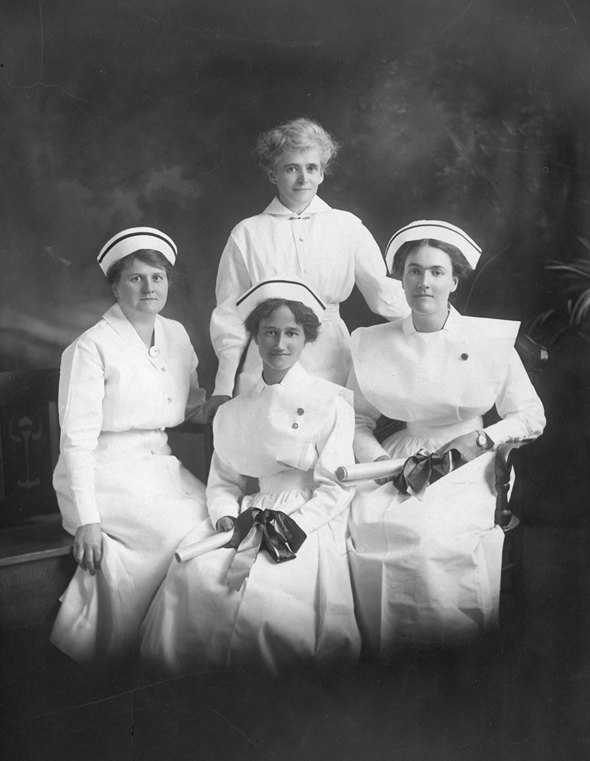
Oshawa General Hospital Nursing Class of 1915

Oshawa General Hospital Nursing Class of 1915
Collection of Oshawa Public Libraries, LH 2406

The woman at the back, Miss MacWilliams, was the Lady Superintendent of Oshawa General Hospital for over ten years. She was in charge of the nurses-in-training program. In the Oshawa General Hospital: A Short History, it describes the position as: “The Lady Superintendent….shall have control, subject to the Board of Directors, of the Oshawa General Hospital and shall instruct Nurses or cause them to be instructed in the art of nursing.”

Oshawa General Hospital Nursing Class of 1925
Collection of Oshawa Public Libraries, LH 2888
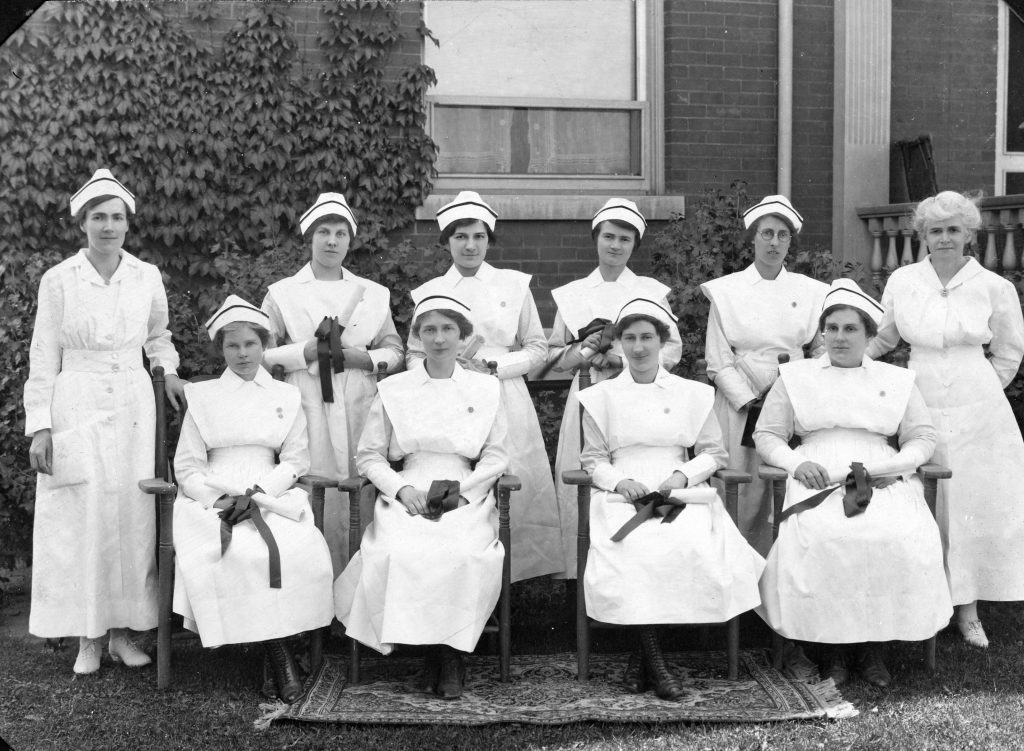
Oshawa General Hospital Nursing Class of 1925

Oshawa General Hospital Nursing Class of 1925
Collection of Oshawa Public Libraries, LH 2888

Miss MacWilliams, the Lady Superintendent of the Nursing School, stands on the right of the 1925 graduating class.

Maternity Ward, c. 1920
Collection of Oshawa Public Libraries, LH 2870
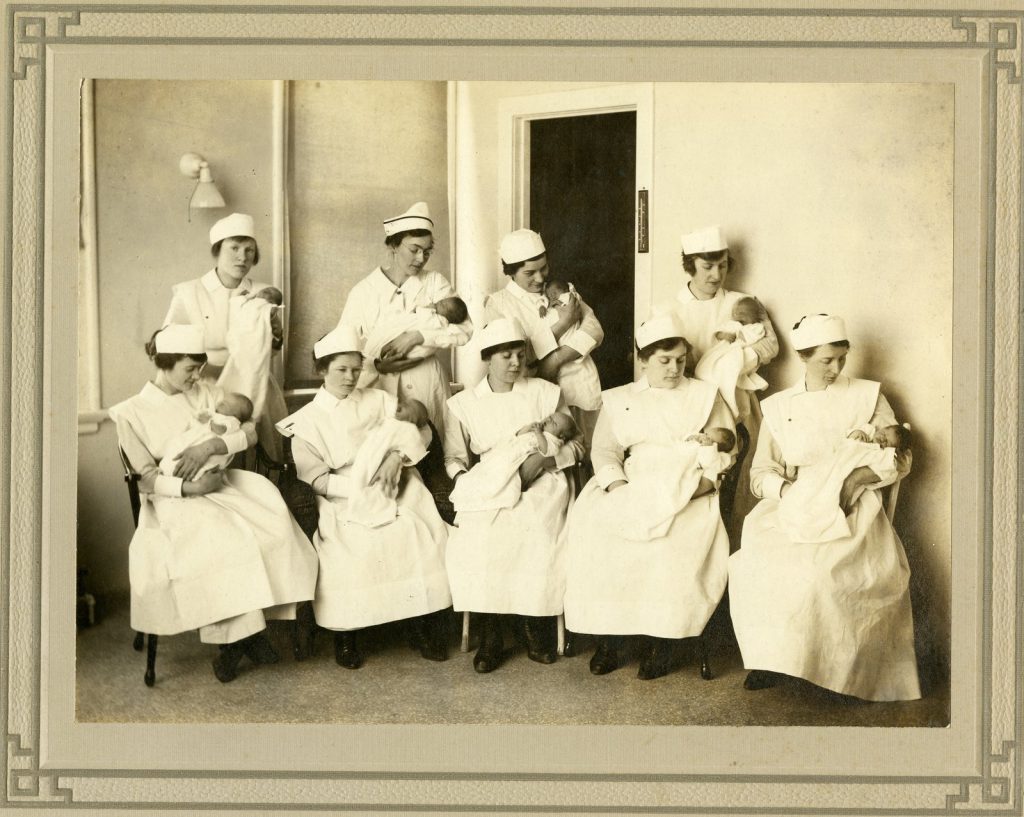
Maternity Ward, c. 1920

Maternity Ward, c. 1920
Collection of Oshawa Public Libraries, LH 2870

Group of nurses holding newborns in the maternity ward. The nurses in the training program received hands-on experience working in various departments of the hospital, including maternity and surgical.

Night Supervisor with Students, c. 1920
Collection of Oshawa Public Libraries, LH 2362
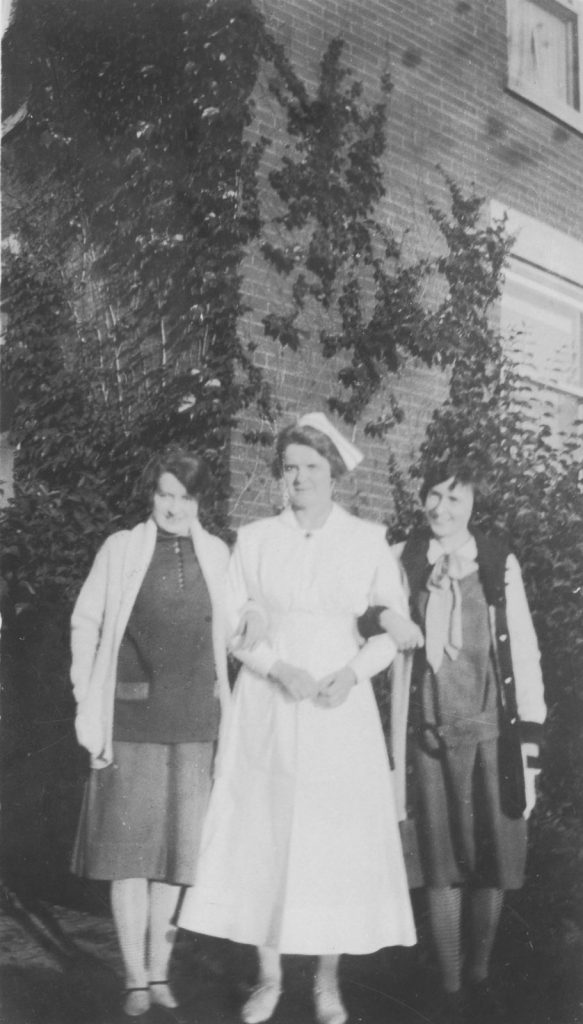
Night Supervisor with Students, c. 1920

Night Supervisor with Students, c. 1920
Collection of Oshawa Public Libraries, LH 2362

Nurse Dryden (Night Supervisor) posing with two nursing students, Miss Shearer and Miss Drimmie, outside the hospital.

Students cutting surgical dressings, c. 1925-28
Collection of Oshawa Public Libraries, LH 2356
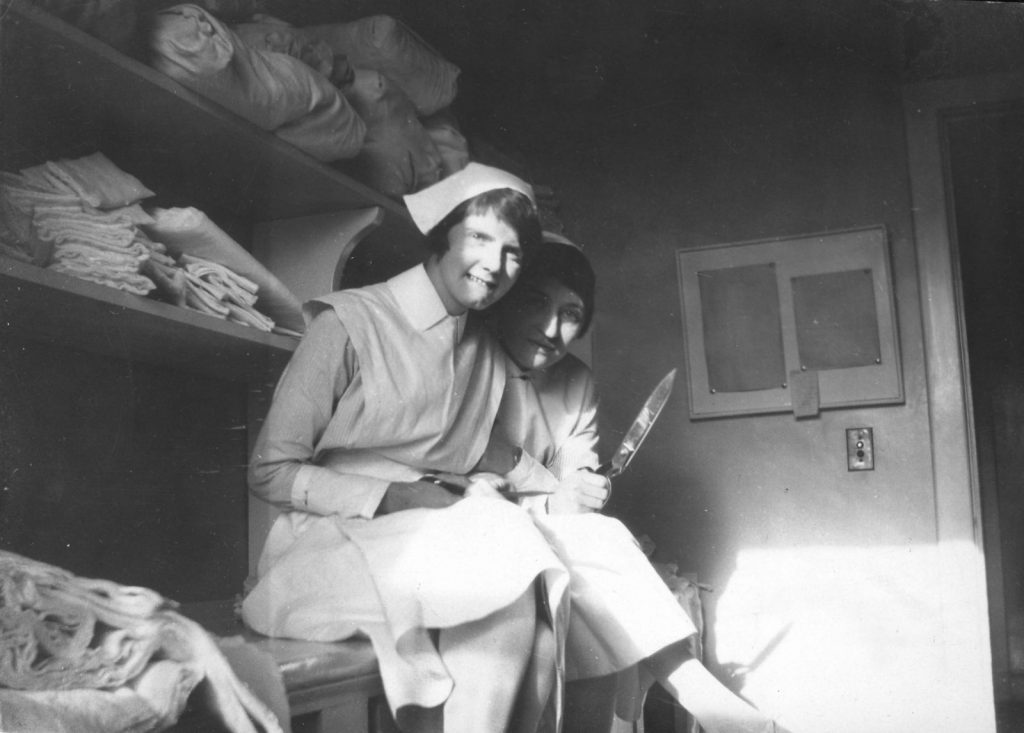
Students cutting surgical dressings, c. 1925-28

Students cutting surgical dressings, c. 1925-28
Collection of Oshawa Public Libraries, LH 2356

Two nursing students, Miss McCohn and Miss Hutchison, making dressings in the surgical wing of the hospital.

Off Duty Nursing Students, c. 1920
Collection of Oshawa Public Libraries, LH 2355
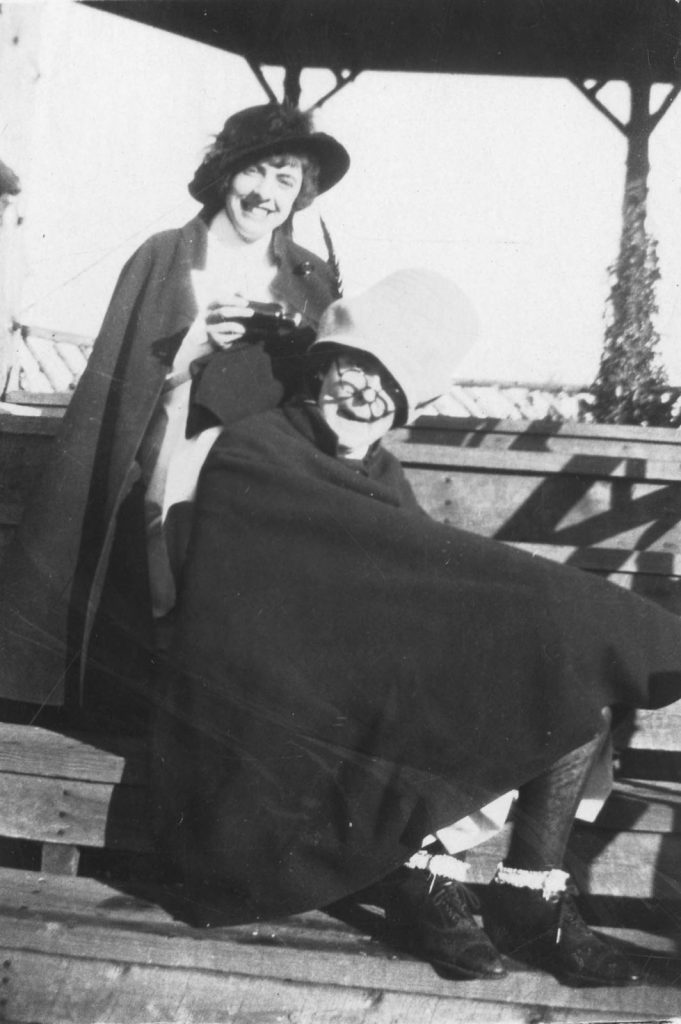
Off Duty Nursing Students, c. 1920

Off Duty Nursing Students, c. 1920
Collection of Oshawa Public Libraries, LH 2355

After coming off duty from the night shift, two nursing students, Miss Hinton and Miss Thompson, have some fun fooling around on the grandstand at Alexandra Park.

Nursing School Staff, 1928
Collection of Oshawa Public Libraries, LH 2357
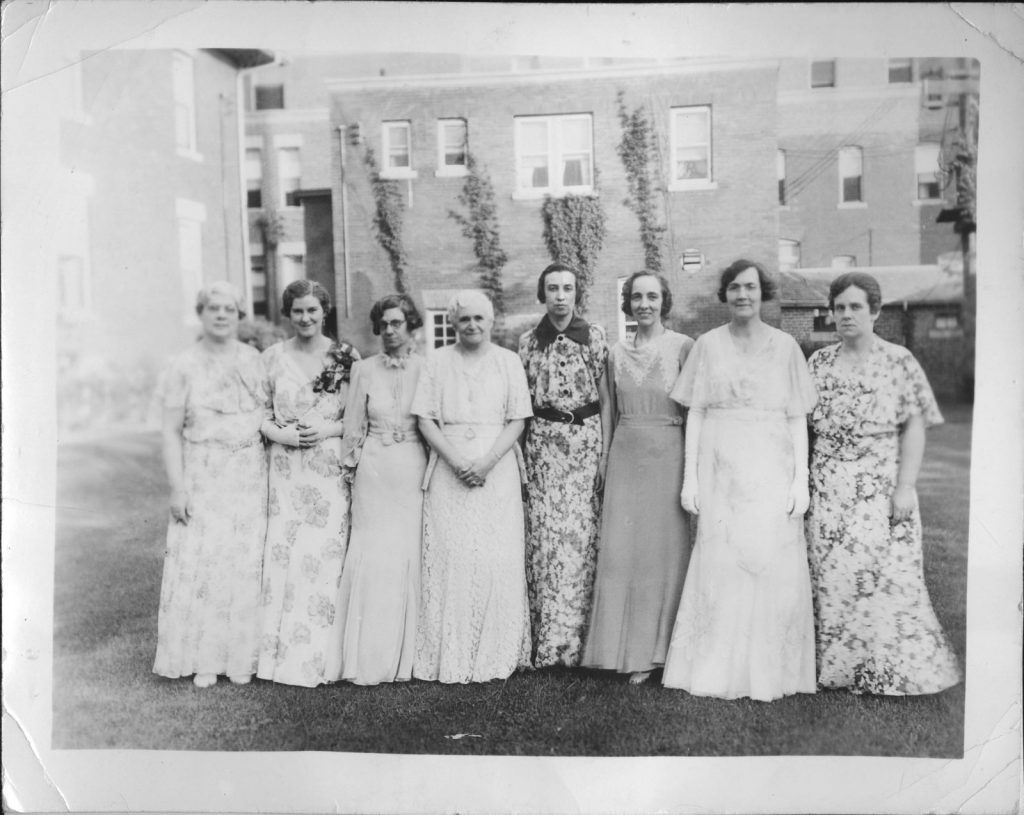
Nursing School Staff, 1928

Nursing School Staff, 1928
Collection of Oshawa Public Libraries, LH 2357

Nursing school staff, including Lady Superintendent Miss McWilliams (fourth from left) posing outside in formal gowns.

Nursing School Cafeteria, c. 1940
Collection of Oshawa Public Libraries, LH 2872
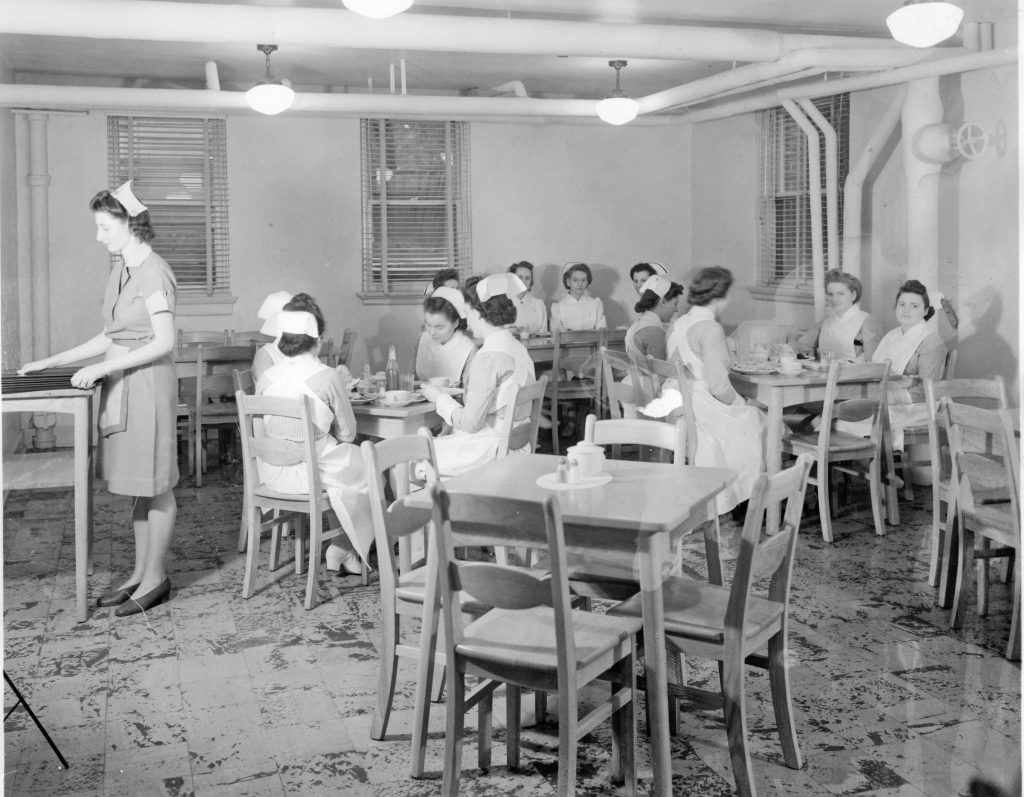
Nursing School Cafeteria, c. 1940

Nursing School Cafeteria, c. 1940
Collection of Oshawa Public Libraries, LH 2872

The nurses-in-training lived in residences on the hospital grounds. As the school grew, so did the need for most residence space. This cafeteria is believed to have been located in McLaughlin Hall, a state-of-the-art facility at the time.
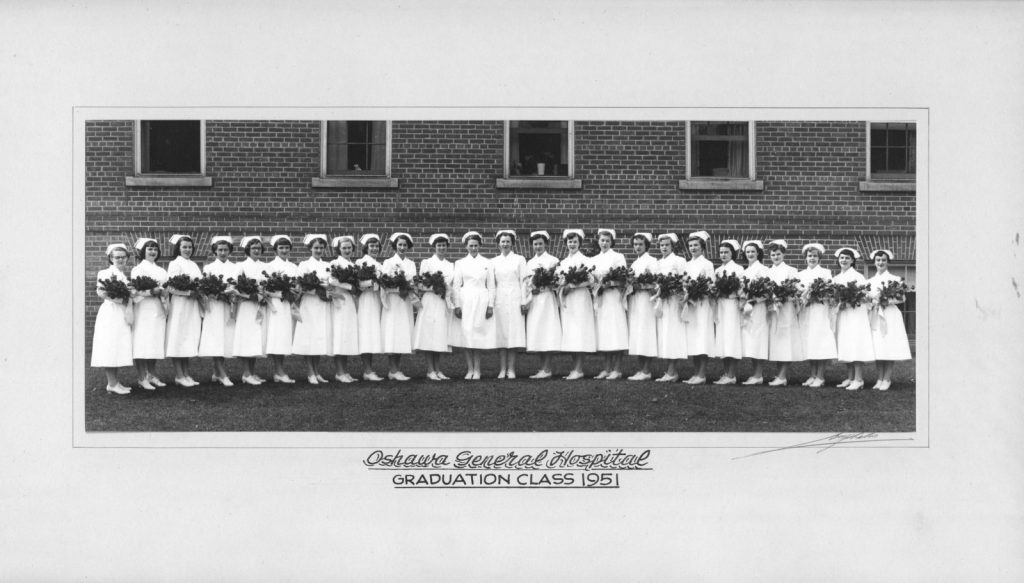
Oshawa General Hospital Nursing Class of 1951
Oshawa General Hospital Nursing Class of 1951. Collection of Oshawa Public Libraries, LH 2427
By the 1950s, admission to the Nursing School had greatly increased. These graduates pose outside of Oshawa High School (today O’Neil Collegiate & Vocational Institute). The photograph was taken by Campbell’s Studio, based in Oshawa.

Collection of the Oshawa Public Libraries, LH 2244
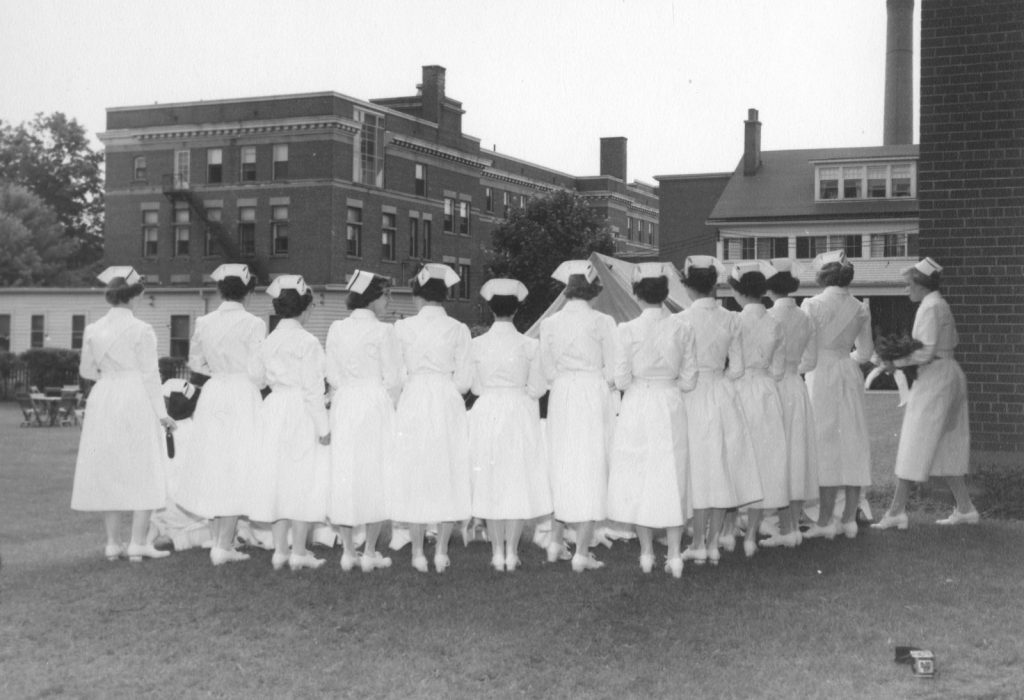
Nursing Students at Hospital, c. 1960


Nursing Students at Hospital, c. 1960
Collection of the Oshawa Public Libraries, LH 2244

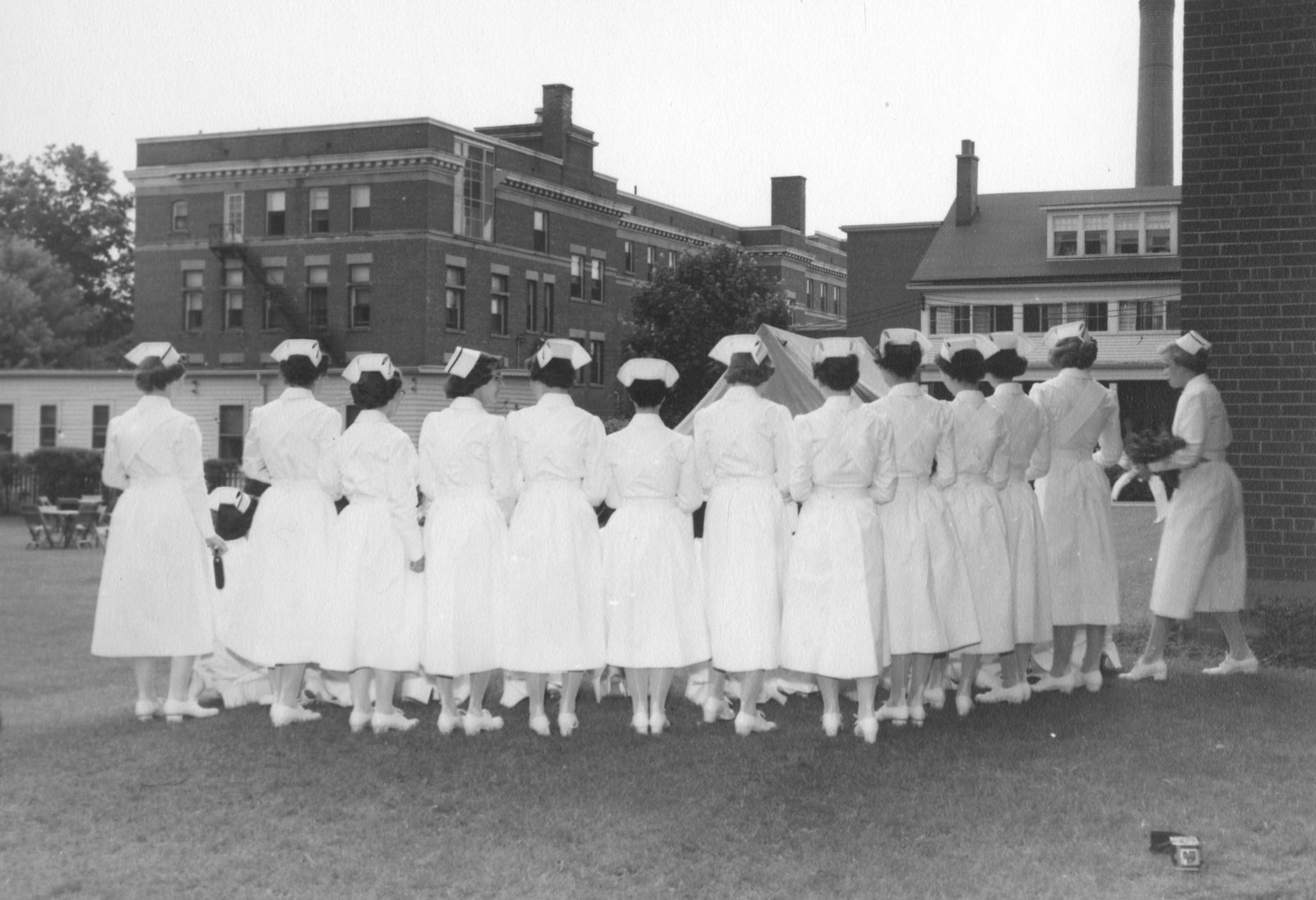
View from behind a group of nursing students posing for a photo outside the hospital.

McLaughlin Hall, Nursing residence, c. 1960
Collection of Oshawa Public Libraries, LH 2403
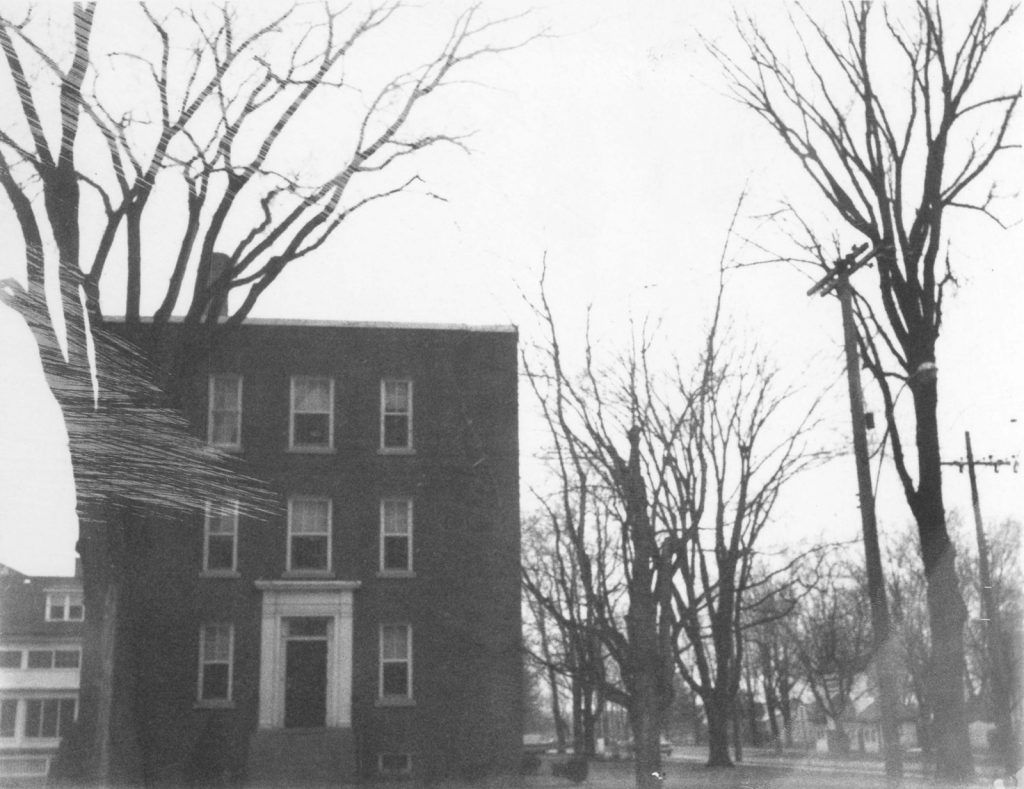
McLaughlin Hall, Nursing residence, c. 1960

McLaughlin Hall, Nursing residence, c. 1960
Collection of Oshawa Public Libraries, LH 2403

Built in 1946 as a result of a donation by Mr. and Mrs. R. S. McLaughlin, this nurses’ residence was officially opened in November of that year. Its original address was 362 Simcoe Street North, which is now 1 Hospital Court. The building is currently used for the administrative offices of Lakeridge Health Oshawa.

Alexandra House, Nurses Residence, c. 1920
The Thomas Bouckley Collection
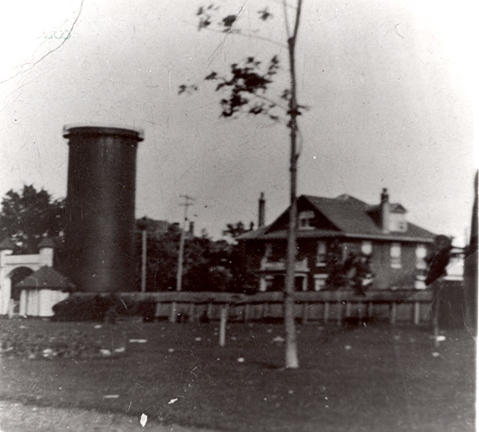
Alexandra House, Nurses Residence, c. 1920

Alexandra House, Nurses Residence, c. 1920
Collection of Oshawa Public Libraries, LH 2403

View from Alexandra Park of the Alexandra House nurses’ residence and the water tower that was located on the south-west corner of Alexandra St. and Simcoe St. North. The board fence in the middle of the photo marks the edge of the park property. Alexandra House was built in 1915 as a nurses’ residence. An expansion was built in 1932 to provide accommodation for 40 nurses. The water tower was removed in the late thirties or early forties. A new nurses’ residence was built by Mr. and Mrs. R. S. McLaughlin on the site in the 1940s.

Oshawa General Hospital School of Nursing
Student Nursing Uniform, c. 1960
Oshawa Museum Collection, 012.5.2
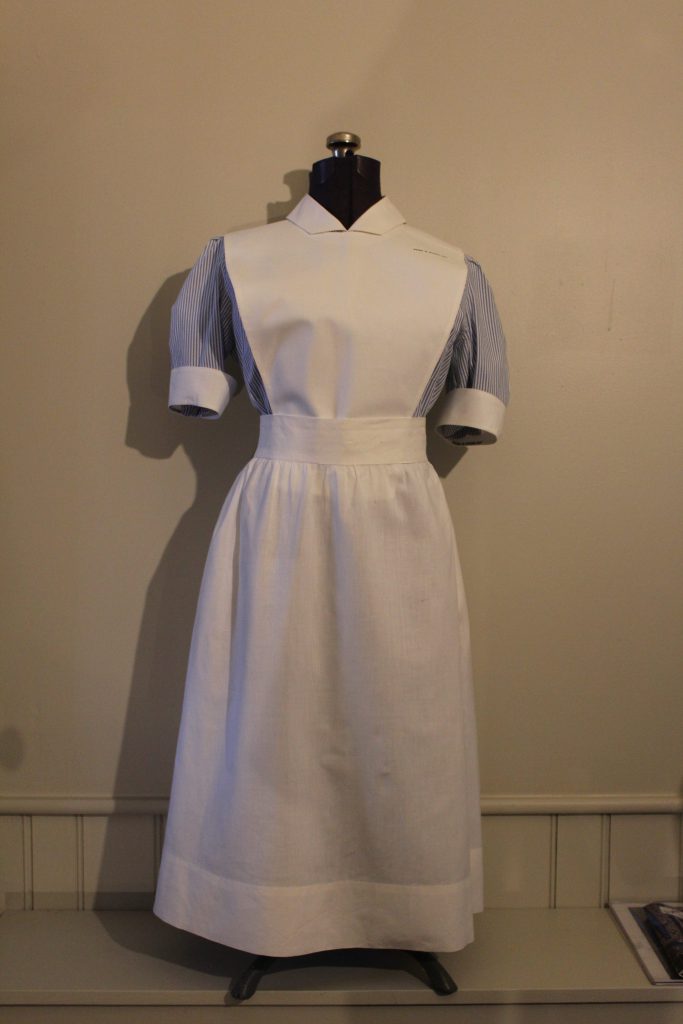
Oshawa General Hospital School of Nursing Student Nursing Uniform, c. 1960

Oshawa General Hospital School of Nursing Student Nursing Uniform, c. 1960
Oshawa Museum Collection, 012.5.2

This student nursing uniform belonged to Miss G. Gorsline when she attended the School of Nursing in Oshawa. Comprised of a blue and white pinstriped cotton dress with a white bib and apron. The uniform also included starched stiff white cuffs and a collar, white stockings and white shoes. There were strict rules regarding a nurse’s appearance in uniform. Student nurses were only allowed to wear their complete uniform while on duty or during classroom lectures.

Award Winners, 1968
Collection of Oshawa Public Libraries, LH 2313
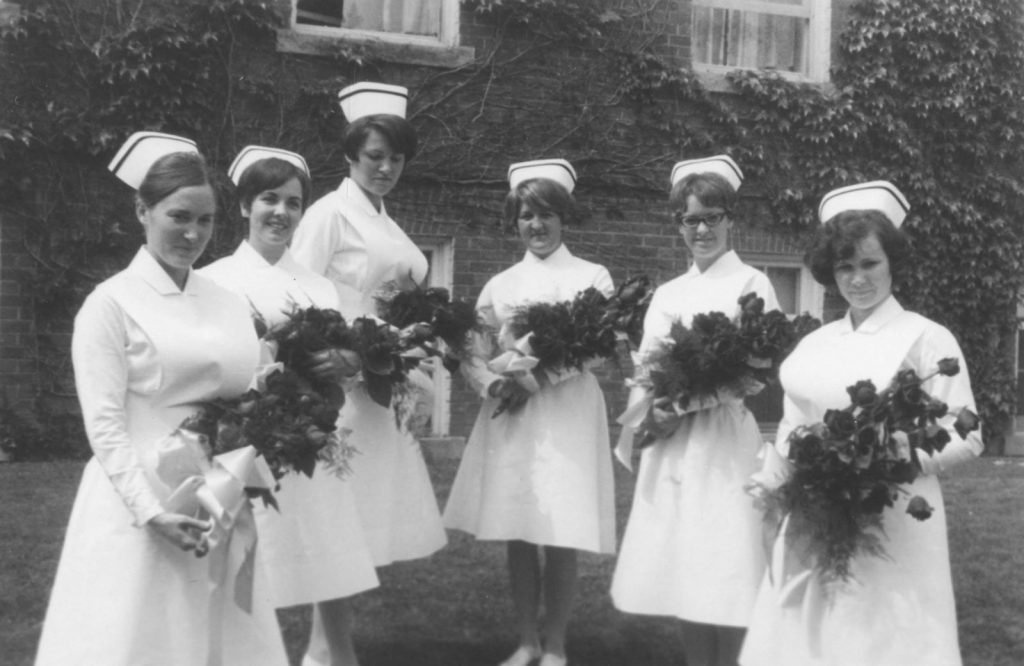
Award Winners, 1968


Award Winners, 1968
Collection of Oshawa Public Libraries, LH 2313

Award winners of the class of 1968 pose with rose bouquets outside.

Oshawa General Hospital Nursing Class of 1962
Collection of Oshawa Public Libraries, LH 2426
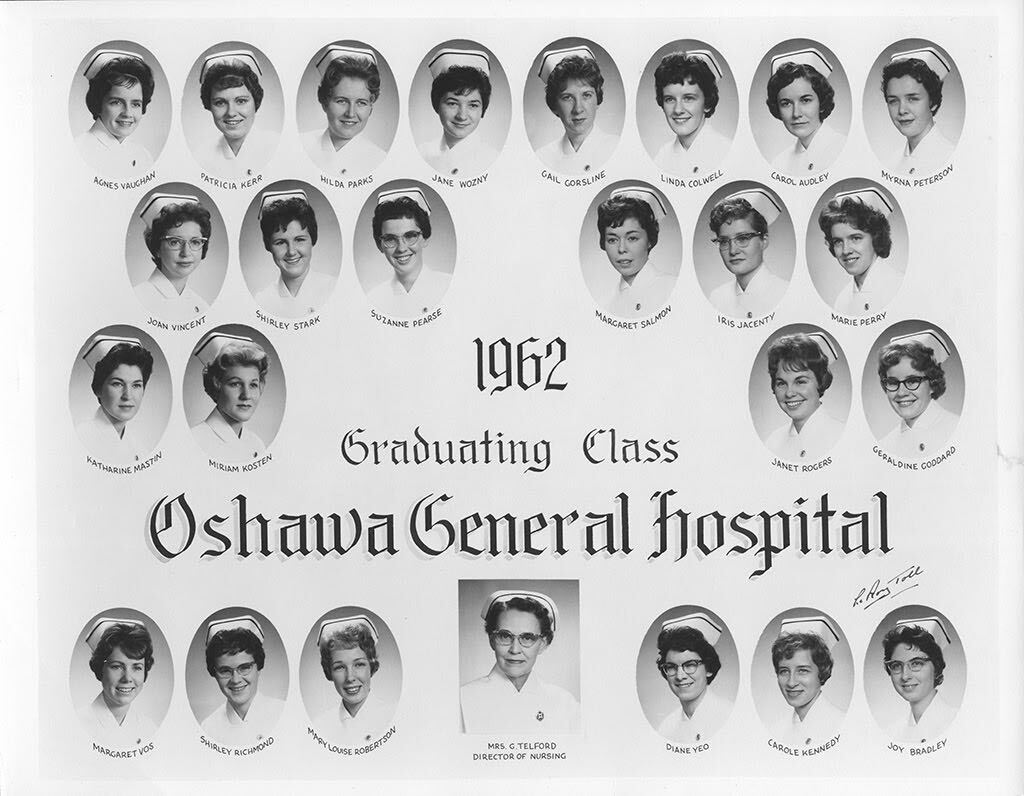
Oshawa General Hospital Nursing Class of 1962

Oshawa General Hospital Nursing Class of 1962
Collection of Oshawa Public Libraries, LH 2426

Operating Room in Oshawa General Hospital, c. 1940s
Collection of Oshawa Public Libraries, LH 2871
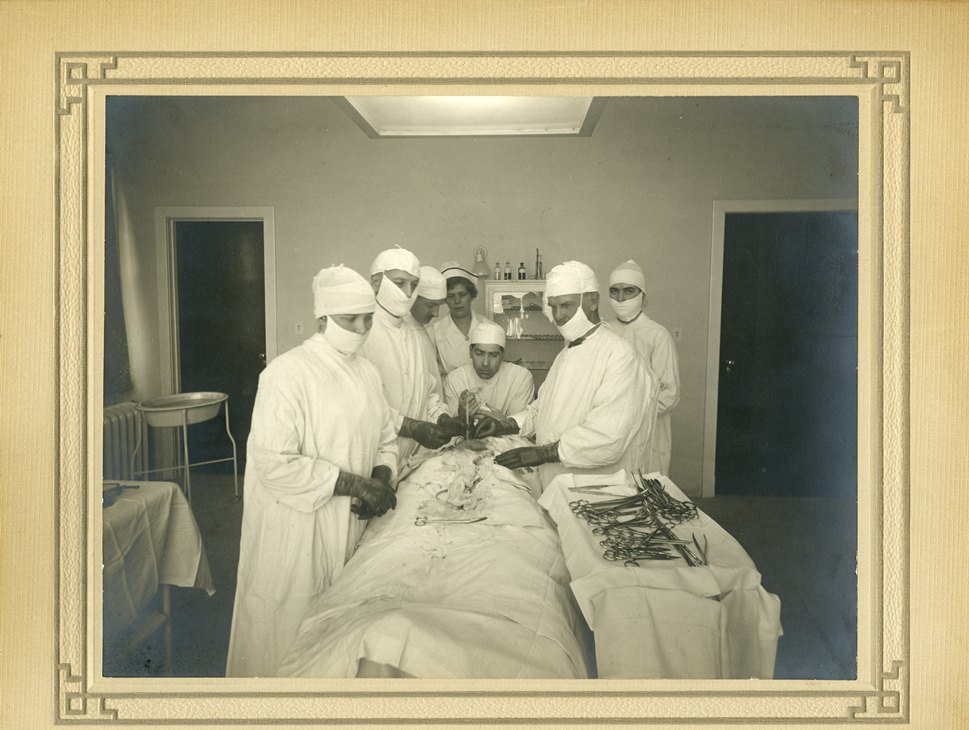
Operating Room in Oshawa General Hospital, c. 1940s

Operating Room in Oshawa General Hospital, c. 1940s
Collection of Oshawa Public Libraries, LH 2871

Nursing students received a well-rounded education by assisting and learning from doctors and nurses from various departments. Seen here is the Surgical Department.


Oshawa Museum Collection, A984.4.12
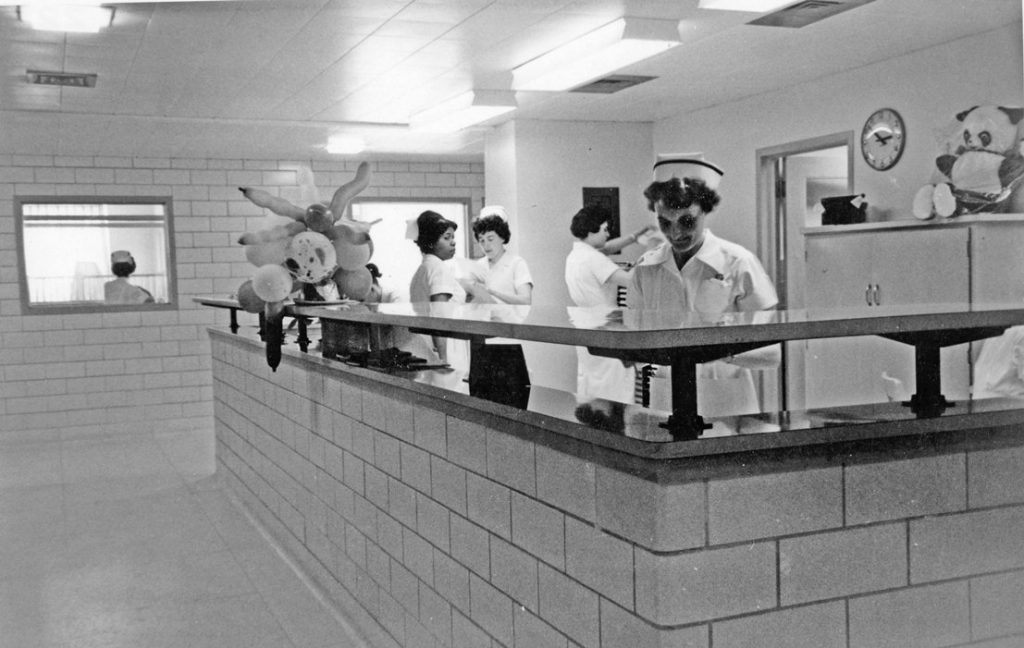
Oshawa General Hospital, Nurses Station, Children's Ward, 1962

Oshawa General Hospital, Nurses Station, Children’s Ward, 1962
Oshawa Museum Collection, A984.4.12

This photo appeared in a 1962 brochure about Oshawa General Hospital’s new Sykes Wing. It depicts the Children’s Floor that had 88 beds exclusively for children. In the brochure it says: “Sick children need comfort and assurance. More than ever they require love and affection…a feeling of security and a faith that they will be guided back to health by the tender care of their nurse and professional skill of the doctor.”


Nursery, Sykes Wing, 1962
Oshawa Museum Collection, A984.4.12
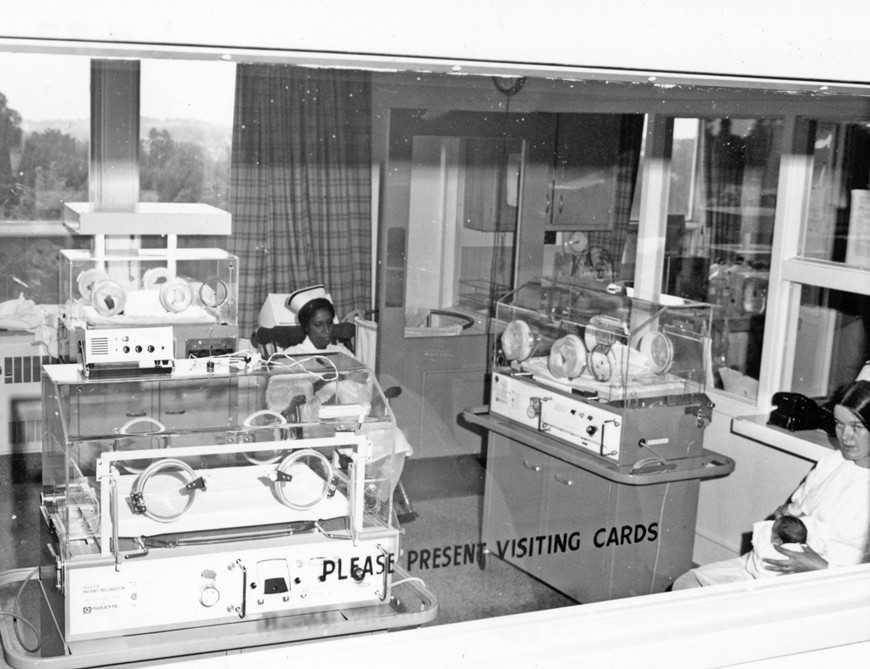
Nursery, Sykes Wing, 1962

Nursery, Sykes Wing, 1962
Oshawa Museum Collection, A984.4.12

This image appeared in a brochure launching the official opening of the new Sykes Wing. The Sykes Wing featured a large nursery and children’s ward.


Recovery Room, Oshawa General Hospital, 1973
Oshawa Museum Collection, A984.4.12

Recovery Room, Oshawa General Hospital, 1973

Recovery Room, Oshawa General Hospital, 1973
Oshawa Museum Collection, A984.4.12

Despite the closure of the hospital-based nursing school and the transfer of the program to Durham College, students still received clinical experiences at Oshawa General Hospital in the program. This photo appeared in a brochure celebrating the official opening of the “G” Wing on October 10, 1973. The caption above the photograph says: “Constant watch in the Recovery Room.”


Bedside Nursing, Oshawa General Hospital, 1973. Oshawa Museum Collection, A984.4.12

Bedside Nursing, Oshawa General Hospital, 1973
Oshawa Museum Collection, A984.4.12

Despite the closure of the hospital-based nursing school and the transfer of the program to Durham College, students still received clinical experiences at Oshawa General Hospital in the program. This photo appeared in a brochure celebrating the official opening of the “G” Wing on October 10, 1973 with the caption: “Tender care is part of bedside nursing.”


Online exhibition designed by Computer Programmer Analyst students, Dhara Savaliya and Damilola Sanusi.

This online exhibition was created in partnership with Oshawa Public Libraries and the Oshawa Museum.



The Wandering Line

Drawings from the Permanent Collection

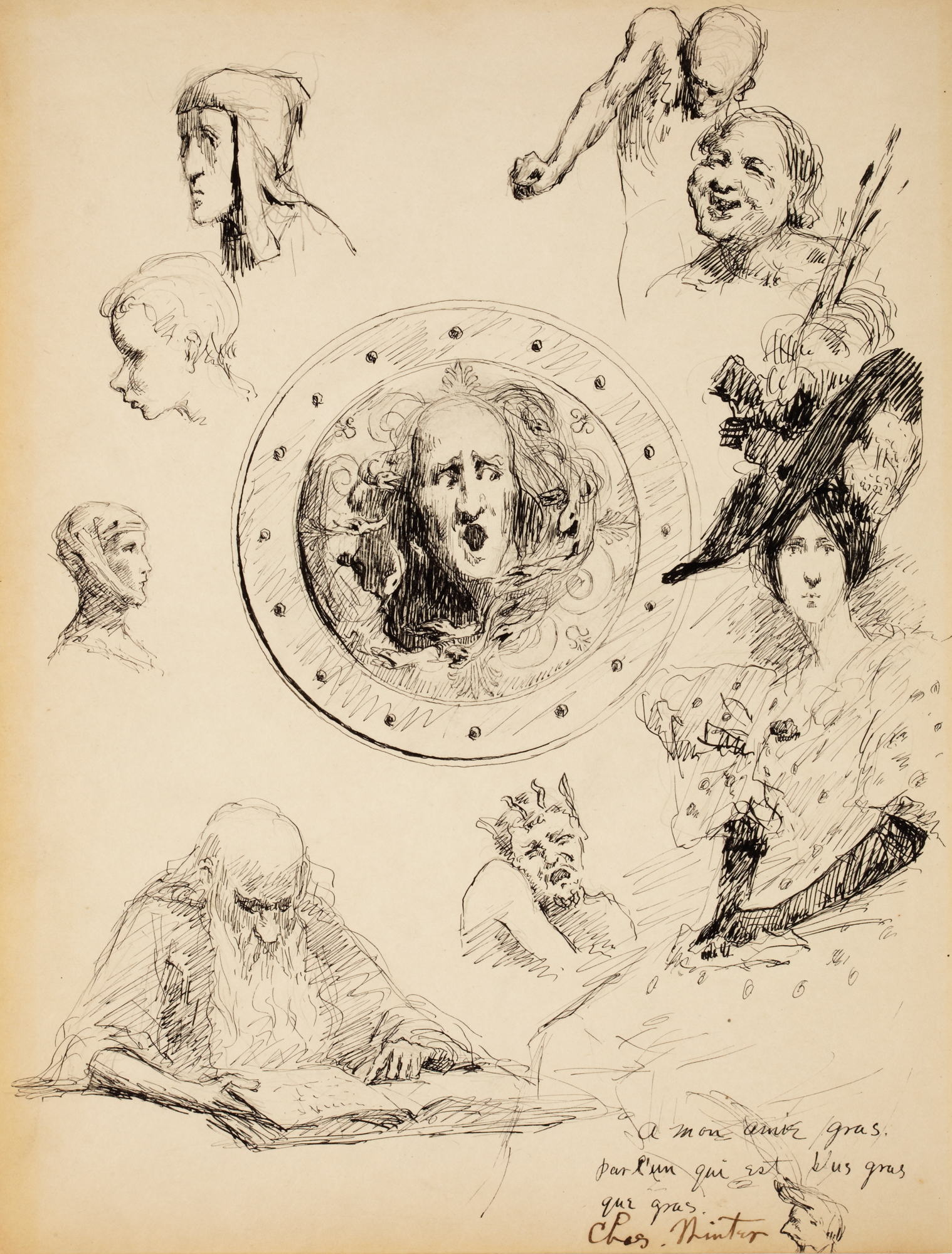
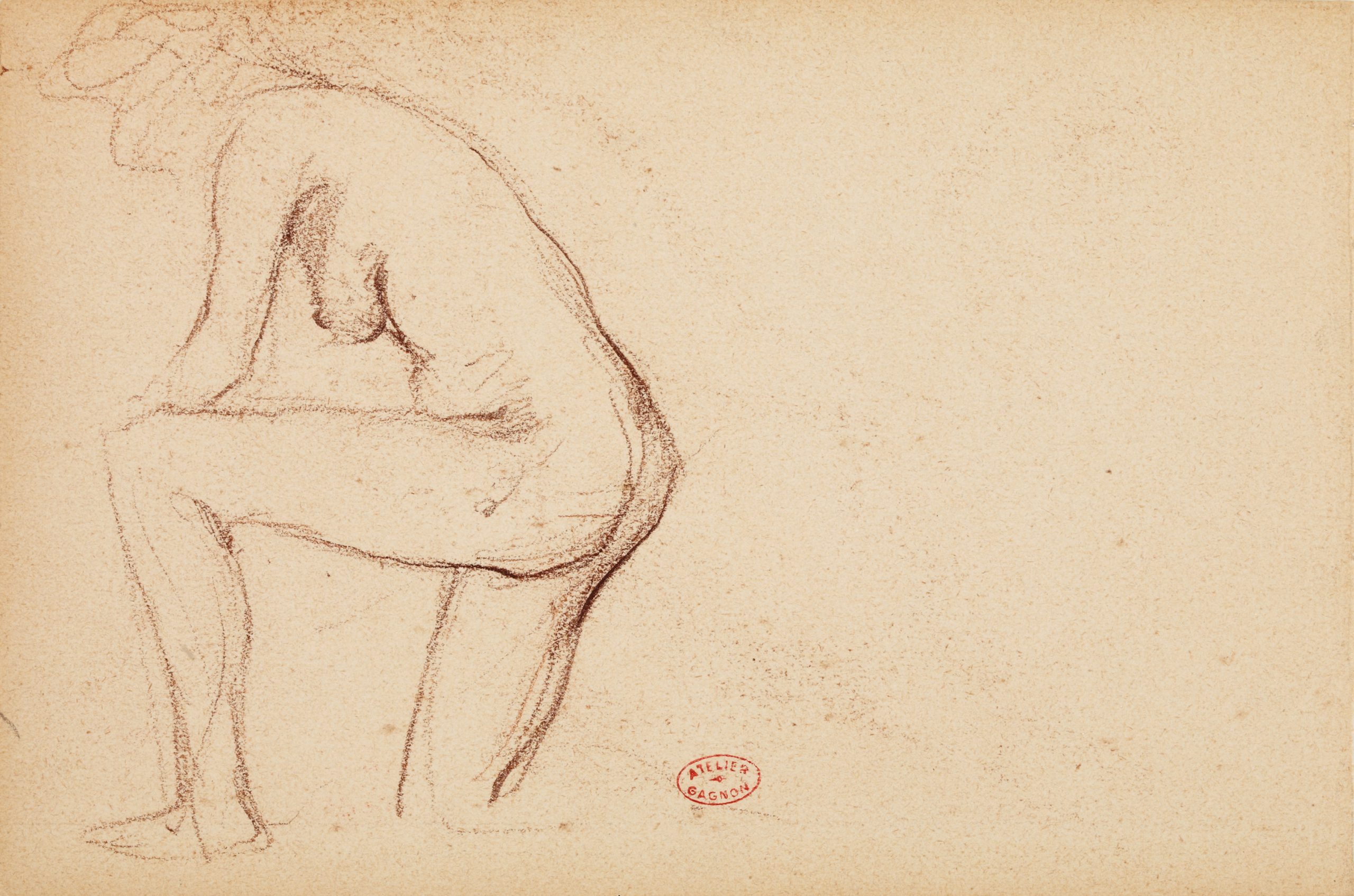
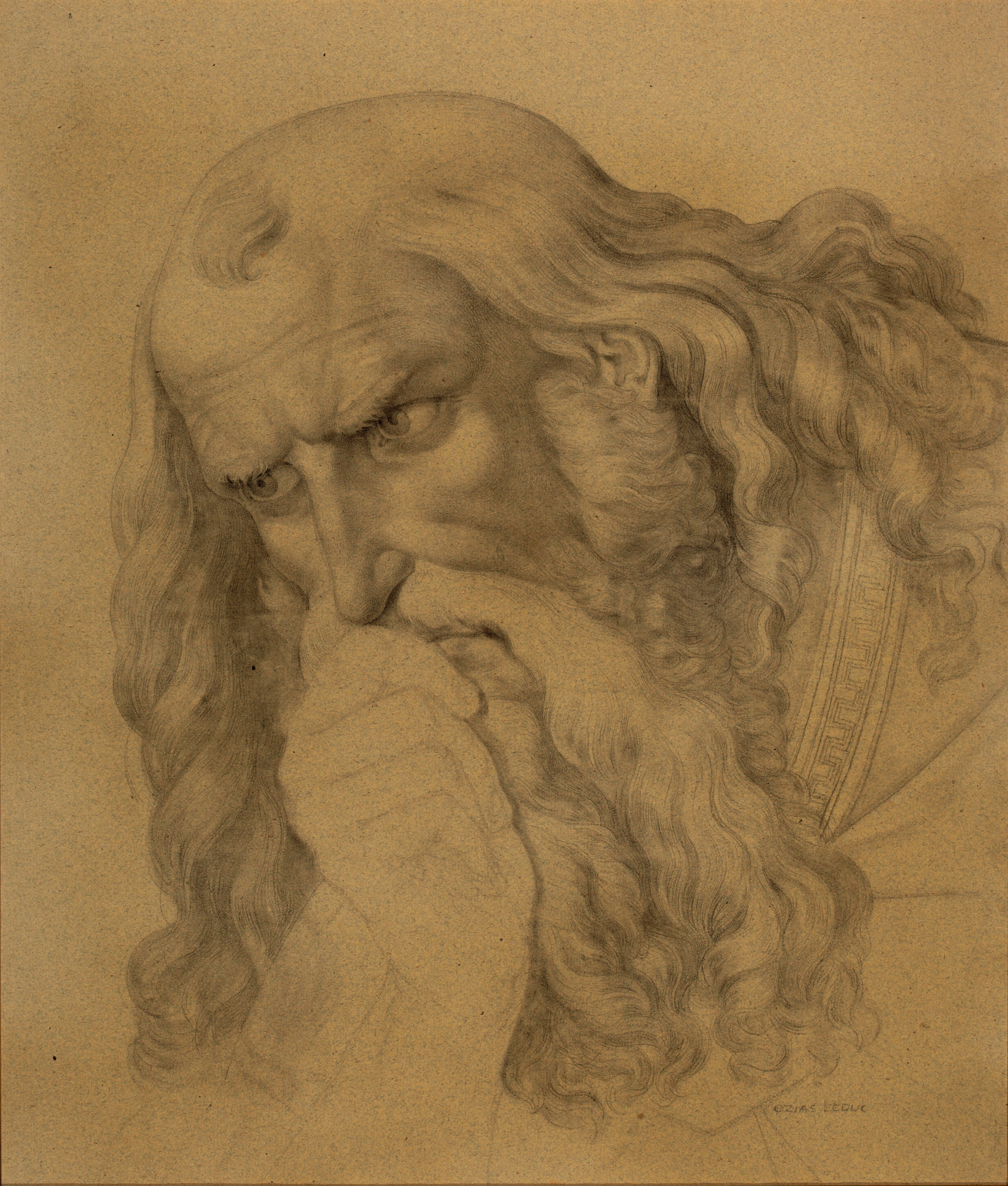
Drawing is one of the oldest forms of human expression, predating the written word. It has long been considered a fundamental part of visual art education due to its exploratory nature that allows artists to experiment and refine their artistic practice. Pulling together a selection of drawings and sketches from the Permanent Collection, this exhibition offers insight into the artists’ process and presents an opportunity to celebrate these sometimes overlooked works as artworks in their own right.

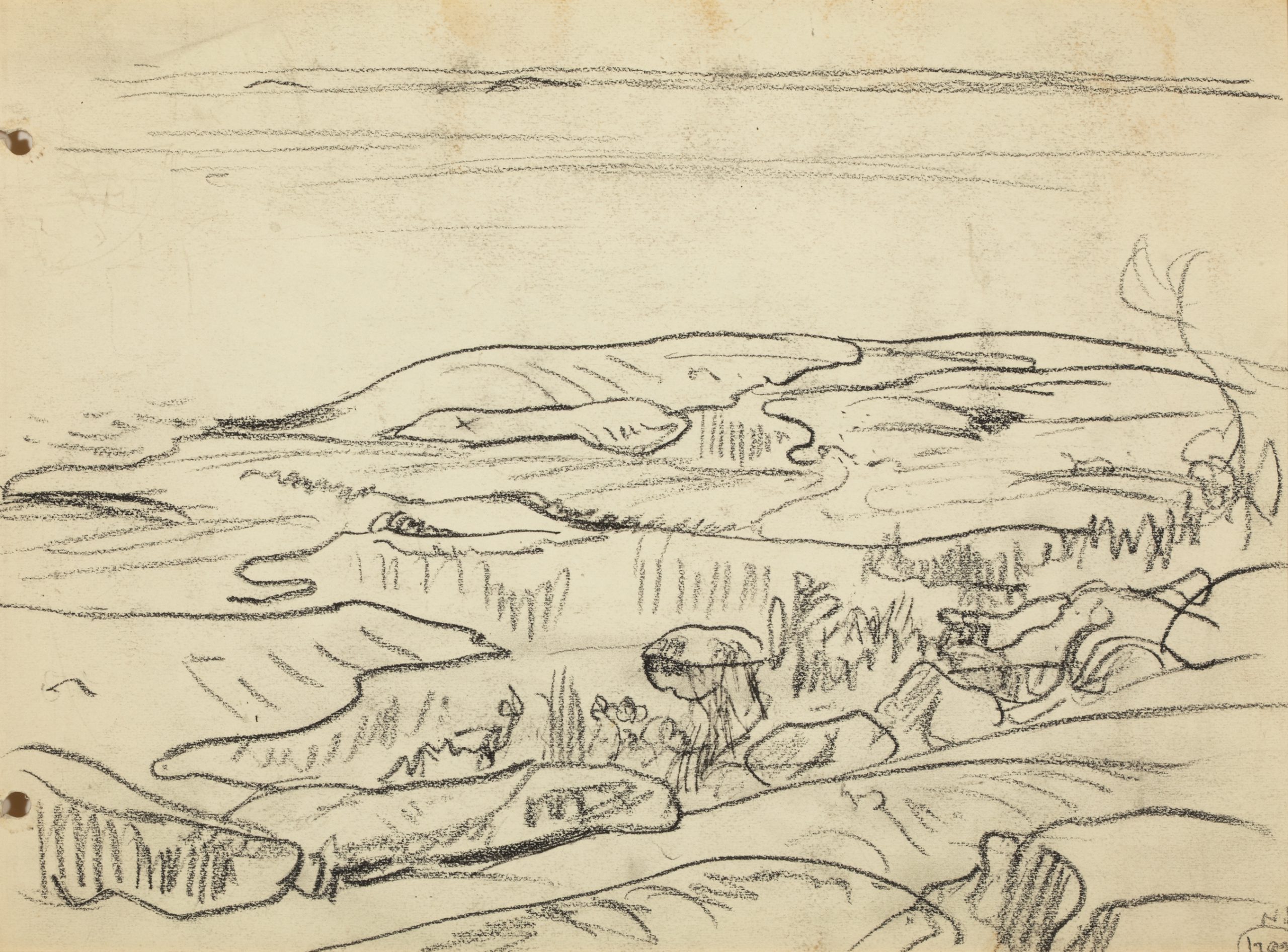
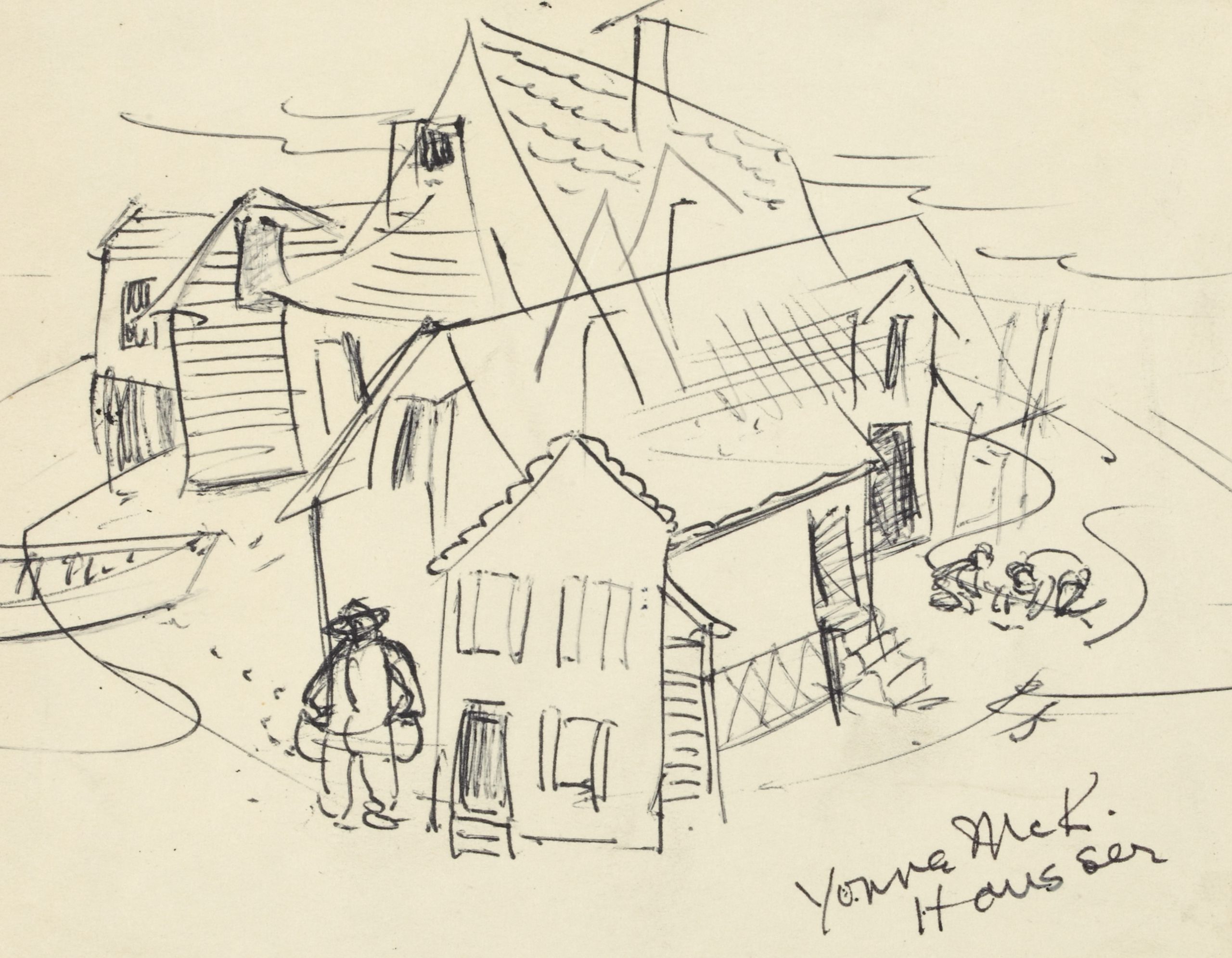
The portability of drawings and sketchbooks has made it a great method for observing the world. In Yvonne McKague Housser’s Walking with a Sketchbook, Mexico (n.d.), as the title suggests, the artist traveled with her sketchbook to capture her views and experiences. Another example is A.Y. Jackson’s Close-up Study of Rocky Shore with Puddle (n.d.), a double-sided sketch, which, based on the ring holes along the side, once lived in a sketchbook.

A.Y. Jackson (Canadian, 1882 – 1974), Close-up Study of Rocky Shore with Puddle, n.d., graphite on paper. Gift of Naomi Jackson Groves, 1992.

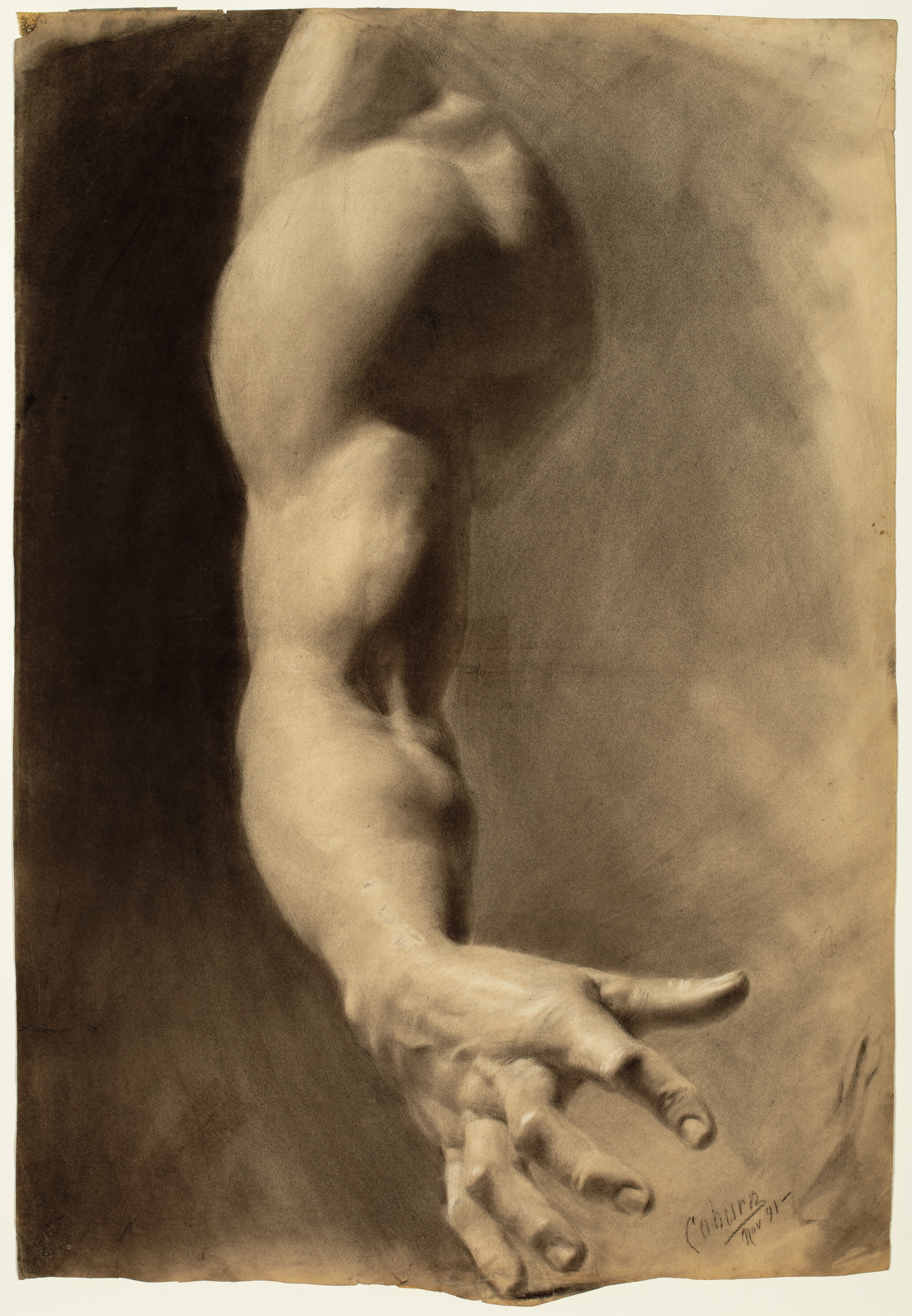
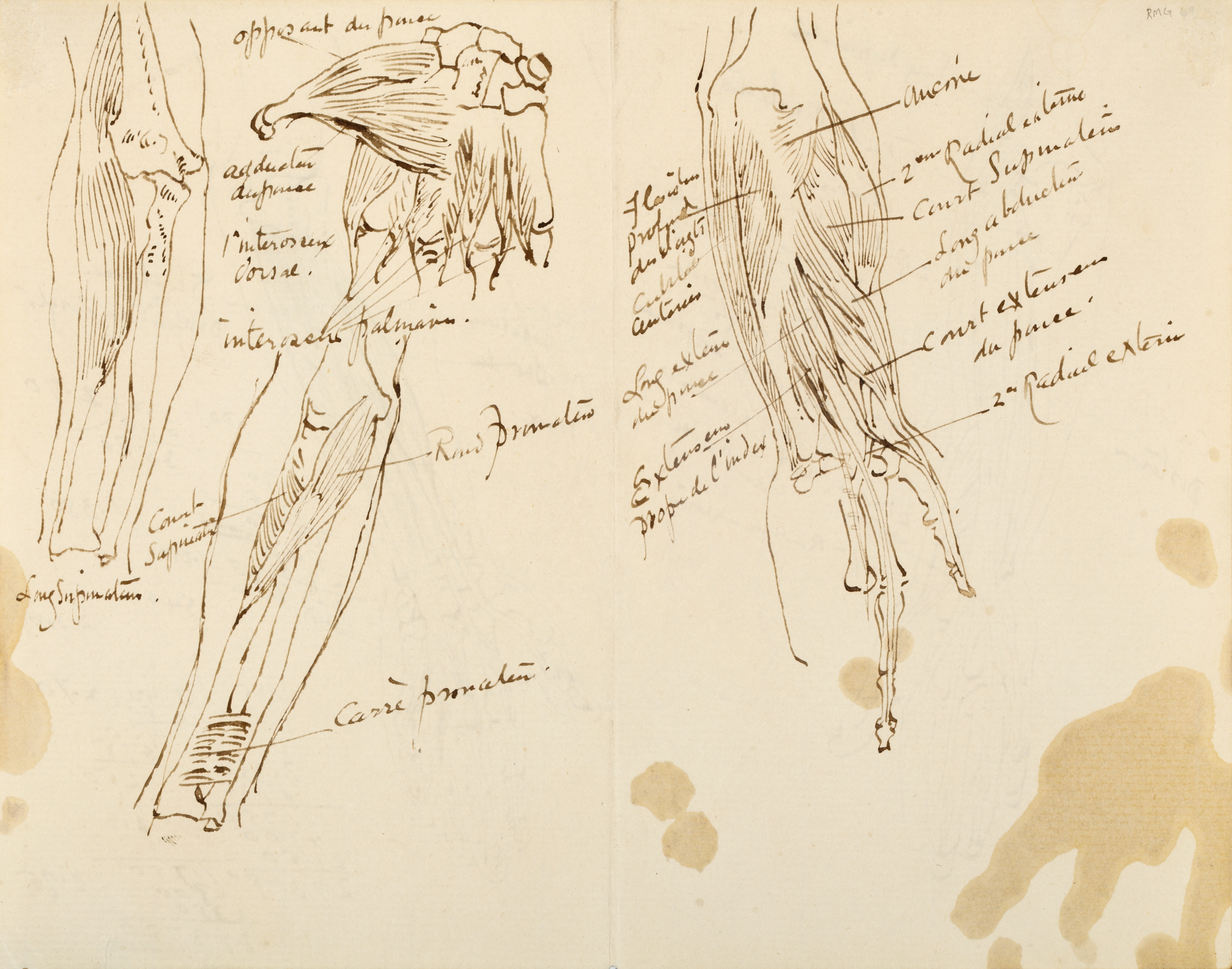
Some of the drawings in this exhibition are examples of artists exploring the human form. Anatomical studies were common for artists to practice and refine their ability to depict the human body. Two precise and very different examples are William Blair Bruce’s more scientific drawing of the tendons in the arm in Untitled (Anatomical Studies) (n.d.), and F.S. Coburn’s Power (1891), in which he uses charcoal to get the definition of muscles and veins through shading. These types of sketches demonstrate the medium’s ability to help artists’ further study, experiment, and improve techniques.
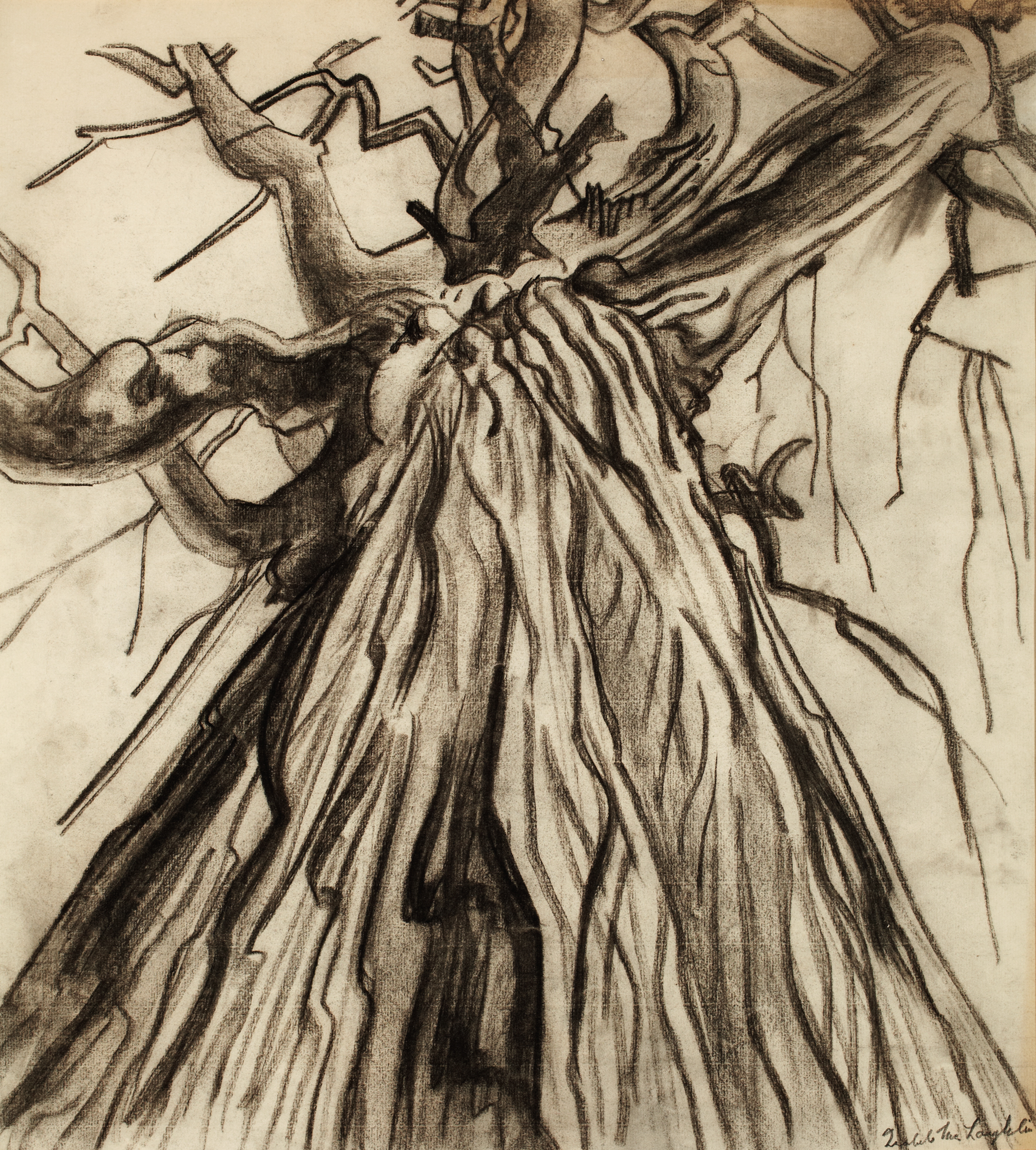
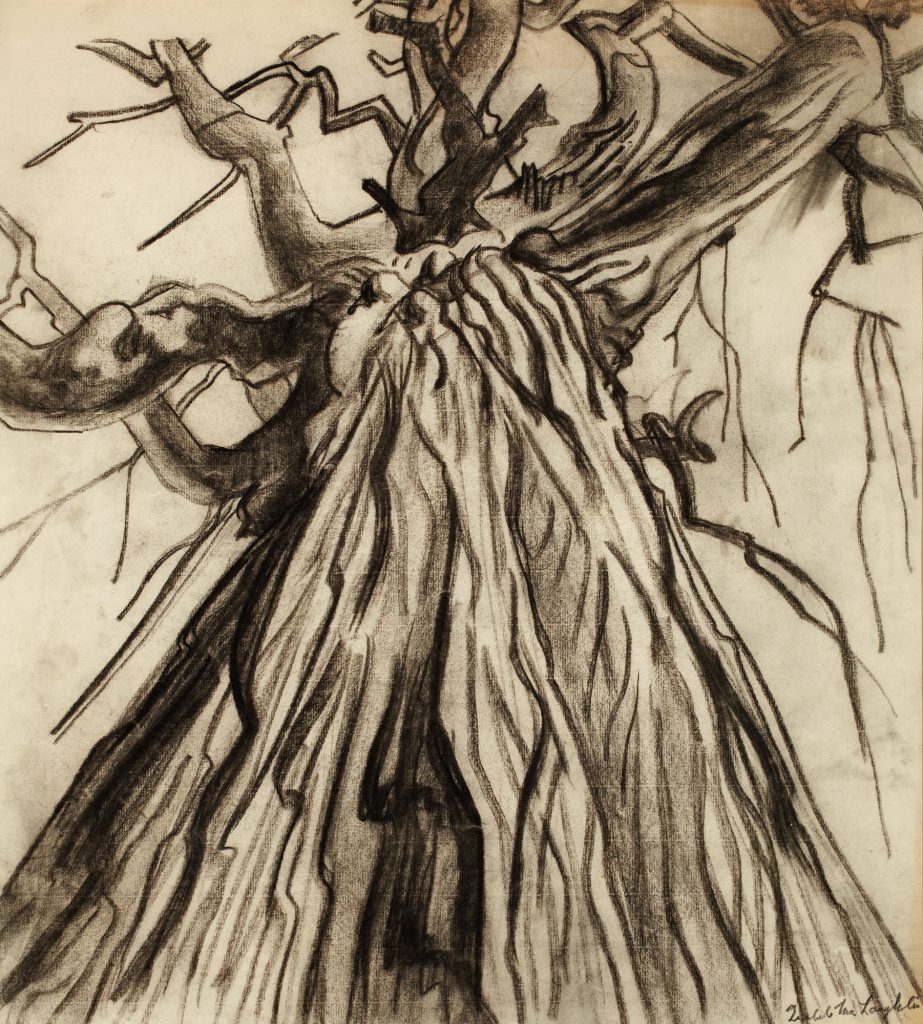
While some of the works in this exhibition are examples of quick drawing exercises, others are preparations for paintings and prints, called studies. Take for example, Isabel McLaughlin’s Sketch for Tree (c. 1935), which is the study for a large painting that is in the collection of the National Gallery of Canada entitled Tree (1935). McLaughlin did many preparatory sketches for this painting, but this one clearly shows the decisive approach that she ended up using for the final painting.

Isabel McLaughlin (Canadian, 1903-2002), Sketch for Tree, c. 1935, charcoal on paper. Gift of the estate of Isabel McLaughlin, 2003.

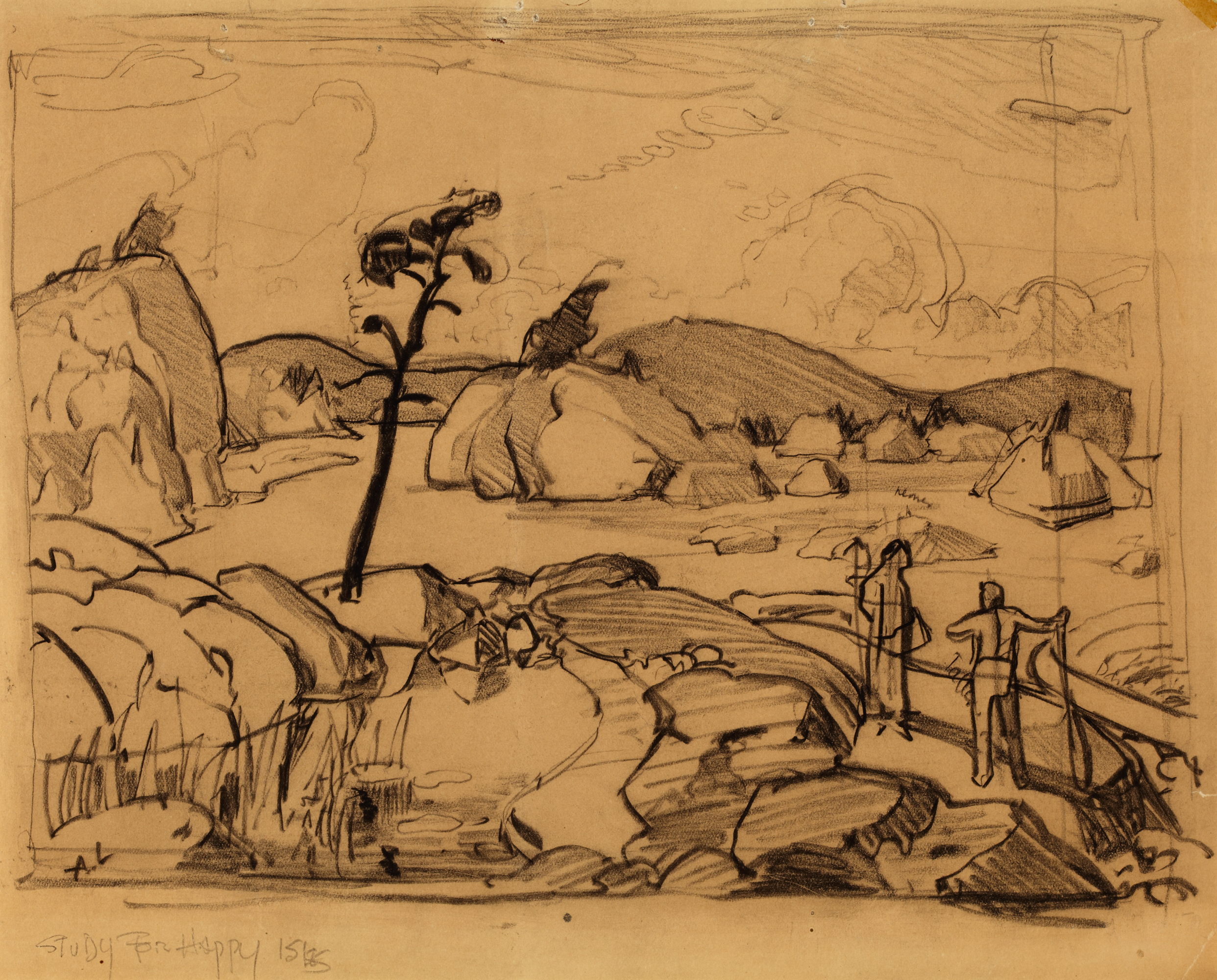
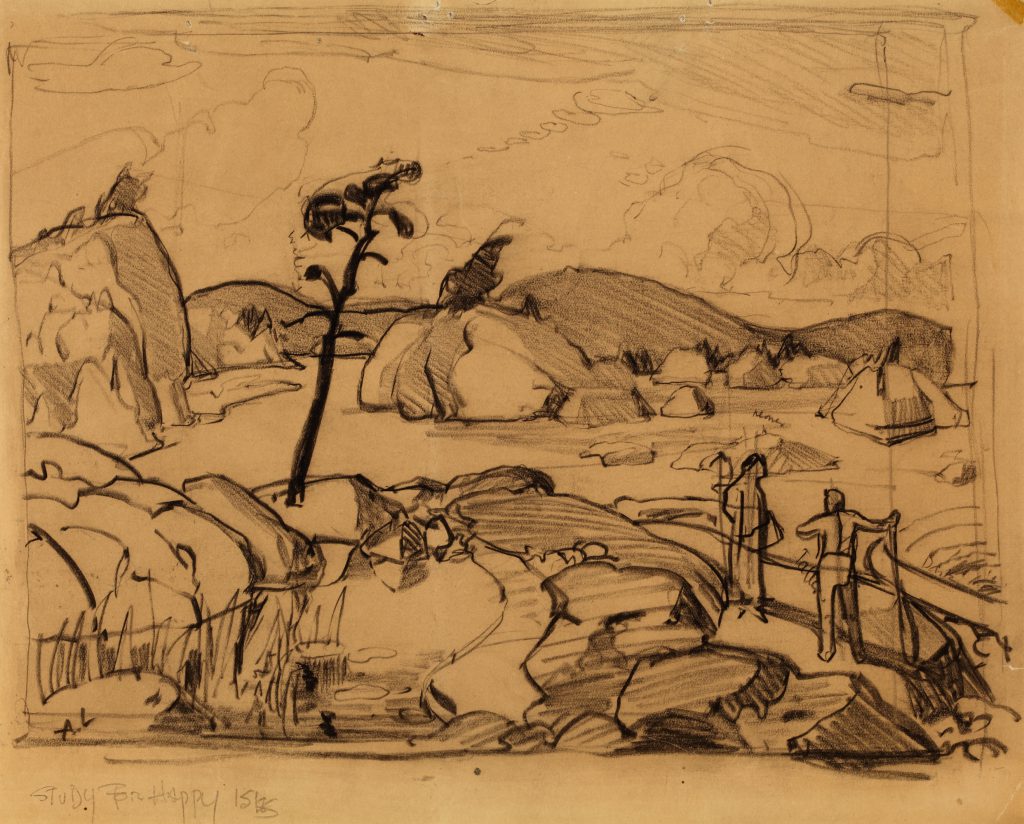
Arthur Lismer (Canadian, b. England, 1885 – 1969), Study for The Happy Isles, c.1924, charcoal on paper. Gift of Charles Goldhamer, 1984.

Arthur Lismer’s Study for Happy Isles (c. 1934) is another example of a sketch in preparation for a large canvas now in the collection of the University of Saskatchewan. It shows how Lismer structured and planned the composition and spacing of the painting. The study depicts Georgian Bay, affectionately referred to as Happy Isles, and captures Lismer’s interest in detailed foregrounds with the figures on the dock.

Drawing from both life and their imagination, artists use the medium to explore and experiment. As artist Paul Klee once said: “A drawing is simply a line going for a walk.” The artworks included in this exhibition take us on a journey with the artist and show how drawings are not just simply a step in the creative process, but can be enjoyed as individual artworks in and of themselves.

Arthur Lismer (Canadian, b. England, 1885 – 1969), Fox Terrier, c. 1942, conte on paper. Gift of Isabel McLaughlin, 1989.

F.S. Coburn (Canadian, 1871 – 1960), The Actress , n.d., conte and coloured crayon on paper. Donated by the Ontario Heritage Foundation, 1988.

Lawren S. Harris (1885 – 1970), Abstract Drawing No. 525, n.d., graphite on paper. Gift of Harold Shenkman, 1987.

Charles A. Winter (1869 – 1942), Group of Character Sketches (from the John Gordon Portfolio), 1897, ink and graphite on paper. Gift of the heirs of the Hortense Gordon estate, 1976.

Clarence Gagnon (1881- 1942), Nude Study No. 2, 1903, conte on paper. Donated by the Ontario Heritage Foundation, 1988.

Ozias Leduc (Canadian, 1864 – 1955), Untitled, n.d.,
graphite on paper, laid down. Purchase, 2002.

F.S. Coburn (Canadian, 1871 – 1960), Power, 1891, charcoal on paper. Donated by the Ontario Heritage Foundation, 1988.

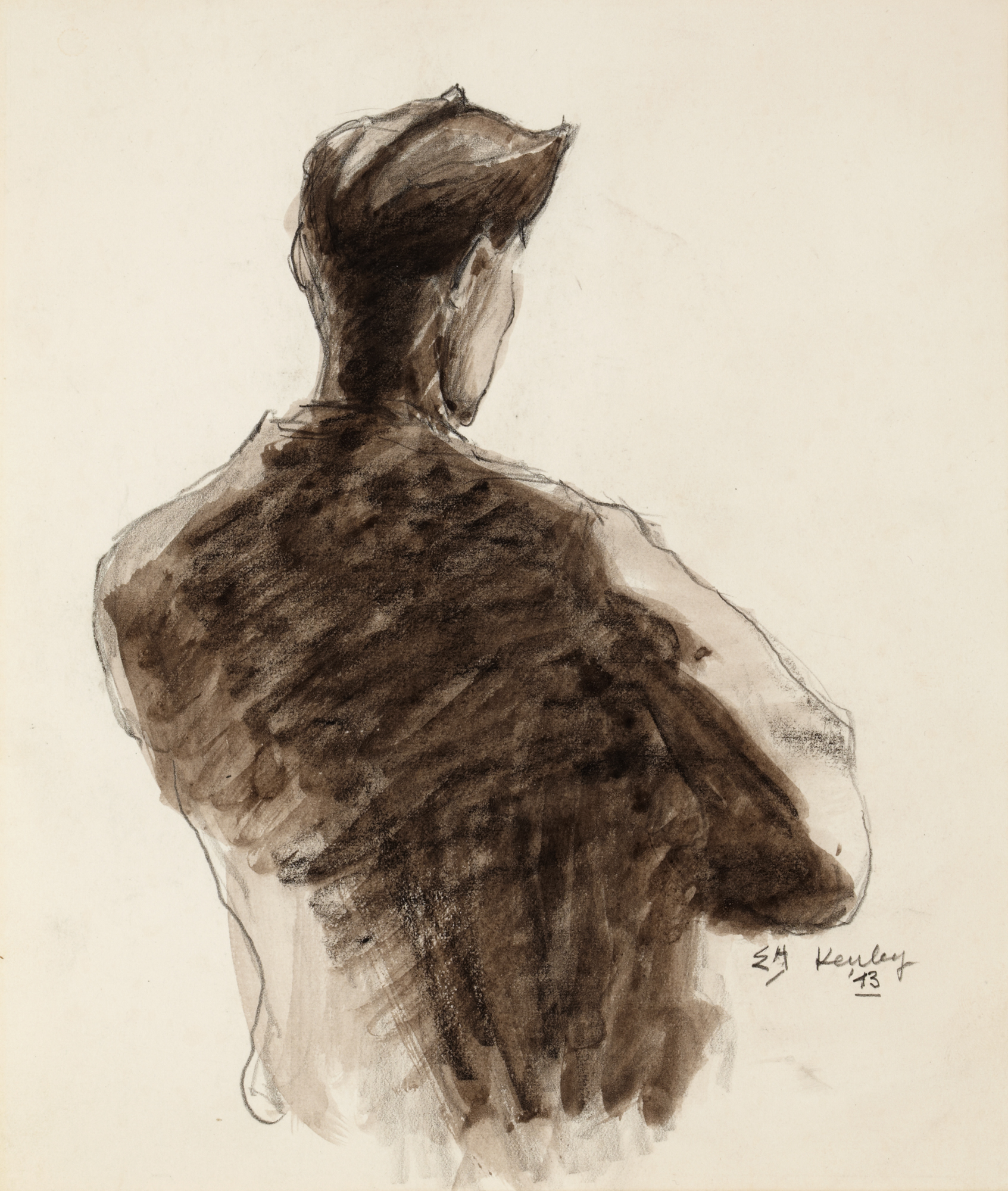
Edwin Holgate (Canadian, 1892 – 1977), Air Mechanic at Kenley, ink wash, 1943, graphite and conte on paper. Donated by the Ontario Heritage Foundation, 1988.

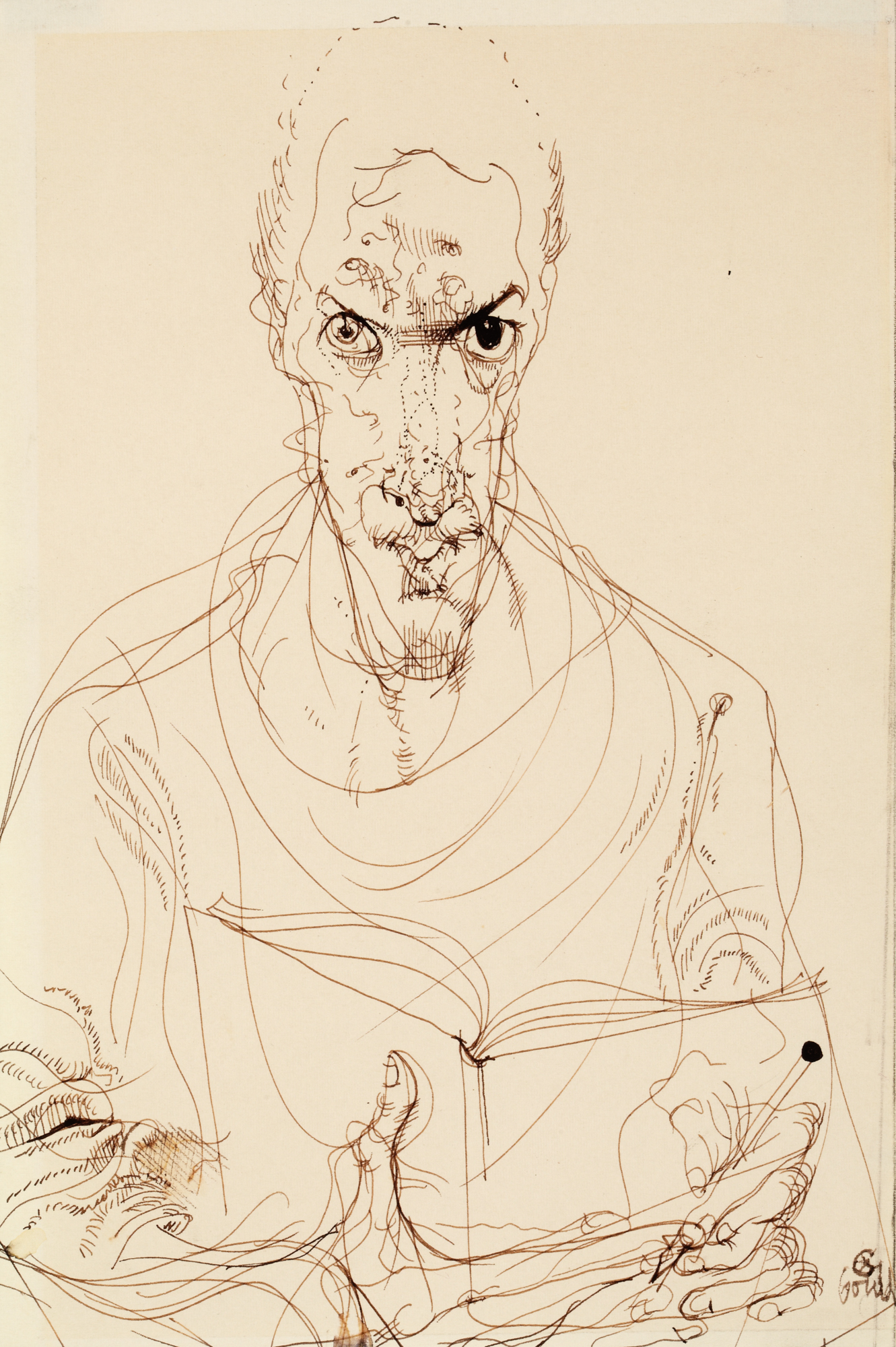
John Gould (Canadian, 1929-2010), Untitled, c.1980, ink on paper. Gift of Kay Kritzwiser, 1994.

Arthur Lismer (Canadian, b. England, 1885 – 1969), Study for The Happy Isles, c.1924, charcoal on paper. Gift of Charles Goldhamer, 1984.

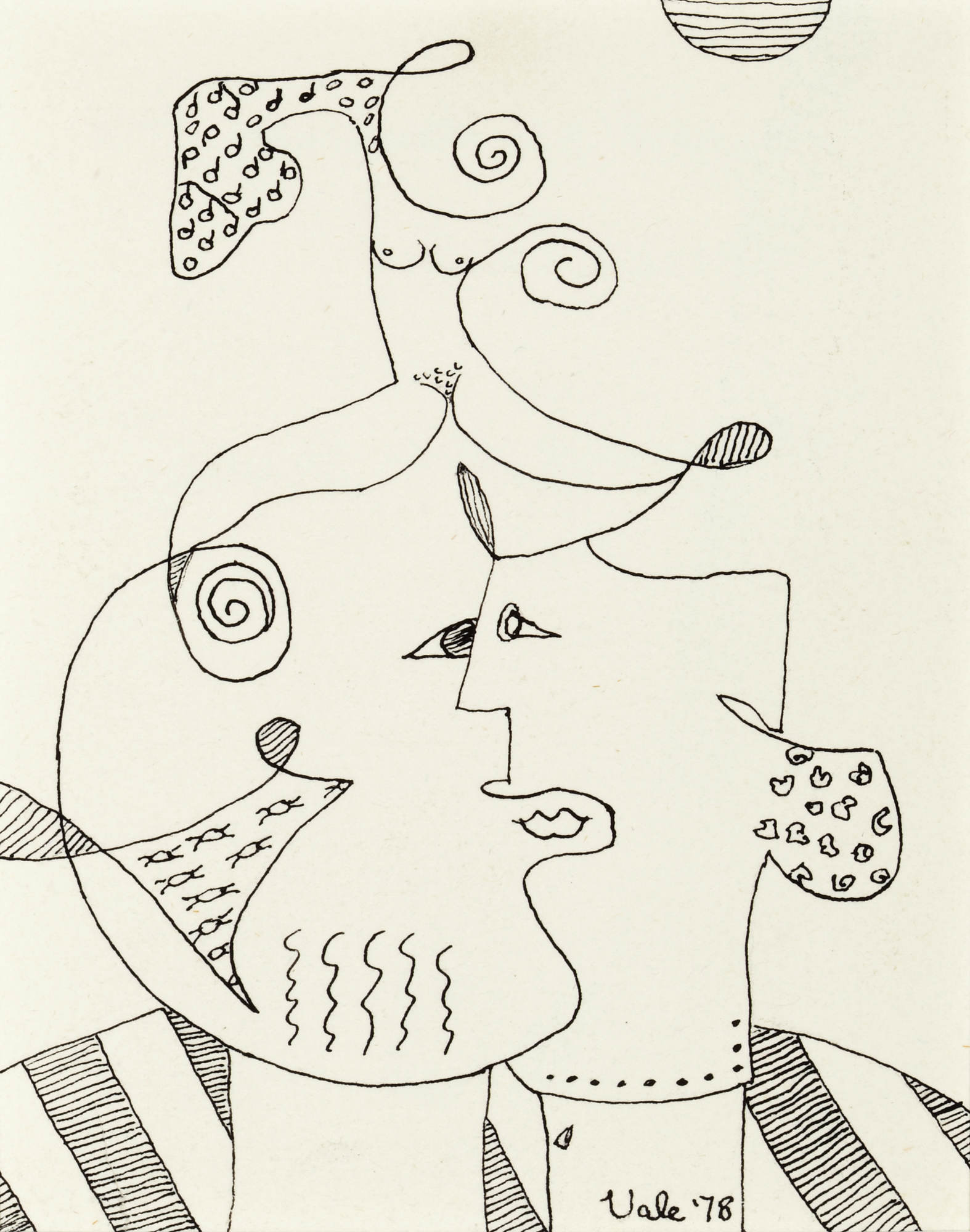
Florence Vale (Canadian, b. England, 1909), Arguing Over Music, 1978, pen and ink on paper. Gift of Kay Kritzwiser, 1994.

William Blair Bruce (Canadian, 1859 – 1906), Untitled (anatomical studies), n.d., pen and ink on paper. Purchased with the assistance of the Government of Canada through the Cultural Property Export and Import Act, 1986.

A.Y. Jackson (Canadian, 1882 – 1974), Close-up Study of Rocky Shore with Puddle, n.d., graphite on paper. Gift of Naomi Jackson Groves, 1992.

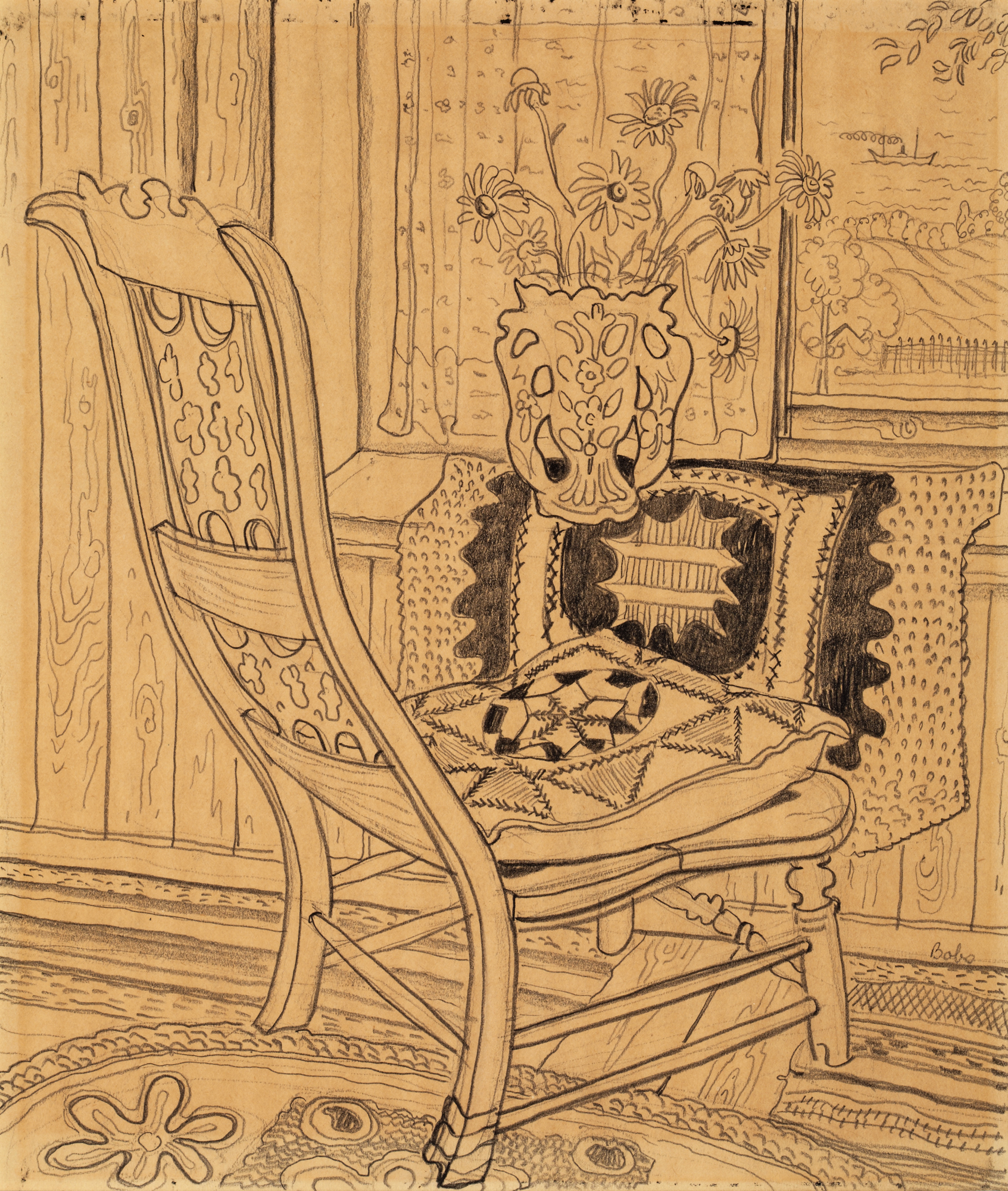
Bobs Cogill Haworth (1900 – 1988), Old Chair, Quebec, n.d., graphite on paper. Gift of Isabel McLaughlin, 1989.

Paul Caron (Canadian, 1874 – 1941), Study of Tree Shadows on a Wall, 1931, graphite and ink on paper. Donated by the Ontario Heritage Foundation, 1988.

Robert Ross (Canadian, b. 1902), untitled (portrait study of a woman), 1939, charcoal on paper. Gift of Pauline Ross, 1991.

William Blair Bruce (Canadian, 1859 – 1906), Sketch for “Bathers at Capri”, n.d., graphite on paper. Purchased with the assistance of the Government of Canada through the Cultural Property Export.

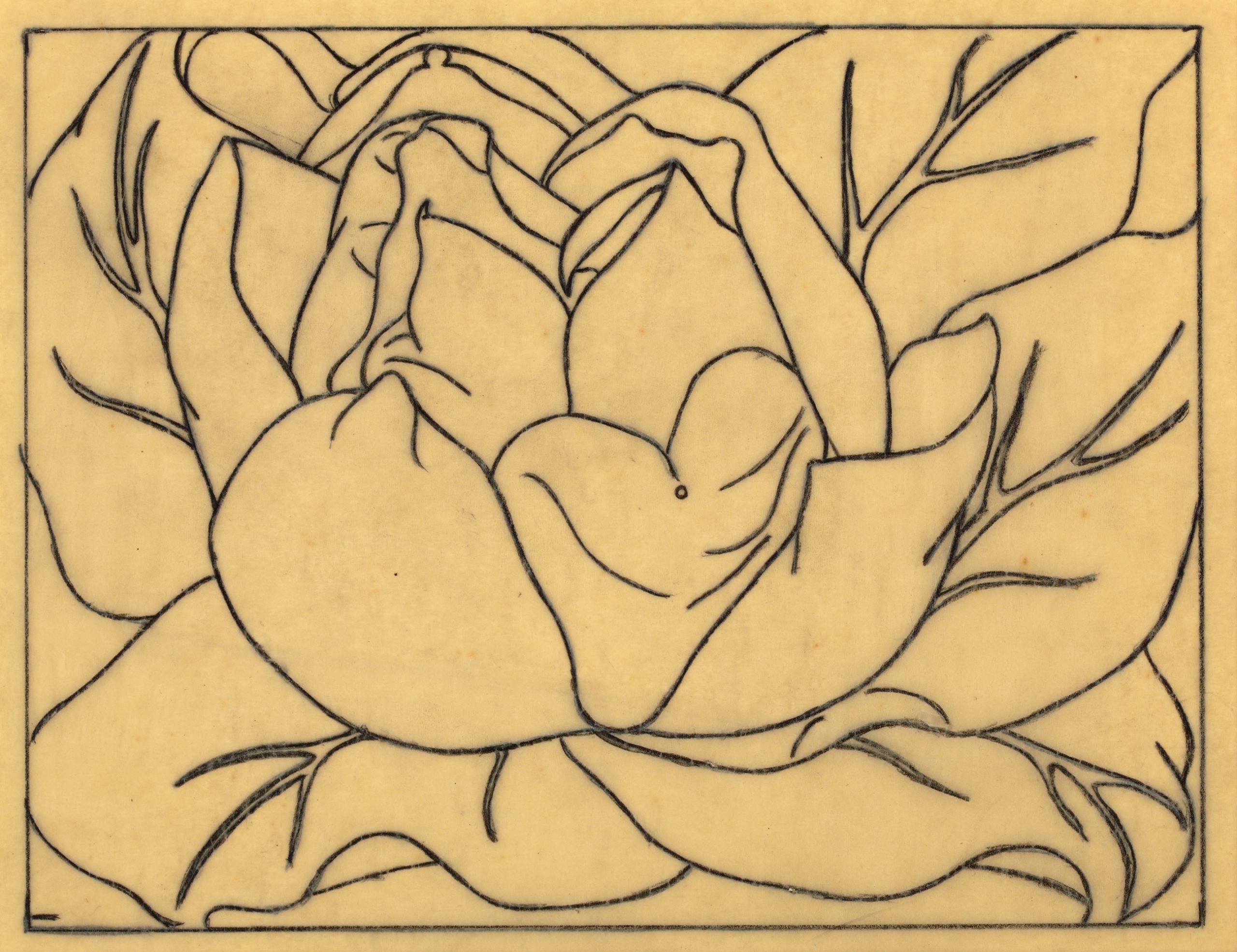
Henrietta Shore (American, b. Canada, 1880 – 1963), Transfer drawing for sketch of “Magnolia”, c.1925/30, pencil and coloured pencil on paper. Purchase, 1994.

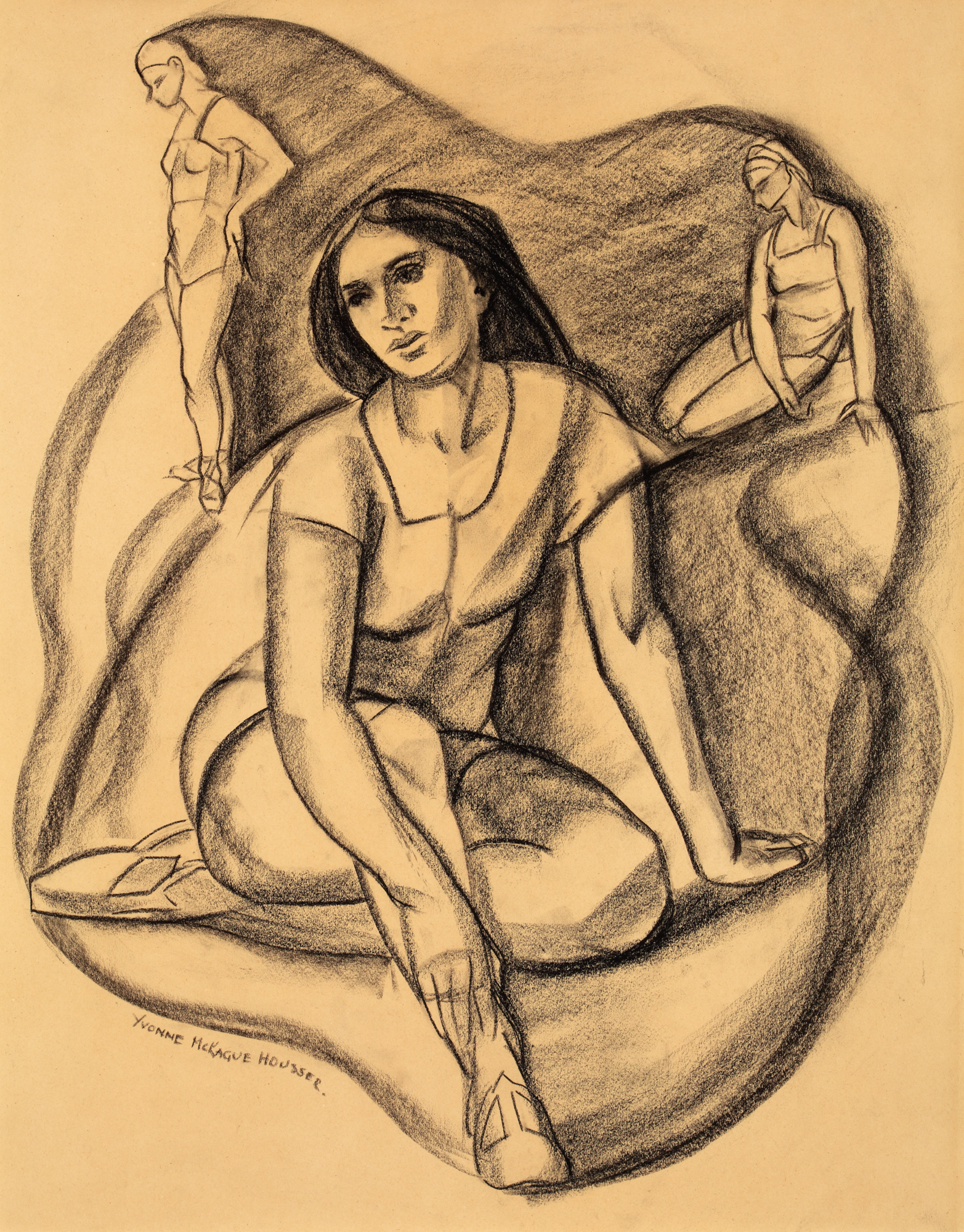
Yvonne McKague Housser (Canadian, 1897-1996), Tired Dancers, 1950, conte and graphite on paper. Gift of W. Ross Murray, 1977.

Isabel McLaughlin (Canadian, 1903-2002), Sketch for Tree, c. 1935, charcoal on paper. Gift of the estate of Isabel McLaughlin, 2003. Sketch for a painting in the National Gallery of Canada’s collection.

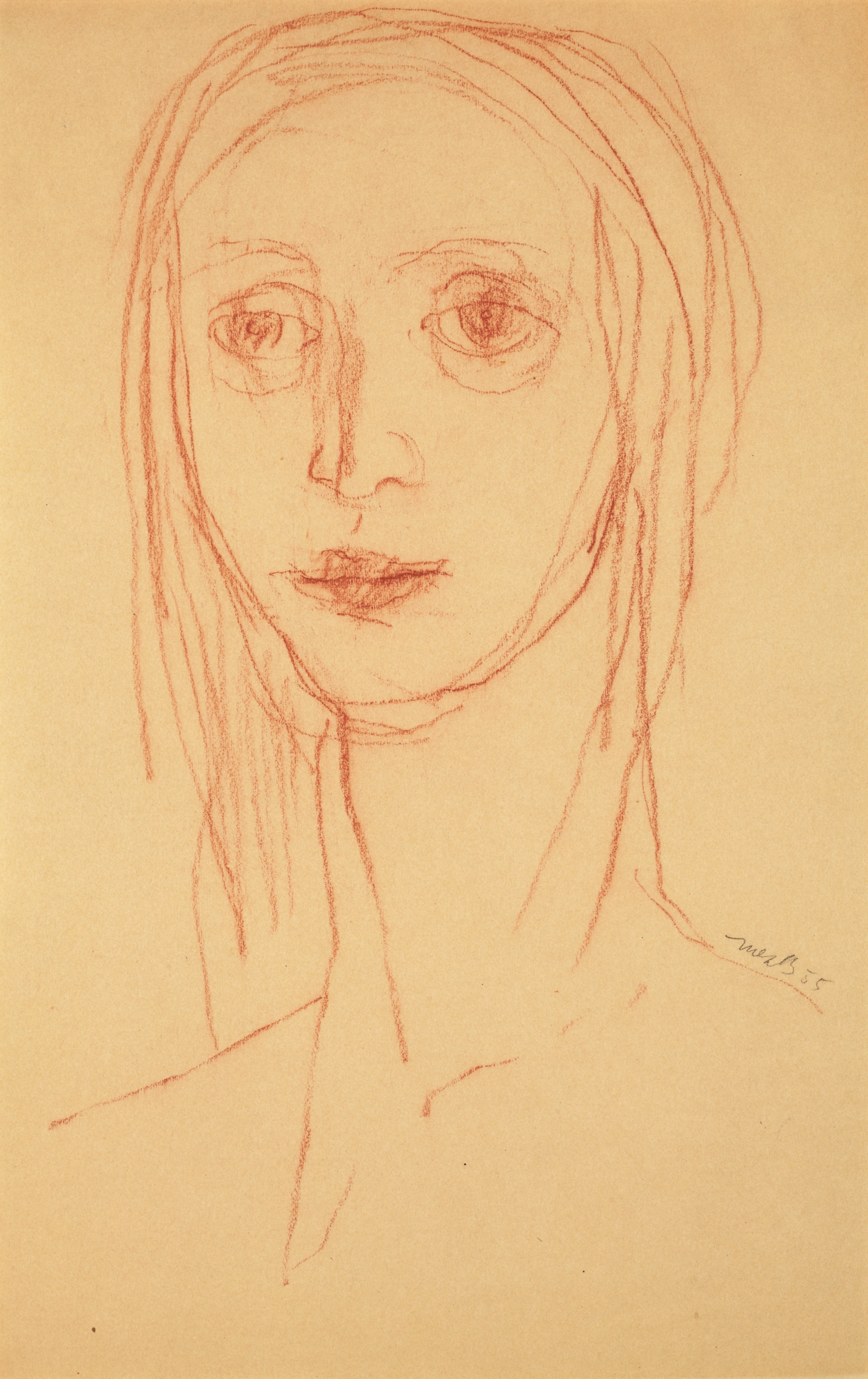
Miller Brittain (Canadian, 1912 – 1968), Female Head I, 1955, conte on paper. Anonymous gift, 1978.

Yvonne McKague Housser (Canadian, 1897 – 1996), Walking with a Sketchbook–Mexico, n.d., ink on paper. Gift of J.V. McKague, 1995.

Ray Mead (Canadian, b. England, 1921-1998), Untitled, pen, n.d., ink on paper. Gift of the Estate of Ray Mead, 1999.

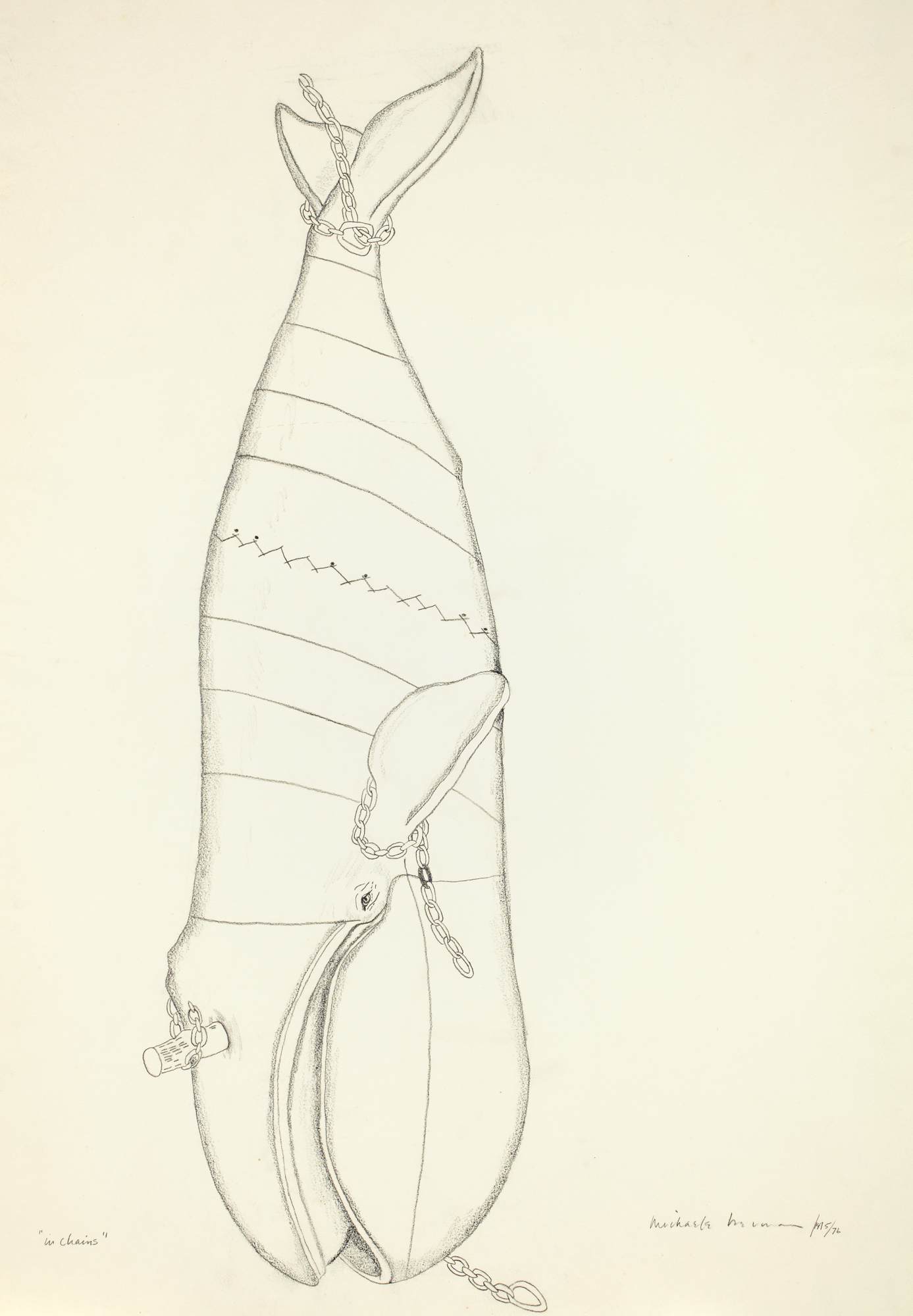
Michaele Jordana Berman (Canadian, b.1947), In Chains, 1975-76, graphite on paper. Purchase, 1977.

Dani Crosby: Caregiving

We recently partnered with Dani Crosby Art on a community engagement activity in celebration of caregivers, inspired by one of our current online exhibitions, A Profession of Care. In this activity, Dani asked our audience to contribute short stories and thoughts on caregivers and the act of care giving, based on a series of writing prompts.

These stories have been collected and turned into portraits by the artist in which she has visually honoured, represented, and acknowledged the qualities and experiences of caregivers of all types. We would like to thank all those who contributed their incredibly moving and personal stories to this project.

Beginning on May 22, 2020, we will slowly reveal each of the five artworks that Dani has created and post it here on this page, as well as on our social media channels.

The artworks are available for FREE as a digital download, so please feel free to print a copy for yourself or keep a digital copy. If you would like to share the digital copy online, please ensure that proper credit is given to the artist. 

Artwork #1

Caregivers: Art Therapists/Therapists

“Art therapists and therapists give us permission and a safe space to reveal ourselves, our experiences, to untangle, to give a name to our demons and learn to live with them. They help us bring ourselves to a point of functionality where we can perform within our individual roles in a healthy and positive way. They teach us positive outlets for difficult emotions and memories. They teach us how to process experiences. We do the work. They work with us. They show us how that very hard, very important work can be done. Often that work goes unseen. That time we spend working on ourselves does not necessarily look like ‘productivity’ by broad societal standards. That time we spend working on ourselves does not always produce or present in a way that is immediately recognized. It’s not a marketable product or the ability to provide labour to a company. It is time spent growing a person, becoming the version of yourself you want to become. It gives us the tools we need to move through and contribute to different spaces and relationships: a classroom, a workplace, family bonds, friendships, platonic and romantic partnerships. If we so choose. Art Therapists and Therapists see us and help us look at ourselves until we can do so with acceptance or perhaps love instead of shame or perhaps anger.”

Artwork #2

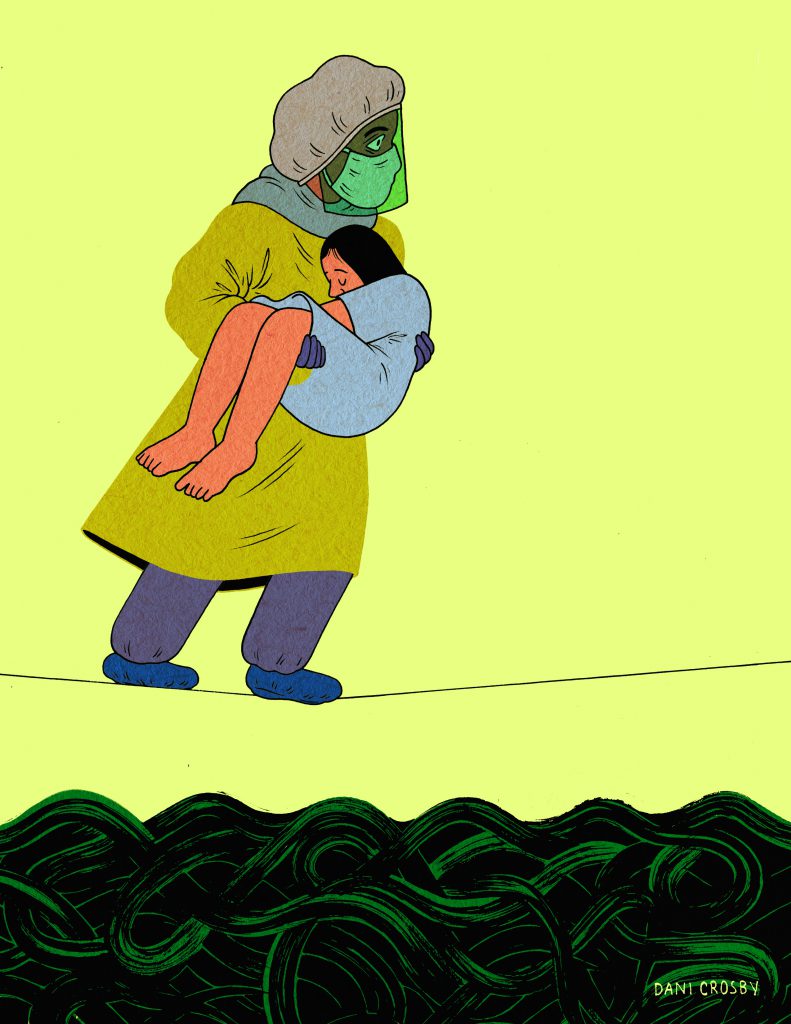
Caregivers: Nurses

“These images were inspired not only by stories of and from Nurses but also PSWs, Paramedics, Doctors and other medical professionals. I read all of the stories sent to me by my community. I read local articles being written about medical professionals before and during the time of COVID19. I read many social media posts by individuals in our community talking about the current and broader experiences of our medical professionals. The medical professionals I connected with both directly and indirectly give so much, risk so much, each and every day.”

Artwork #3

Caregivers: Nurses

“They provide emotional care as well as physical care to their patients. They are with their patients through their worst, back to their best, into and past their final moments. They are the messengers of the good news and the news no one wants to give or receive. They maintain composure in the face of chaos, they push past their limits and work through conditions where proper support and resources are not made available. They are with us while we are at our most vulnerable and treat us with the dignity we all deserve, at all stages through our life and into our decline. Their chosen path puts them at great risk and provides them with great joy. It is a balancing act, a struggle, a calling, a role which benefits our society immensely. May we acknowledge and honour their importance during and beyond our moments of shared and individual crisis.”

Artwork #4

Caregivers: Teachers

“This image represents the cyclical flow of energy in the classroom. The constant giving of one’s self to students, the return of that energy and the struggle to reach all students. Each student had a unique personality, unique needs, unique personal circumstances. There is a need for hyper awareness and sensitivity to the impact words and actions might have on a student, each and every day. This image focuses on teachers who work with young children. But the challenges and joys illustrated here can be applied to teachers who work with any age group. Teachers extend themselves within and beyond their limits to maintain balance in the classroom, and between all the various roles in their lives. Students learn from their teachers, from each other, and teachers are constantly learning from their students. Each participant in a classroom grows together and leaves the classroom each day better equipped to navigate their own lives and participate the world around them.”

Artwork #5

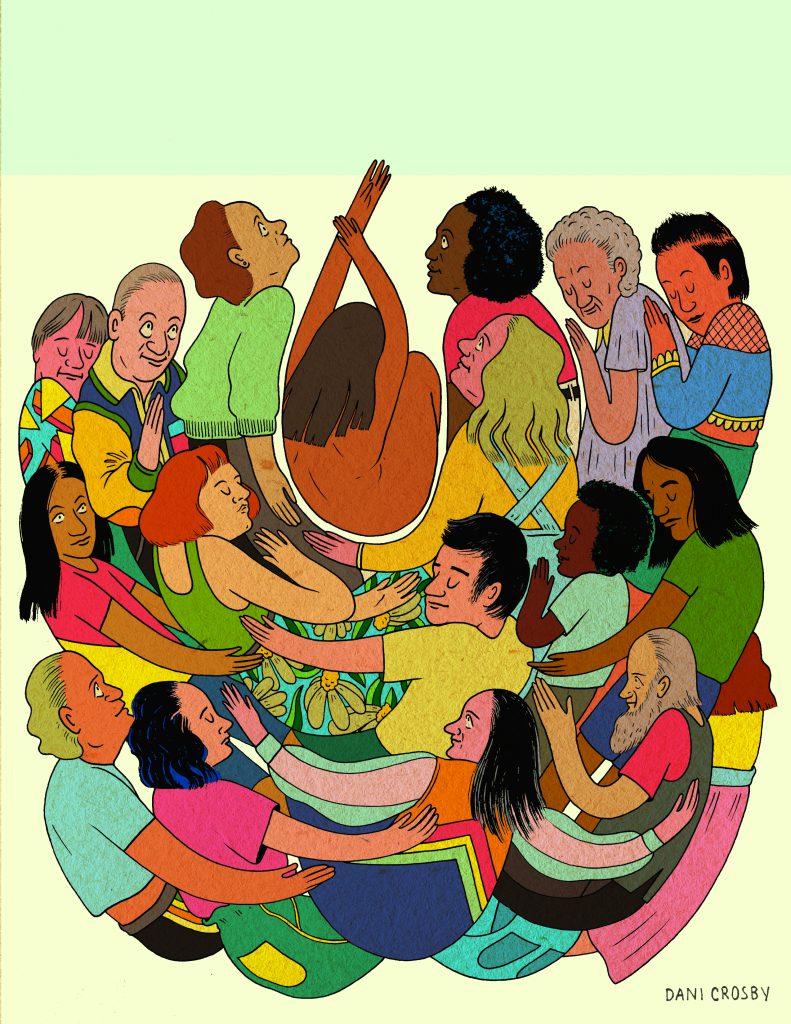
Caregivers: Family and Friends

“Family are Parents, Mothers and Fathers, Siblings, Sisters, Brothers, Cousins, Aunts, Uncles, Grandparents, Grandmas, Grandpas, partners, and friends. Family can be born into and family can be chosen. Family can be people we meet in person and in the virtual world. Family are the people who help us grow, accept us, protect us, nurture and love us.

The nude figure in the upper middle of the image represents vulnerability, need, and growth as a result of personal determination and the support from family. The figures surrounding them represent all of the people in their family. May we all find the family we deserve.”

Looking Out, Looking In

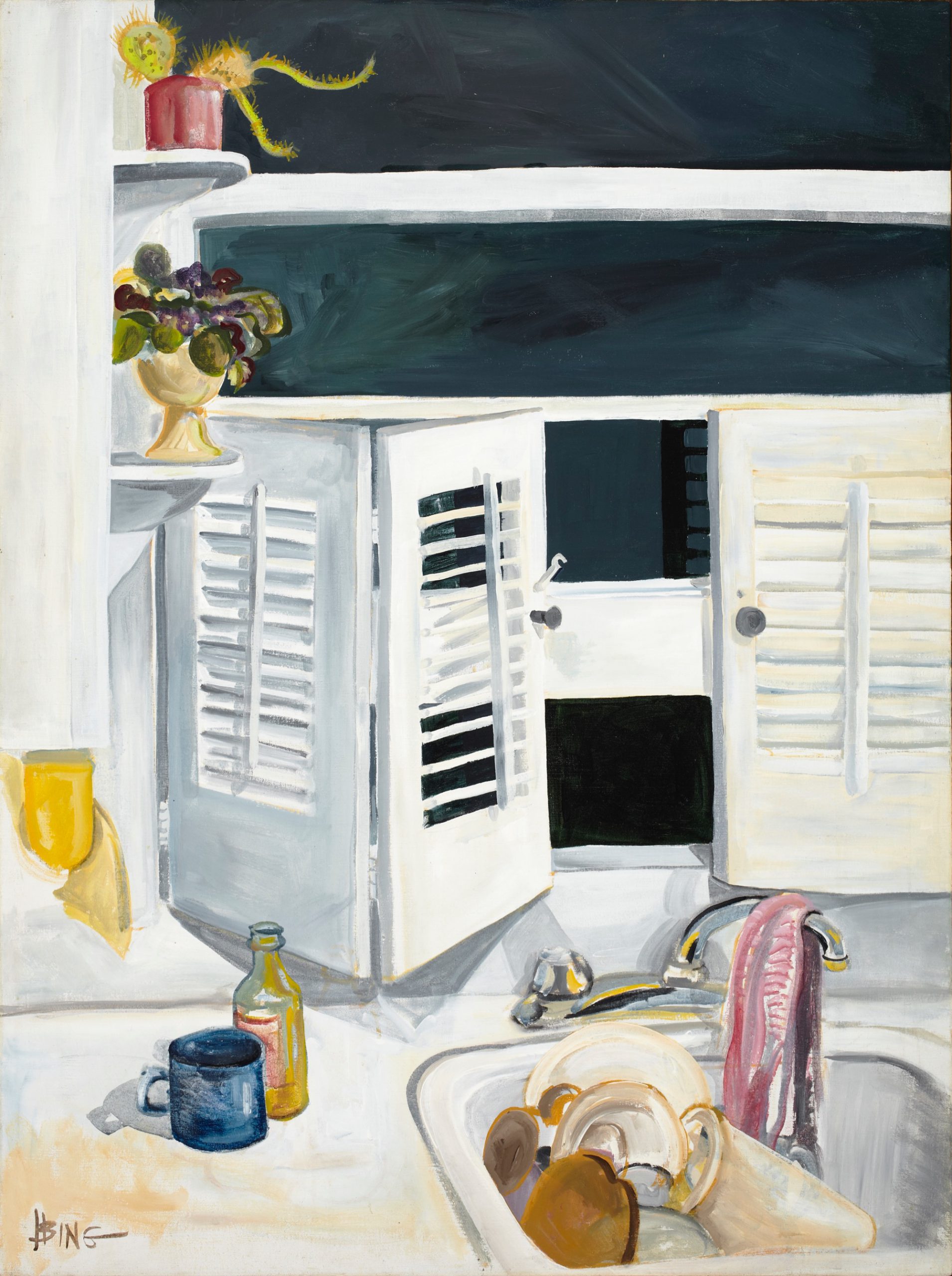
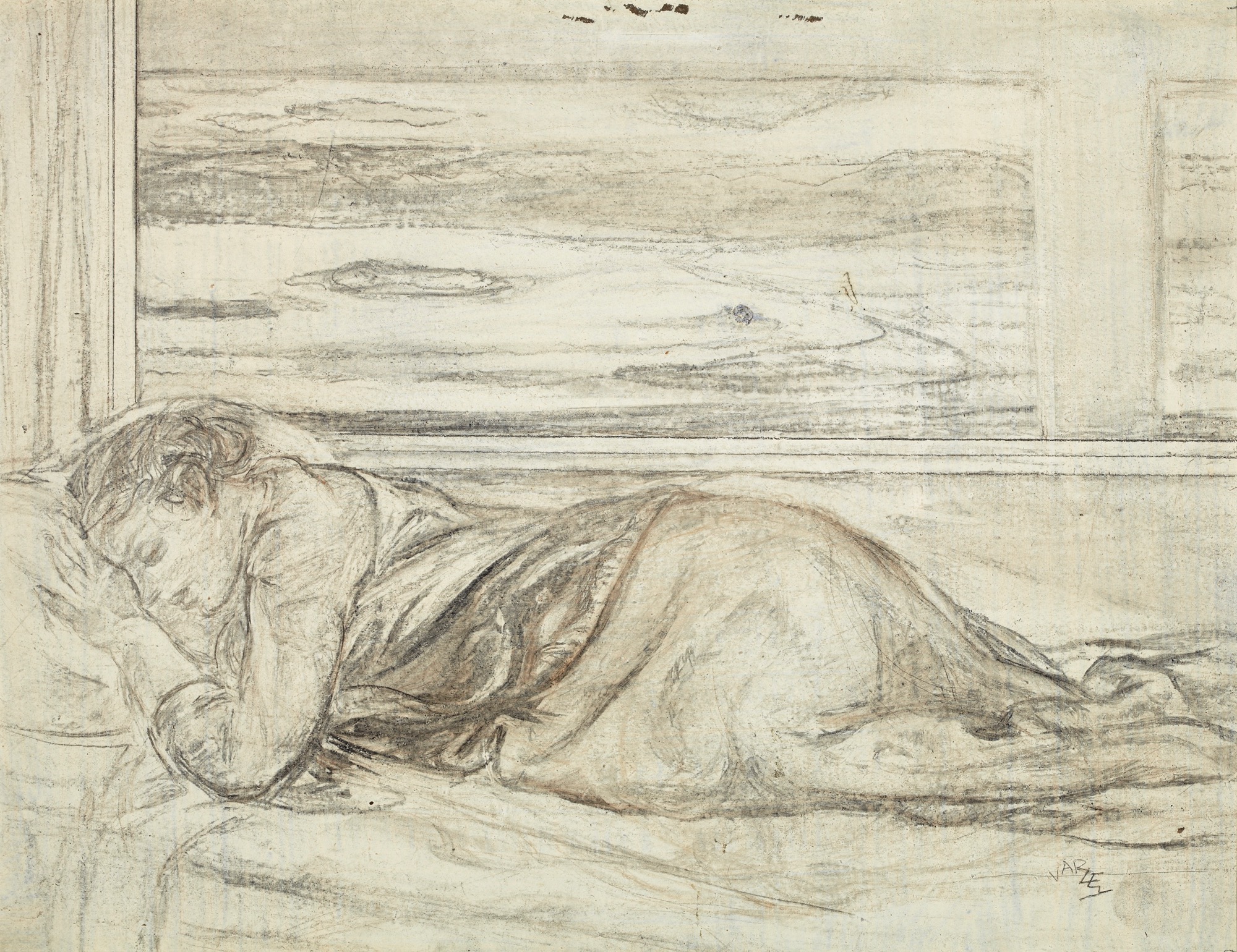
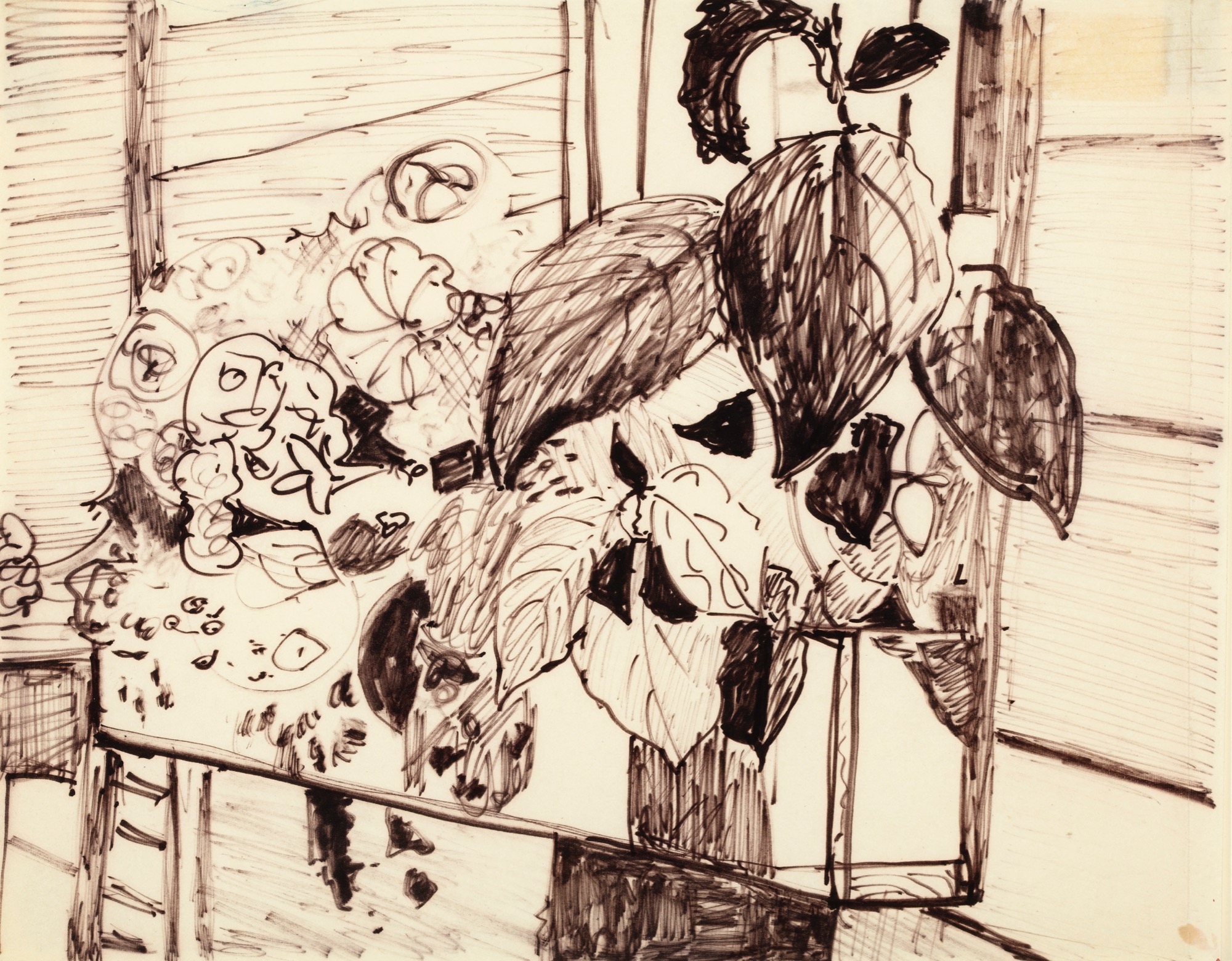
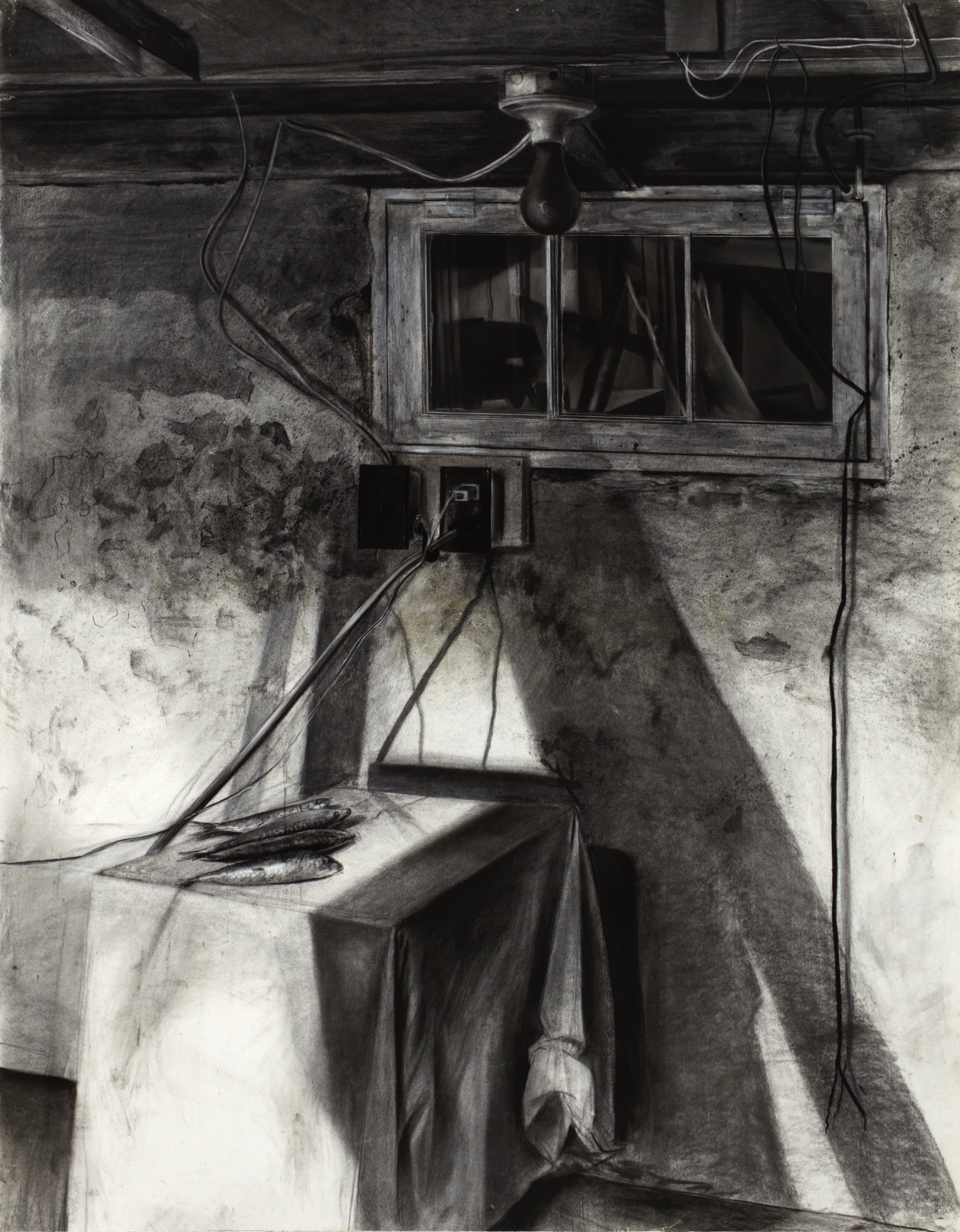
During this time of social-distancing and, in some cases, isolation, we are watching the world go by from our windows. They are portals through which we can escape and take in the views. Windows have long been a popular motif in art, often used for their ability to convey different perspectives or emotions and to frame interior spaces. This exhibition, featuring works from the RMG’s Permanent Collection, delves into the many ways artists use windows in their work.

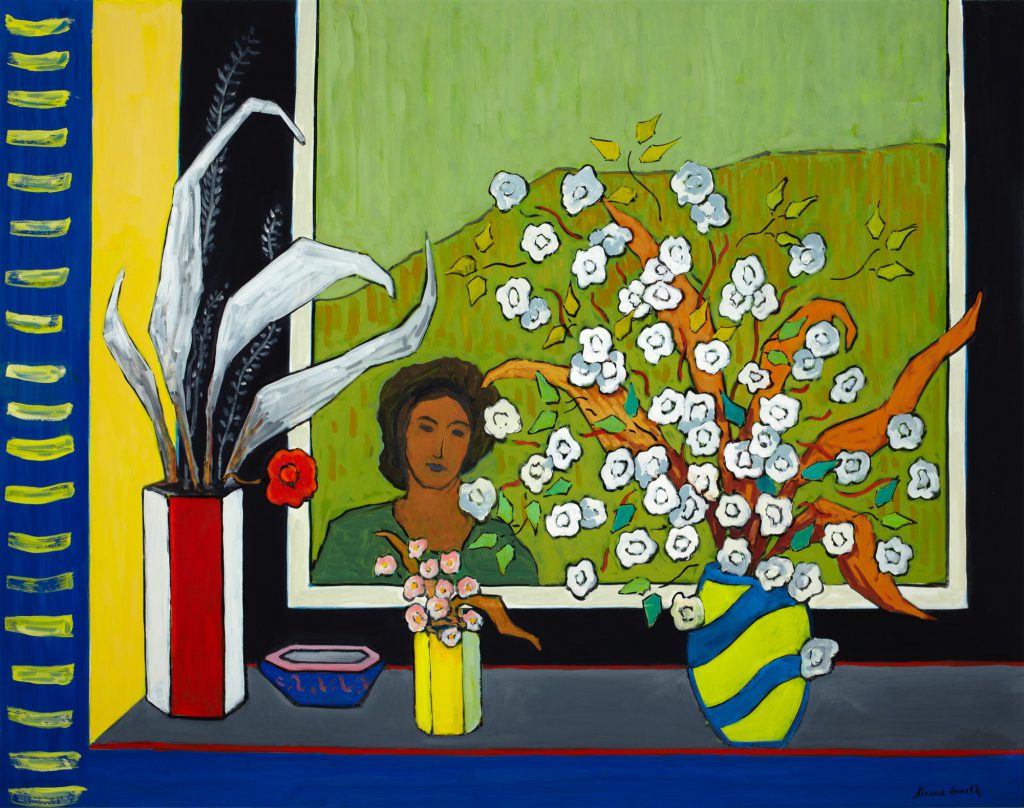
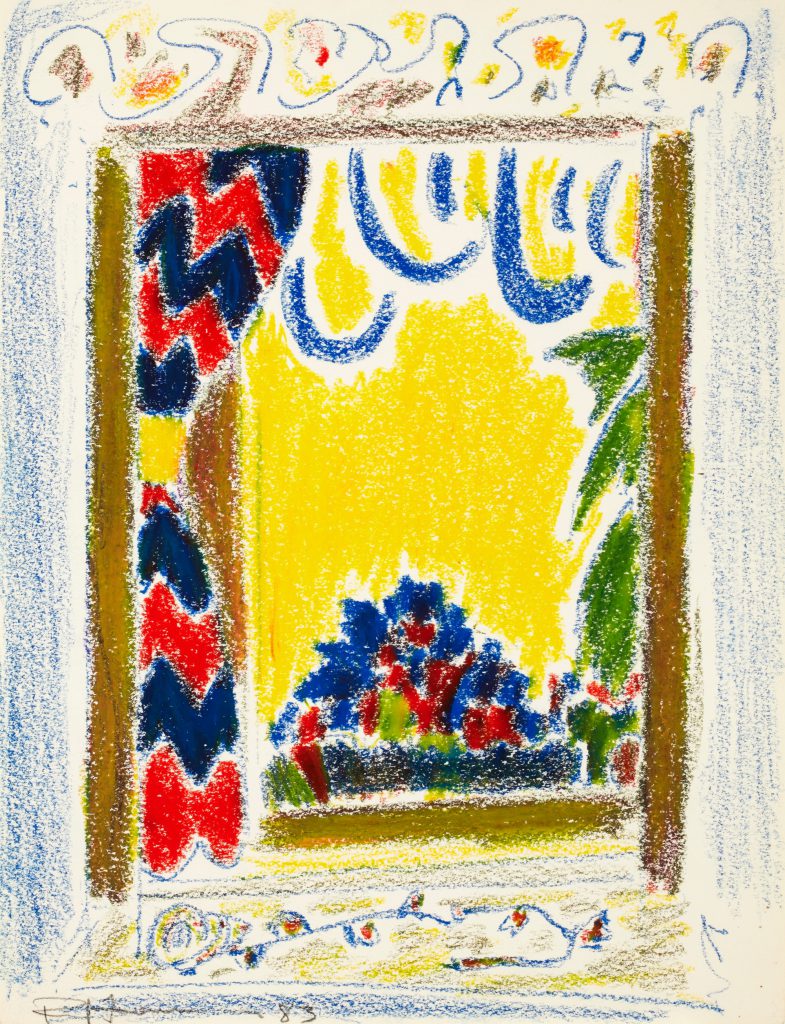
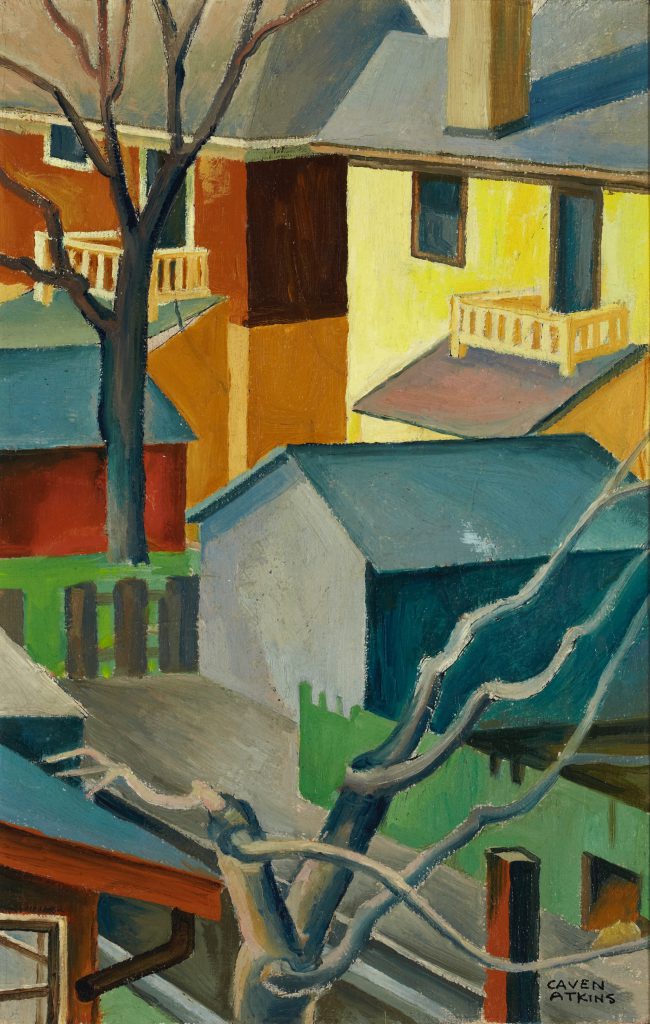
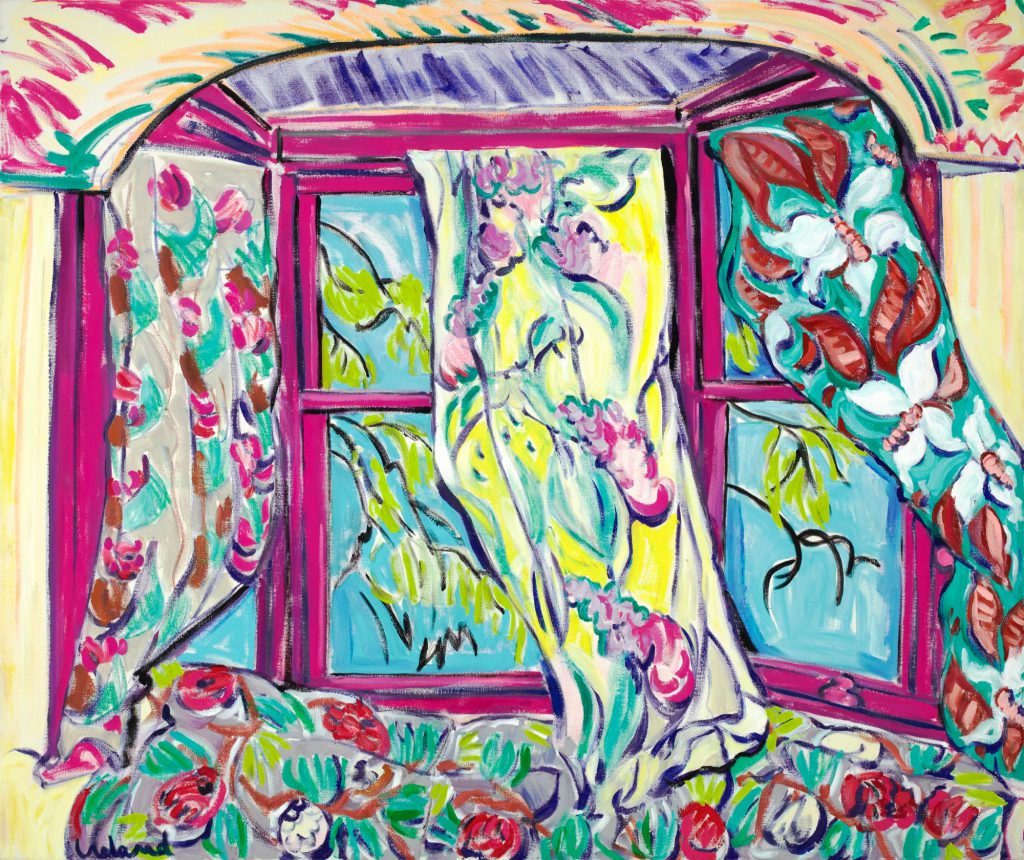
Because windows are frames within themselves, they can provide interesting perspectives between the inner and outer world. In Bruce Smith’s painting Face in the Window (Figure 1.) the landscape and figure outside are of equal importance to the window frame and bouquets on the sill. Here, the natural beauty that you would typically see outside, is sitting in vases inside while a women looks in through the window—a playful inversion of these spaces. While in other works, the window is the subject itself. For example, in Paul Fournier’s Untitled (Sketch for Florida Mirror Series) (Figure 2.) and Denise Ireland’s  Studio on Albany (Figure 3.), the artworks are framed by the contours of the window. Through both windows you get a glimpse of the natural world, but it’s only a minimal view, with the window itself being the focal point. In contrast, Caven Atkins’ painting From My Studio Window, Winnipeg (Figure 4.), the window frame is not visible but instead the focus is on the view; a look at the world from above, offering a different perspective on urban life.

Figure 1. Bruce Smith (Canadian, 1925 – 2005), Face in the Window, oil on Masonite, 1996. Gift of Lorne Smith, 1998.

Figure 2. Paul Fournier (Canadian, b. 1939), Untitled (sketch for Florida Mirror series), coloured pencil and wax crayon on paper, 1983. Gift of the Estate of Alkis Klonaridis, 1993.

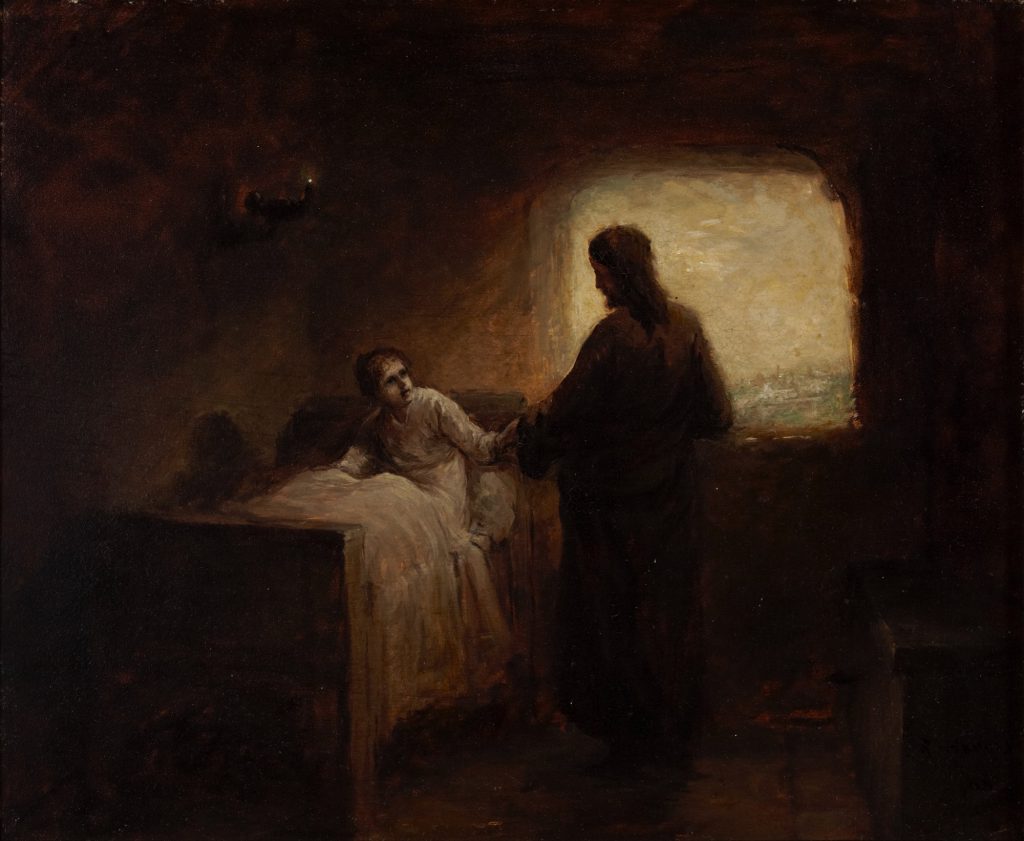
The window can also simply be an architectural or compositional accent in the background of an interior space, providing a source of light or even just adding a point of interest. For example, in the religious painting by Robert Harris, Bedside Scene (Figure 5.), the light spilling through the window has the clear purpose of illuminating the young boy sitting in darkness.

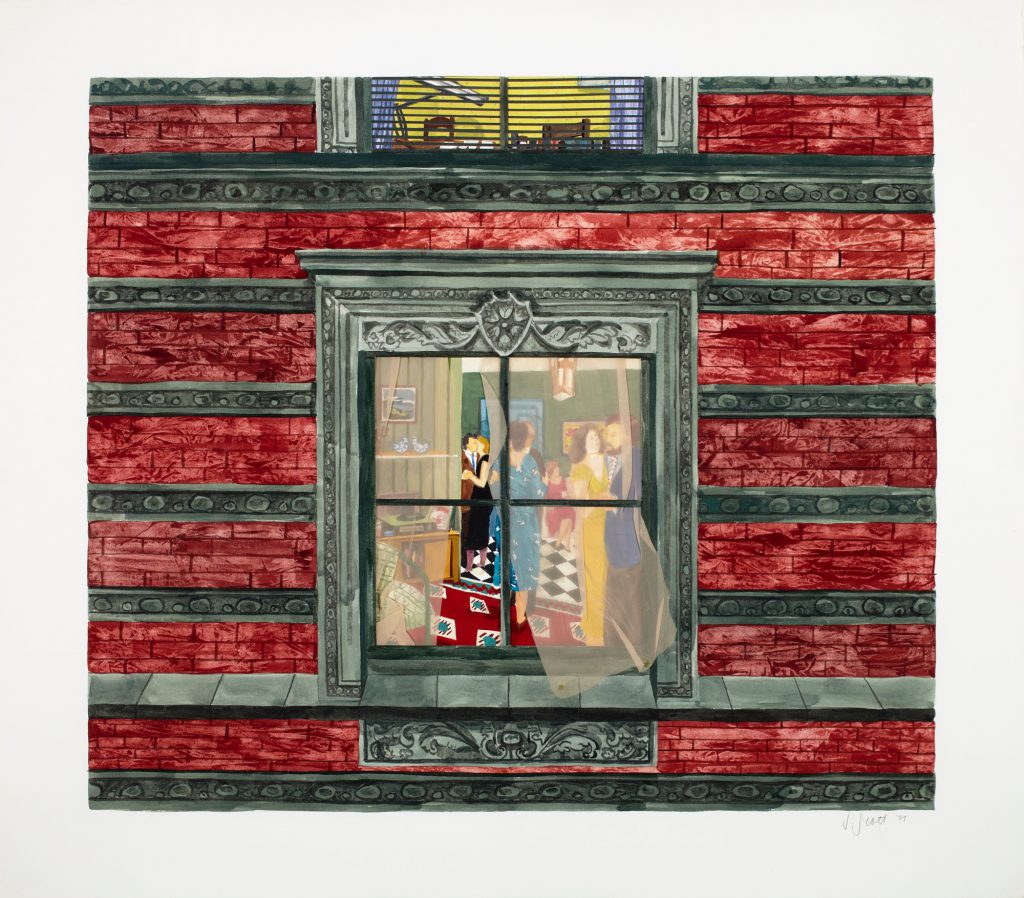
In stark contrast to the interior views of windows, inside looking out, there are a couple examples of windows as seen from outside. While peering through the sheer curtain of a window in Susan Scott’s, The Party (Figure 6.), you can see the glowing lights of a party with guests dancing, giving the viewer a glimpse into their private world.

Figure 5. Robert Harris (Canadian, 1849 – 1919), Bedside Scene, oil on millboard, 1885.

Figure 6. Susan Scott (Canadian, b. 1949), The Party, gouache, graphite and fabric on paper, 1979.

Figure 3. Denise Ireland (Canadian, b. 1949), Studio on Albany, acrylic and pastel on canvas, 1981.

Figure 4. Caven Atkins (Canadian, 1907-2000), From My Studio Window, Winnipeg, oil on panel, 1931. Gift of Christie Hewlett, 2009.

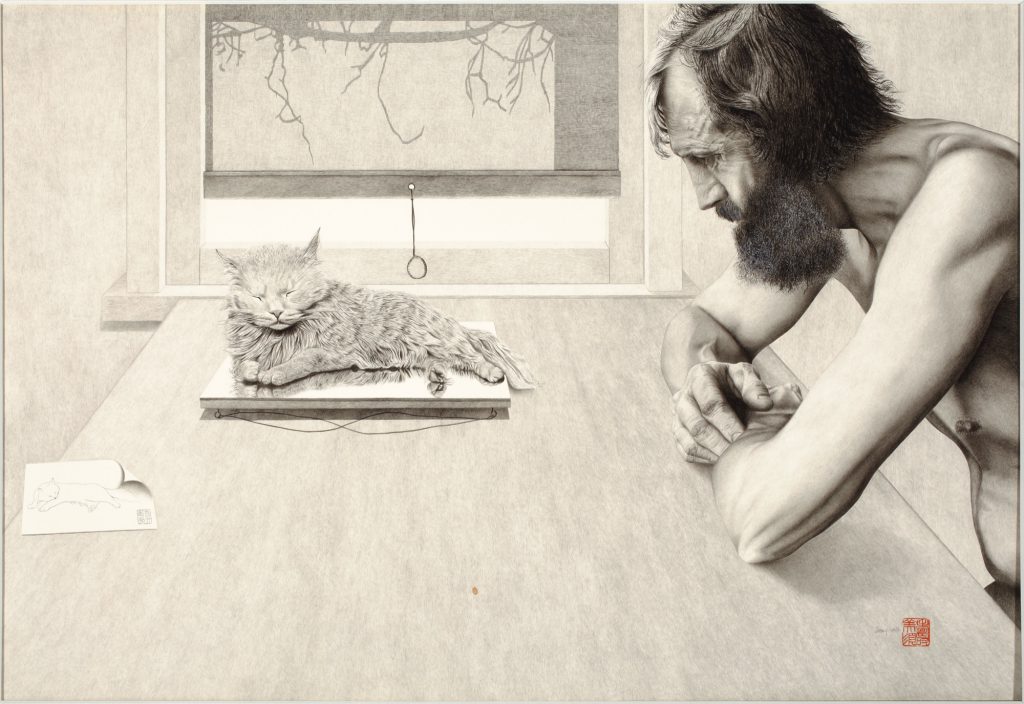
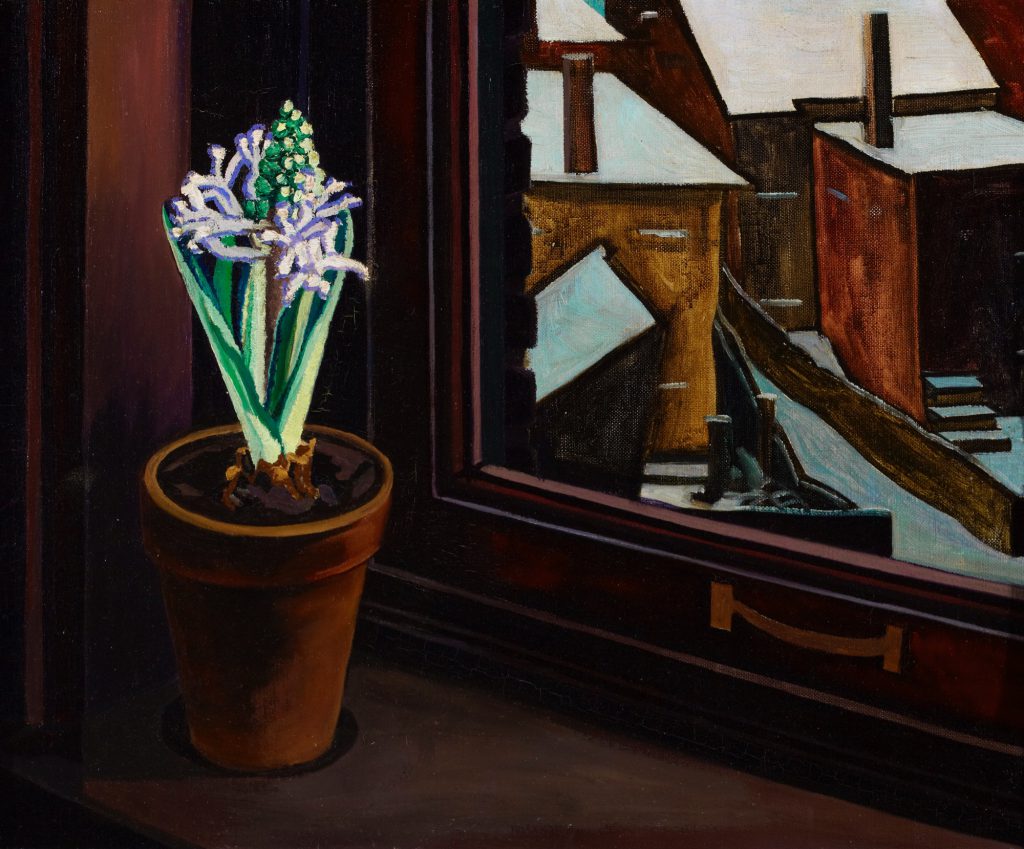
Windows can also convey feelings of loneliness and yearning, as well as be a metaphor for hope. For example, in Jeremy Smith’s drawing, Still Life (Figure 7.), a forlorn looking man stares at his cat with the blinds pulled down over the window in the background. The lowered blinds create a barrier between this man and the outside world, adding to the melancholy of the work. While in Isabel McLaughlin’s Budding Hyacinths (Figure 8.) the stark winter landscape through the window and the beautiful hyacinths budding inside suggests the hopeful sign that spring is right around the corner.

Figure 7. Jeremy Smith (b. 1946), Still Life, ink on paper, 1973. Gift of Mira Godard, 1991. Used with permission from Mira Godard Gallery.

Figure 8. Isabel McLaughlin (Canadian, 1903 – 2002), Budding Hyacinths, oil on canvas, c.1933. Gift of Charles Goldhamer, 1983.

Windows are our link to both inner and outer worlds. Artists have been inspired to use windows in their work for centuries, giving them ample ways to explore and think about the world around them, which is fitting as they can do the same for us.

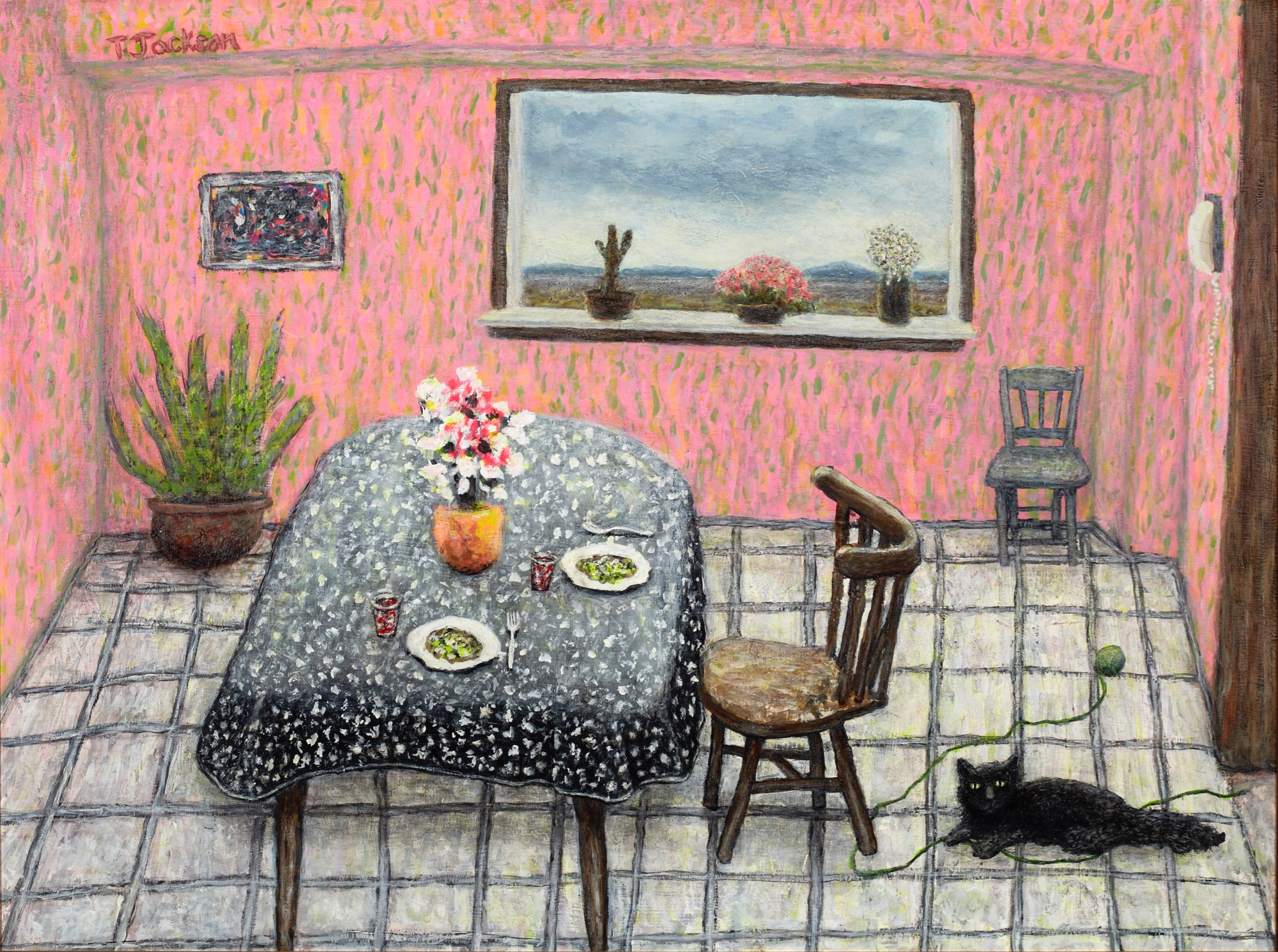
Terry Jackson (Canadian, b. 1945), Dinner with Blackie, acrylic on masonite, 1993. Gift of the artist, 1993.

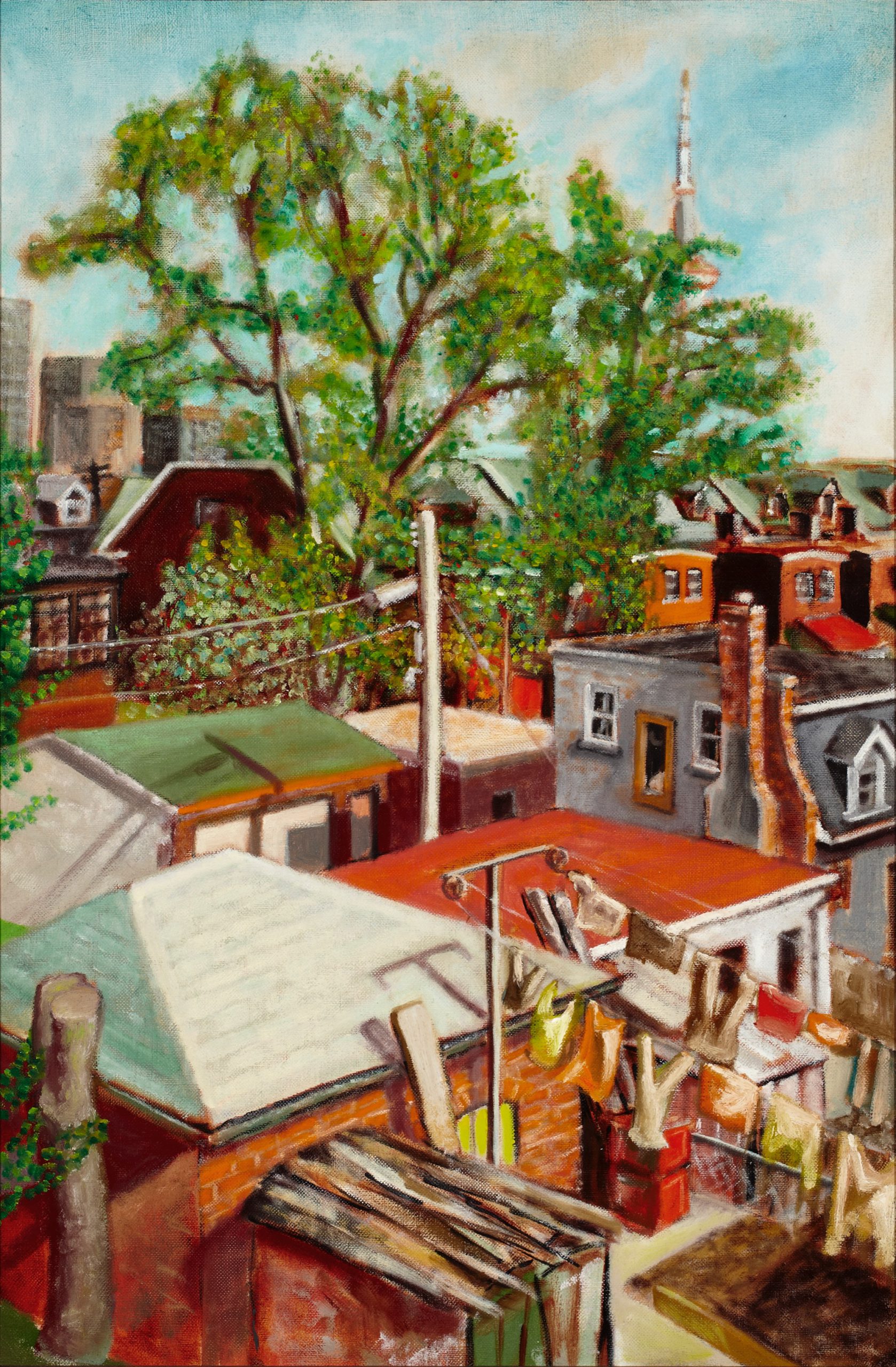
Andrew Bodor (Canadian, b. Hungary, 1947), View from Kitchen Window, oil on canvas, 1981.

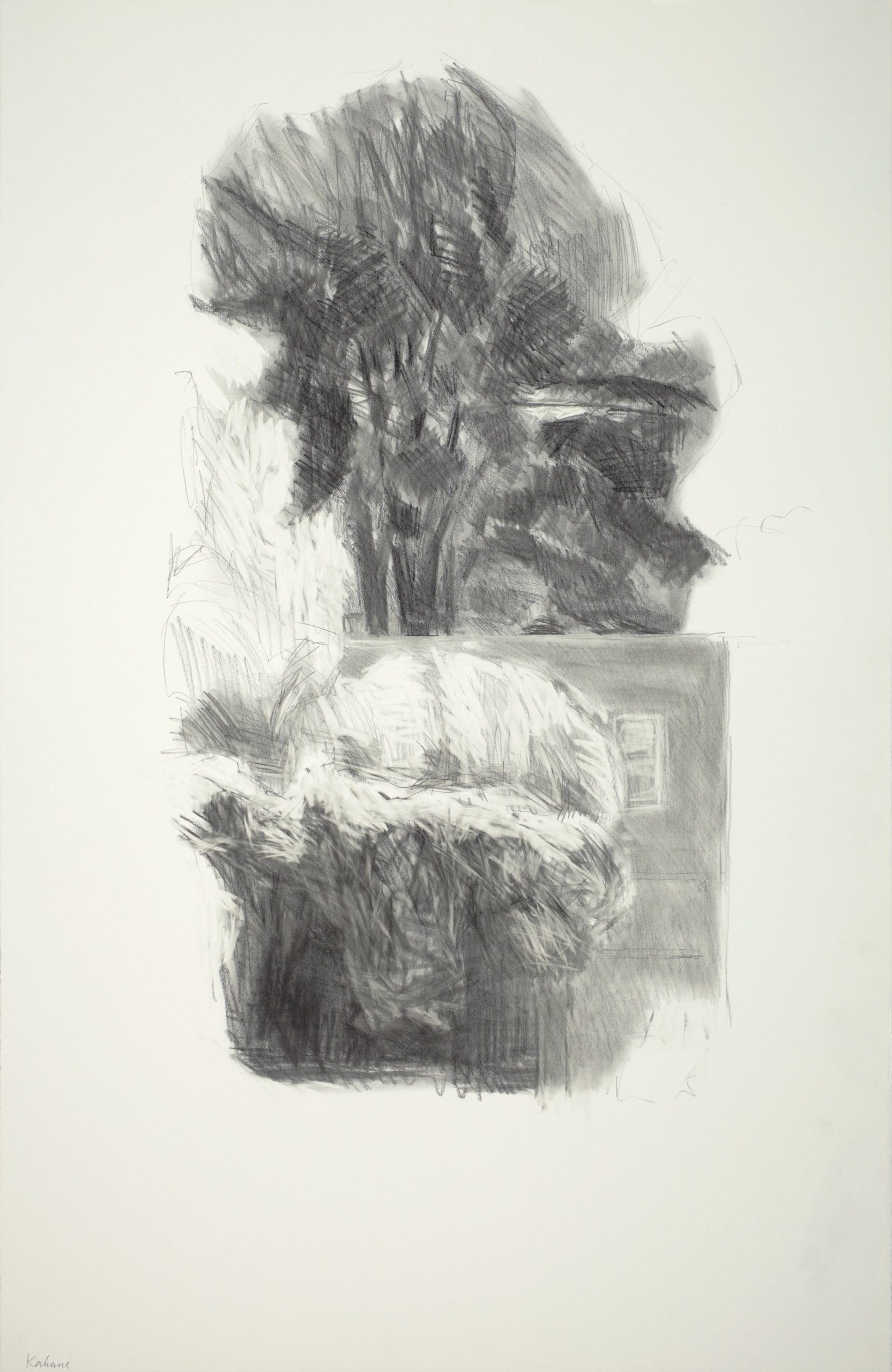
Anne Kahane (Canadian, b. Austria, 1924), View from My Window No. 8, graphite on paper, 1979.

Donna Ibing (Canadian, b.1947), Kitchen Window, acrylic on canvas, 1973.

F. H. Varley (Canadian, b. England, 1881 – 1969), Sleeping Figure, graphite and coloured pencil on board, c. 1955. Gift of M. Sharf, 1983.

Alexandra Luke (Canadian, 1901 – 1967), Plant Life Before a Window Blind, ink on paper, n.d. Gift of Mr. and Mrs. E.R.S. McLaughlin, 1971.

Anastasia McEwen (Canadian, b.1966), Basement Still Life, charcoal, ink and acrylic on paper, 1991.

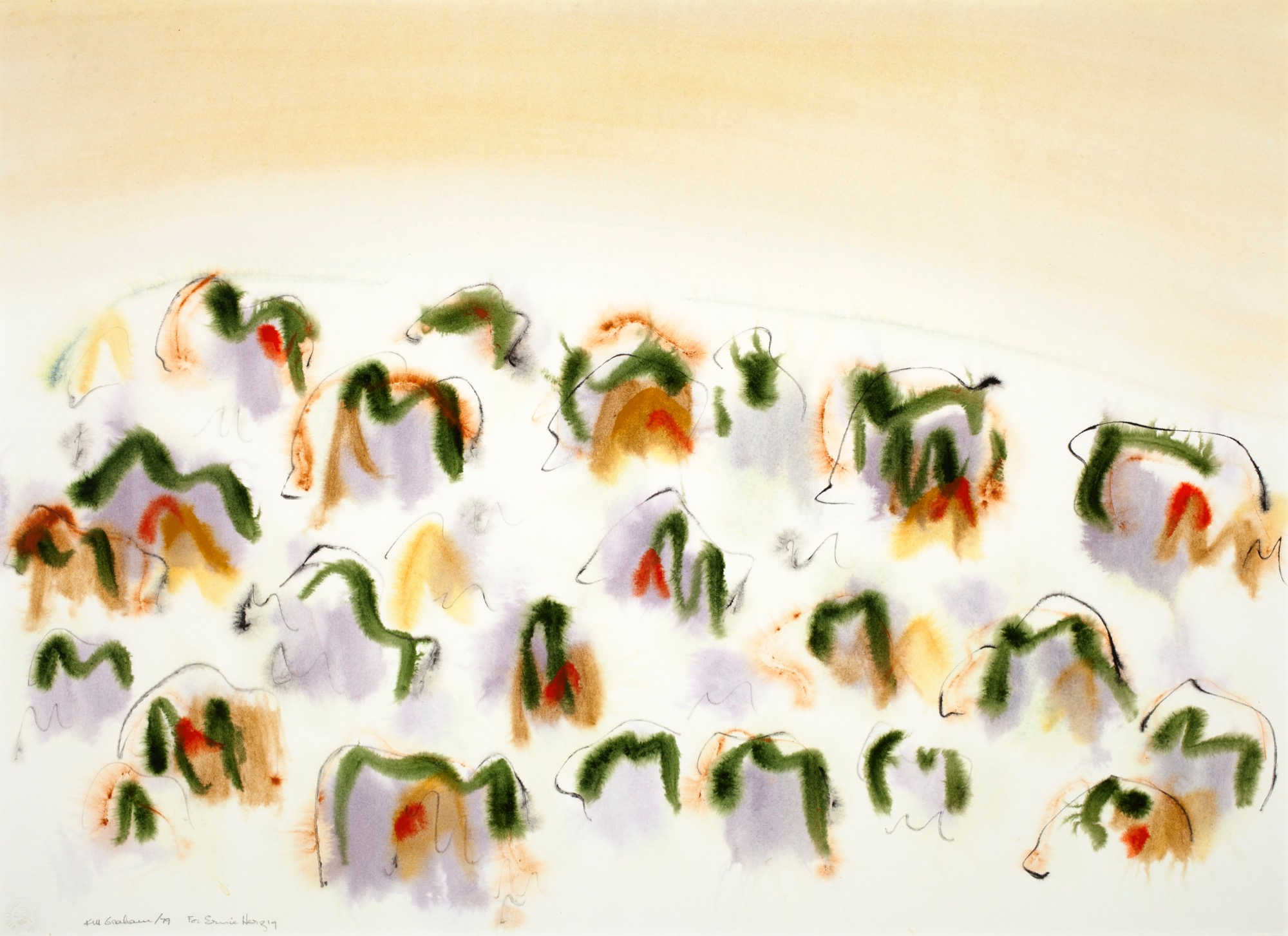
K. M. Graham (Canadian, 1913-2008), From My Window, Cape Dorset, acrylic on paper, 1979. Gift of Mr. and Mrs. Ernest and Rivette Herzig, 1993.

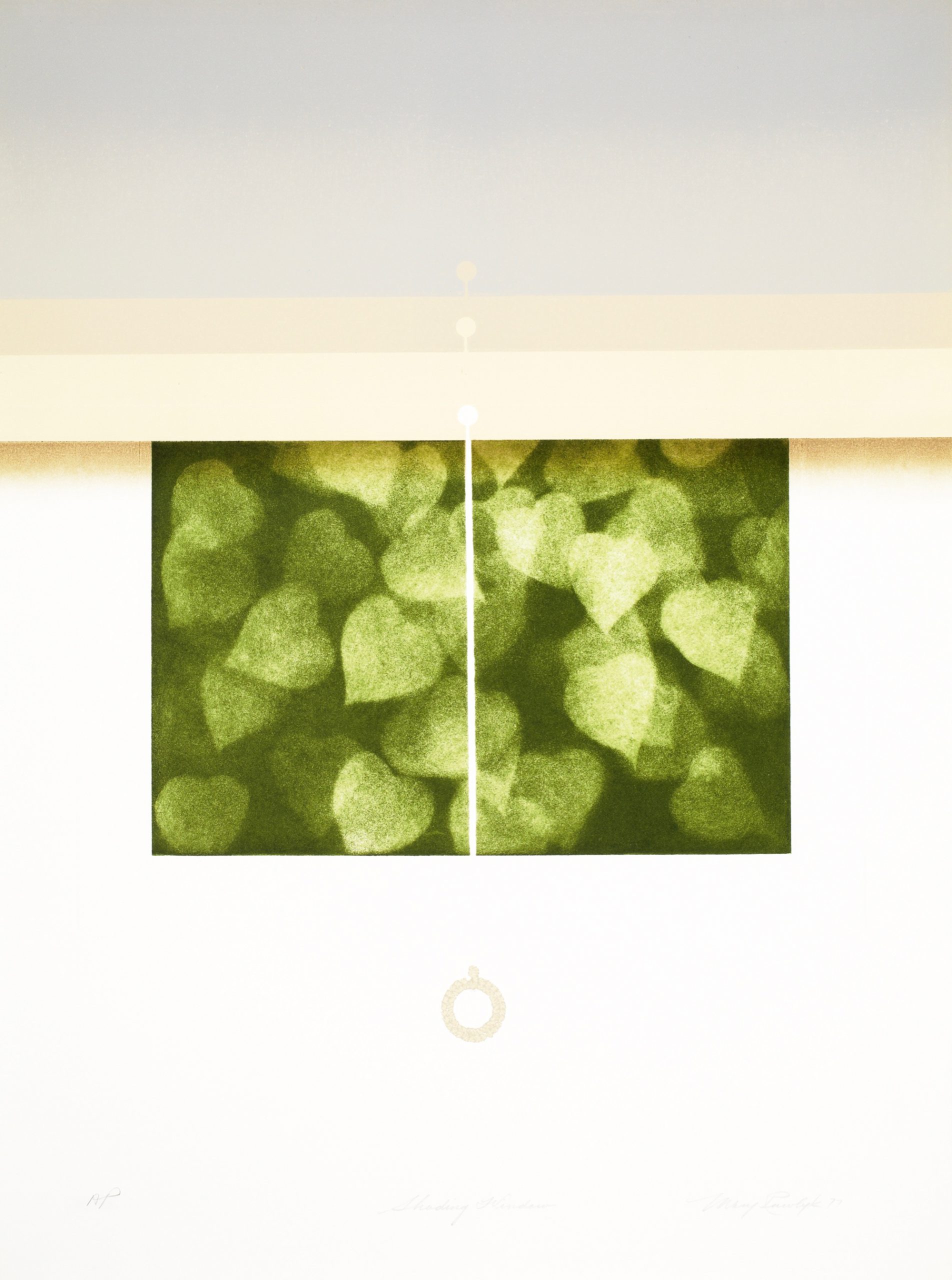
Mary E. Rawlyk (b. 1934), Shading Window, aquatint, relief printing on paper, 1977.