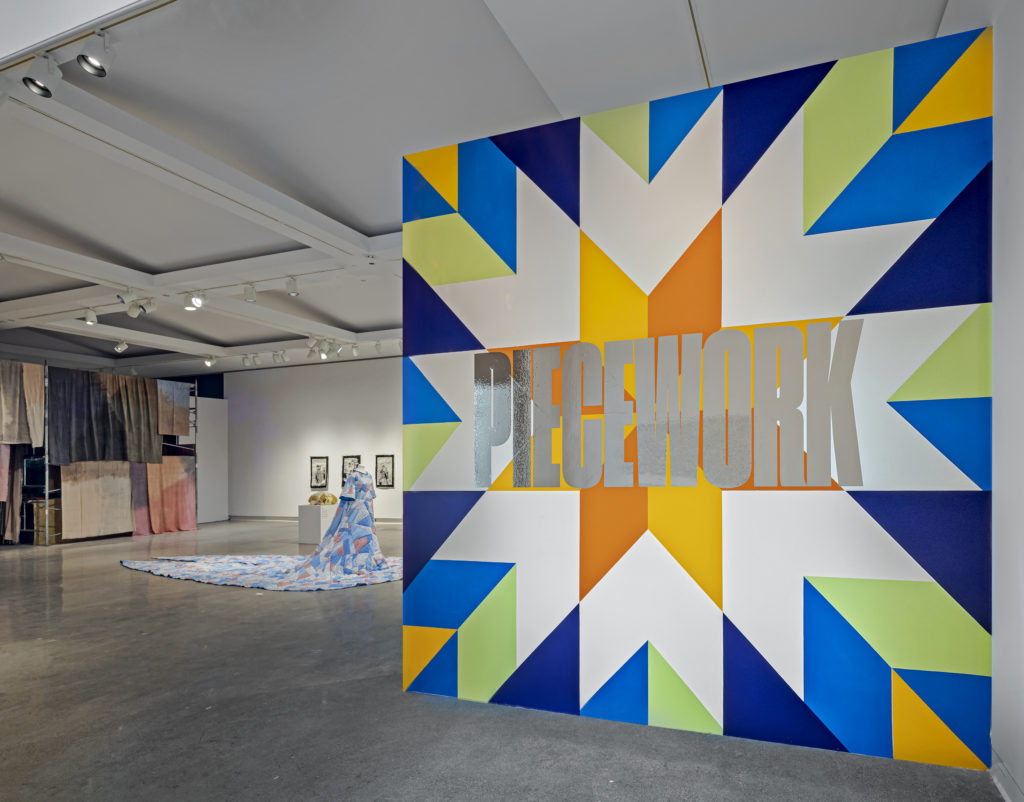
Piecework

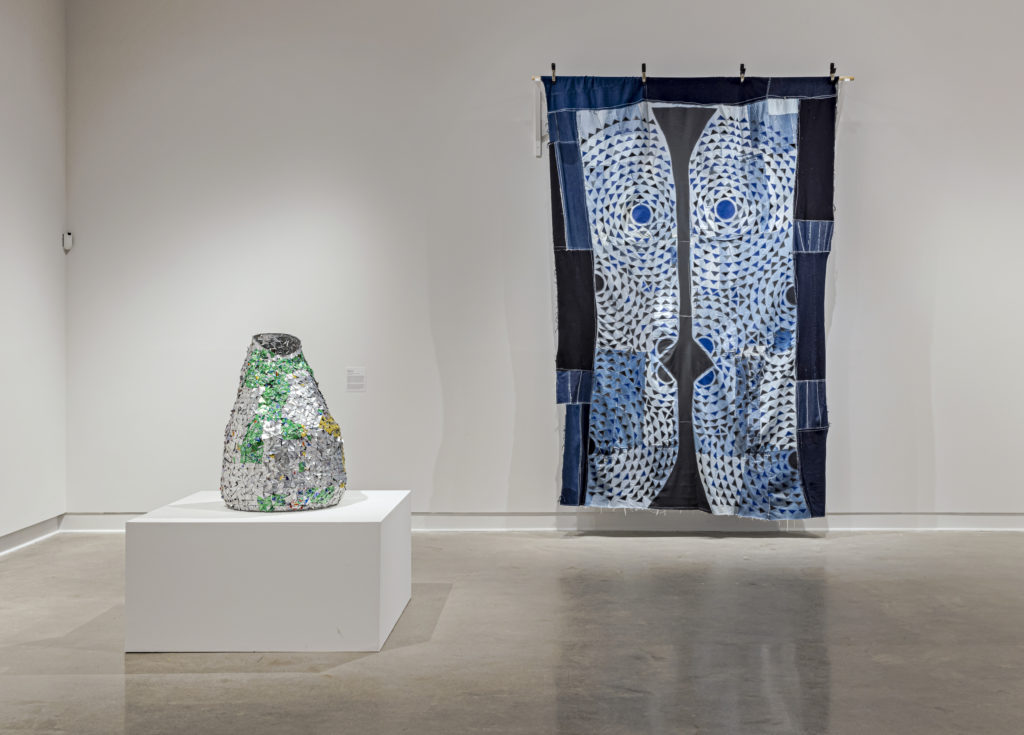
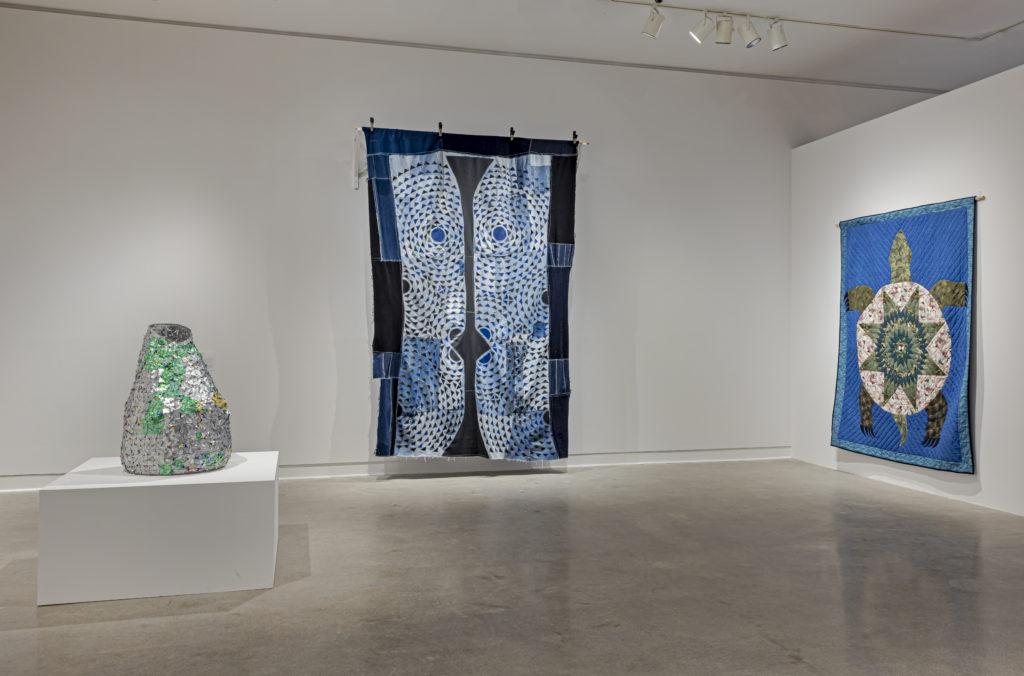
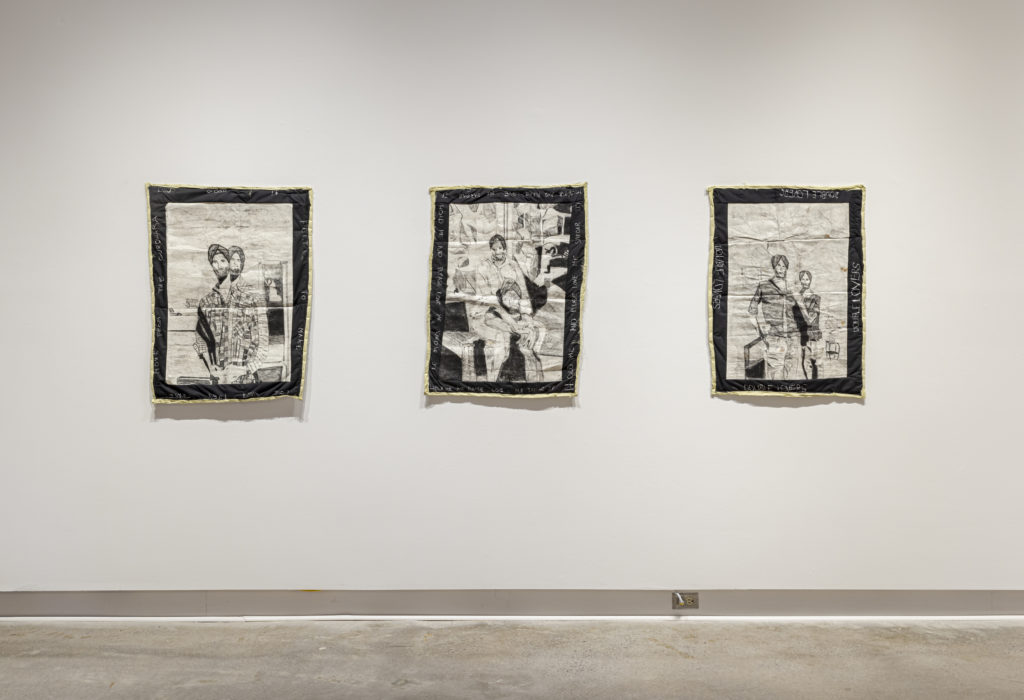
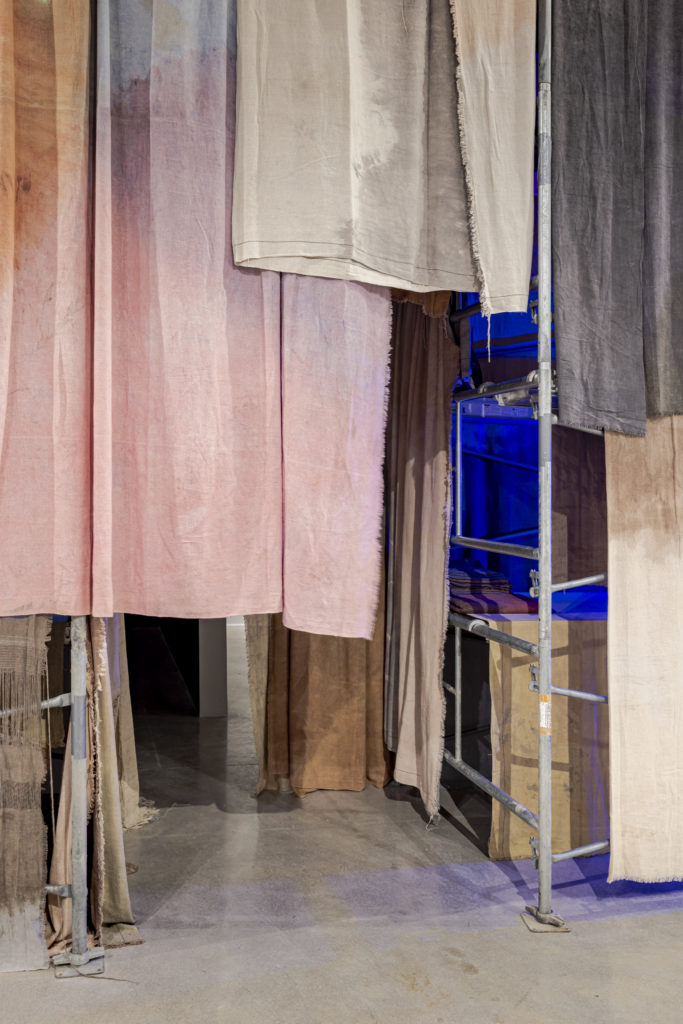
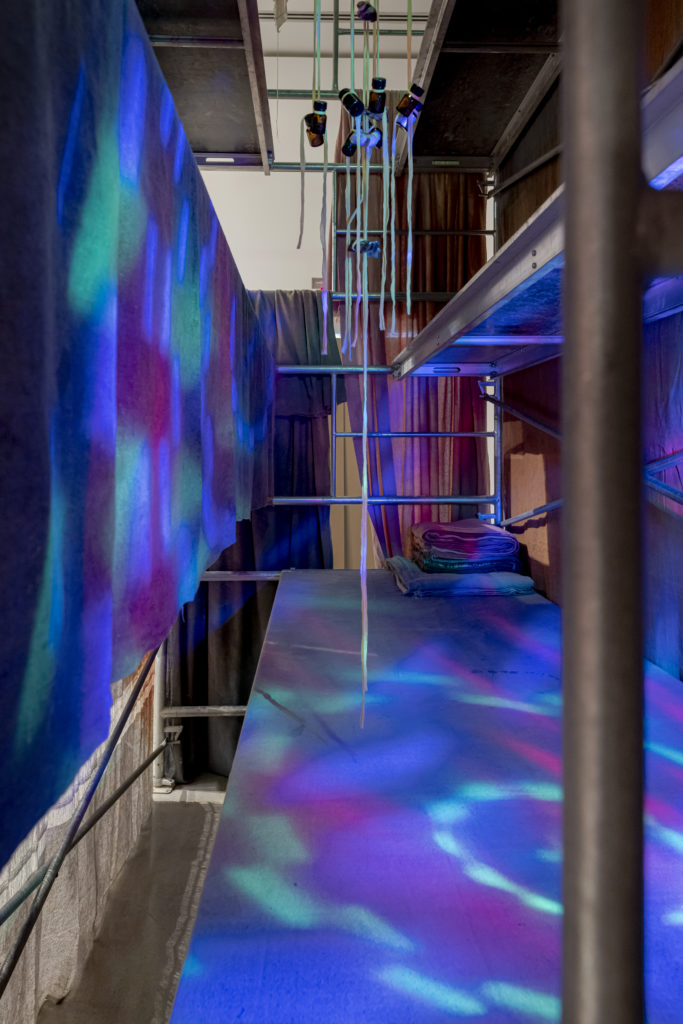
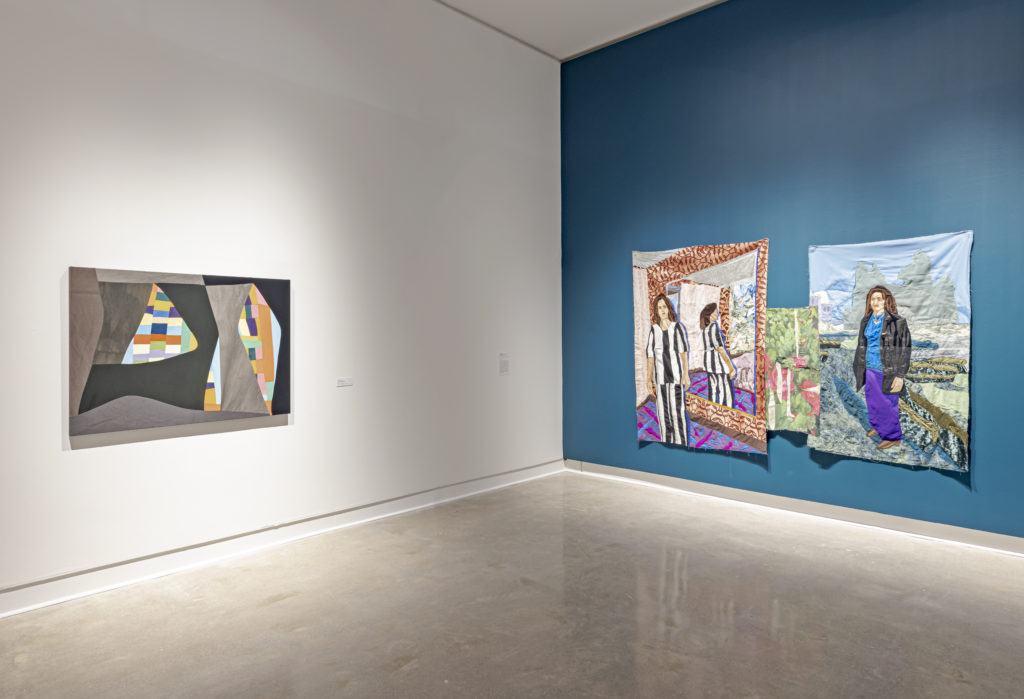
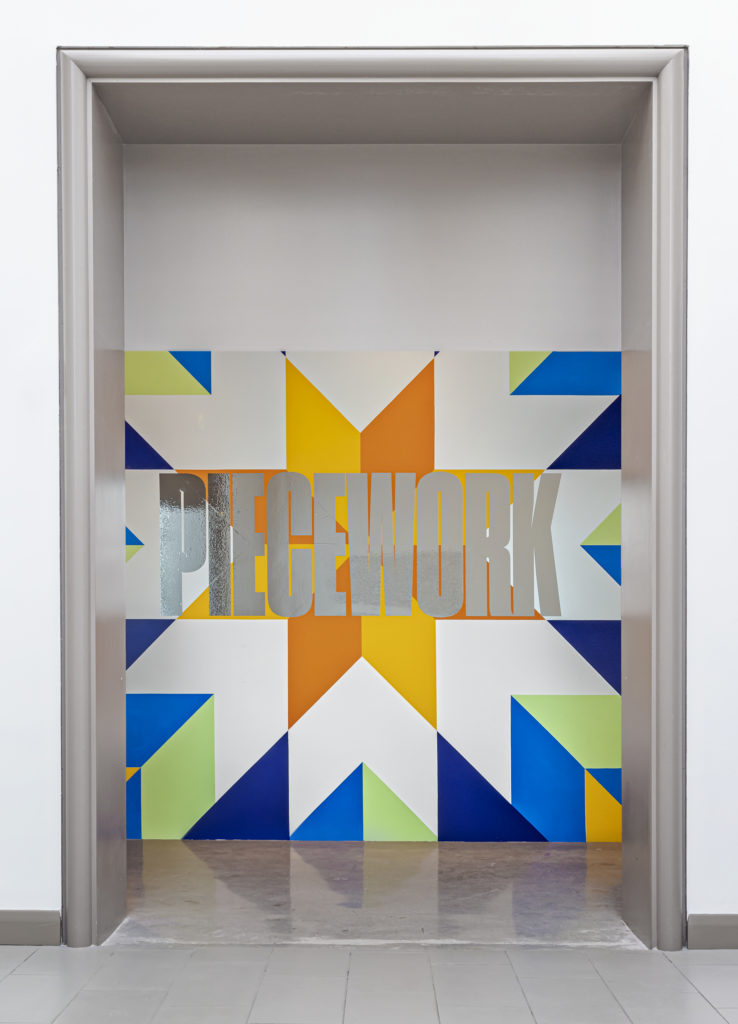
Using the materiality of quilt making as a metaphor for how the fabric of the world holds together, this exhibition brings together a group of contemporary artists who use textiles and assemblage as world-building tools. Pulling together the seemingly discarded, quilts are a composition of scraps, held together with the intention of offering warmth and comfort. This process of building something new from what was left behind, offers an orientation for engagement and opens possibilities for what can become. Quilts also occupy a set of social relations, where the making and sharing is often intergenerational and collective. They are meant to be passed down and cherished, appreciating in value through use.

Starting from a material approach, this exhibition is maximalist in form, weaving together the different ways that artists have picked up quilting as both metaphor and formal strategy in their work. Taken together, the exhibition forms a patchwork of ideas and objects, centering materiality and sensuousness as a ground for the various approaches and intentions within the works.

Artists:

Hangama Amiri holds an MFA from Yale University where she graduated in 2020 from the Painting and Printmaking Department. She received her BFA from NSCAD University in Halifax, Nova Scotia, and is a Canadian Fulbright and Post-Graduate Fellow at Yale University School of Art and Sciences (2015-2016). Her recent exhibitions include A Homage to Home (2023) at The Aldrich Contemporary Art Museum, Ridgefield, CT; Sharjah Biennial 15: Thinking Historically in the Present (2023), Sharjah, UAE; Reminiscences (2022) at Union Pacific in London; Henna Night/ Shabe Kheena (2022) at David B. Smith Gallery, Denver, CO; Mirrors and Faces (2021) at Cooper Cole Gallery, Toronto; Wandering Amidst the Colors (2021) at Albertz Benda, New York, NY; Spectators of a New Dawn (2021), Towards Gallery, Toronto; and Bazaar: A Recollection of Home (2020) at T293 Gallery, Rome, Italy.

Amiri works predominantly in textiles to examine notions of home, as well as how gender, social norms, and larger geopolitical conflict impact the daily lives of women, both in Afghanistan and in the diaspora. Continuing to use textiles as the medium, Amiri searches to define, explore, and question these spaces. The figurative tendency in her work is due to her interest in the power of representation, especially of those objects that are ordinary to our everyday life, such as a passport, a vase, or celebrity postcards.

Alicia Barbieri is an interdisciplinary artist from Southern Alberta. Her work expands into photography, textile, performance, video, and installation. She holds a BFA in Studio Art from the University of Lethbridge and is currently an MFA candidate at the University of Guelph. Alicia is interested in the blurred line between health and beauty and aims to dissect objectification in the current medical-industrial complex. Driven by her experiences with Wildervanck Syndrome, a congenital condition that has led to chronic pain, she considers the intangible wholeness of cure. She wants to share the strength in bodies being too much and not enough and give physical form to the infinite potential of the bodies discarded for failure to conform. Deeper healing requires an intimate type of care and understanding, only acquired through time. Through collaboration, performance, and craft practices, Alicia injects this time into the photographic process allowing material and interpersonal intersections to form.

Colleen Heslin is an artist and independent curator based in Vancouver. With an MFA from Concordia University, Montreal, and a BFA from Emily Carr University, Vancouver, her work explores medium crossovers between painting, sculpture, fibres, and photography. Heslin was the winner of the 2013 RBC Painting Competition and her work has been exhibited and published in Canada, USA, and Europe. Heslin founded The Crying Room Projects (1999-2014), which provided an open platform for emerging contemporary art in Vancouver’s downtown eastside.

Jeremy Laing makes objects, spaces, and situations for embodiment and relation. Through the synthesis of craft, conceptual, and social modes, their work explores the interrelation and transitional potential of people and things, materials and meanings, and questions the normative logics of who and what matters, is valued, or not.

Preston Pavlis’ work on canvas and fabric represents his interest in the fusion of painting and textiles as a means to explore narrative, form, and colour. Focused on poetic association and metaphor, the resulting works in oil, embroidery, and collage are personal charts for time and memory. The works situate solitary figures on often non-descript grounds, their gazes shifting between the viewer and somewhere beyond their space. Whether their expressions are pensive, ebullient, or intentional– they possess a palpable interiority. Pavlis’ figures convey a subtle energy and a deep sense of presence that is enhanced by their imposing scale.

Preston Pavlis currently lives in Halifax, Nova Scotia, where he is completing his studies at the Nova Scotia College of Arts and Design. Pavlis has presented his work in exhibitions at Half Gallery (New York), Guts Gallery (London), and at Spurs Gallery (Beijing). His work was also included in recent art fair presentations, notably Frieze New York and NADA Miami. Pavlis has recently been featured in publications including Esse and C Magazine, and is the most recent recipient of the 2021 Eldon + Anne Foote Edmonton Visual Arts Prize.

Jagdeep Raina (b. 1991, Guelph, Ontario, Canada) received his MFA from the Rhode Island School of Design. He has been the subject of solo exhibitions at Grice Bench, Los Angeles; Cooper Cole Gallery, Toronto; Midway Contemporary, Minneapolis; and the Art Gallery of Guelph. Raina’s work has been included in exhibitions at the National Gallery of Canada, Ottawa; RISD Museum of Art, Providence; and the Rubin Museum of Art, New York. In 2016, he was included in the 11th Shanghai Biennale. Raina is a 2019 recipient of the Textile Museum of Canada’s Melissa Levin Emerging Artist Award, and a 2020 recipient of the prestigious Sobey Art Award in Canada.

Moraa Stump is a Canadian, Kenyan artist and maker. Using textile techniques, Stump’s practice repurposes mixed media and materials to make 2D images and soft sculptures. Stump’s work seeks to widen the scope of possibility and imagination when confronting the themes of race, physical space and safety. Having spent her formative years growing up in Tanzania, Mozambique and Swaziland, Stump then moved to Toronto, Canada 10 years ago. This marked the beginning of her adulthood, and most notably her relationship to a Black identity. Re-learning and contextualizing herself to a North American lens has been a constant source of inspiration and questioning that fuels and excites her work.

Judith Tinkl is a fibre artist based in Sunderland, ON. Actively exhibiting her work since the early 1980s, her artistic career spans over forty years, and includes teaching art, organizing exhibitions, and volunteering with many arts organizations and craft councils. Judith became permanent faculty at the Ontario College of Art (now OCADU) in 1990 and was subsequently an Assistant Dean for eight years, and then an Associate Professor, retiring in 2009. That year her work was shown in Unity and Diversity at the Cheongju International Craft Biennale in Korea and at the World of Threads Festival in Oakville. She had a solo exhibition, Piece by Piece at the Visual Arts Centre, Clarington in 2010.

Joyce Wieland (1930–1998) began her career as a painter in Toronto before moving to New York in 1962, where she soon achieved renown as an experimental filmmaker. The 1960s and 1970s were productive years for Wieland, as she explored various materials and media and as her art became assertively political, engaging with nationalism, feminism, and ecology. She returned to Toronto in 1971. In 1987 the Art Gallery of Ontario held a retrospective of her work. Wieland was diagnosed with Alzheimer’s in the 1990s, and she died in 1998

Alice Olsen Williams is renowned for her unique quilted textile works that blend expressions of Anishinaabe beliefs and ideology with reflections on contemporary social issues. Alice was born in Trout Lake, 150 miles north of Kenora Ontario, Canada, in the traditional Anishinaabe territory of her mother’s people for millennia, long before Euro-colonization. Even as a child Alice had a delight for fabrics, creating small sewing projects that would later become her passion. Her distinctive style is grounded in the traditional skills of beadwork and sewing of the Anishinaabe people, and the unique symbols and themes of her culture. Alice’s creative vision in quilt design focuses on the central placement of animals and birds, which figure prominently in the lives of the Anishinaabeg.  She also uses the beautiful floral motifs that Anishinaabe-Kwewag continue to use in their beadwork, quillwork, embroidery and other creative media.   Surrounding her central designs are the conventional North American quilting blocks which were introduced by the first European Settlers, and continue to be developed by contemporary quilt artisans. Alice combines the knowledge and appreciation of both her Norwegian and Anishinaabe ancestry with new materials, to syncretize wonderful expressions in cultural meaning, the healing arts and indigenous activism. 
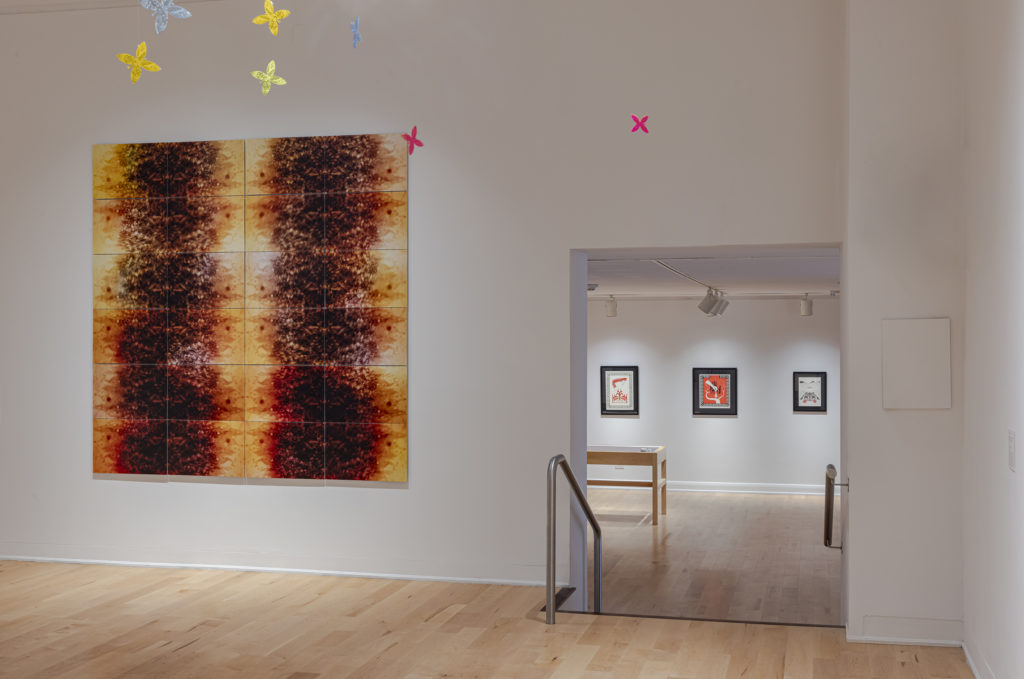
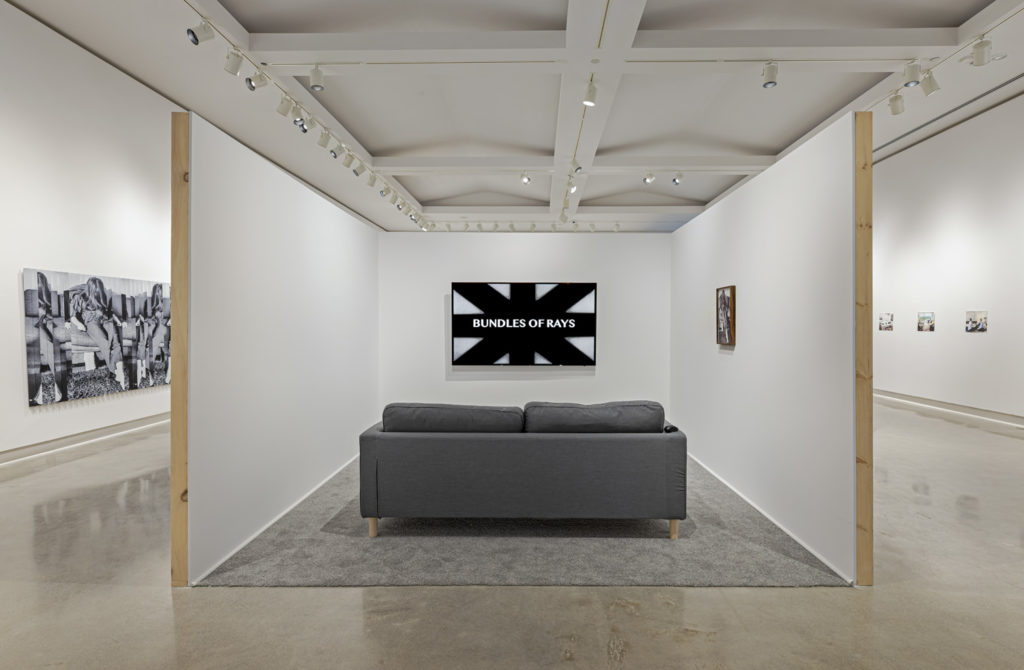
Installation of Piecework at The Robert McLaughlin Gallery, 2023. Images by Toni Hafkenscheid.

Presented in Partnership with Images Festival.
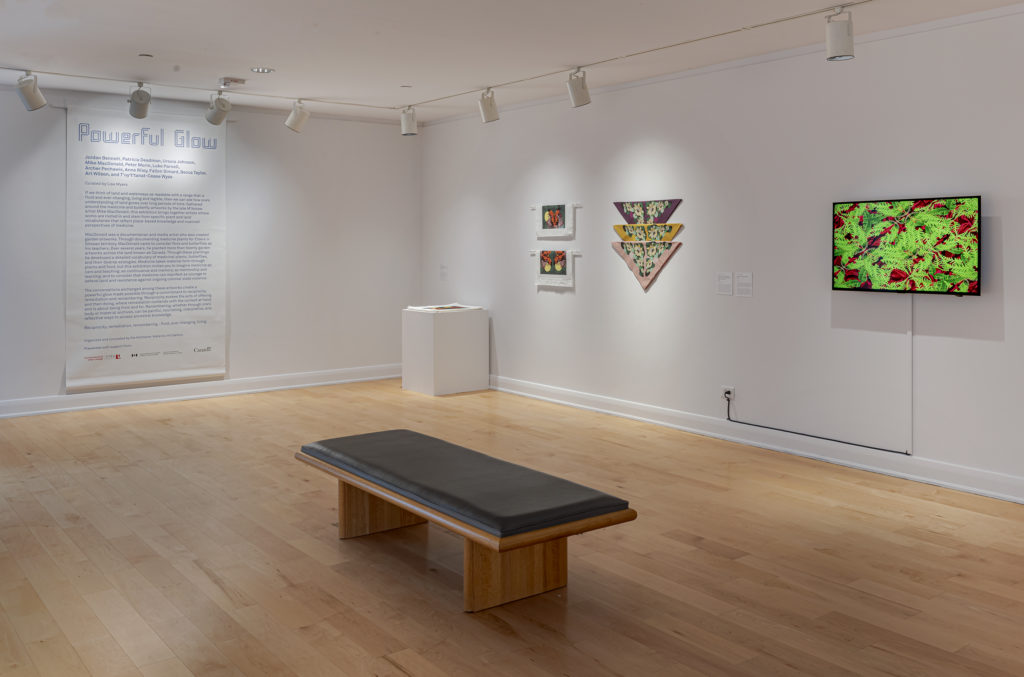
Powerful Glow

Join us at the Winter Exhibitions Opening on November 26, 2022, 1-4pm.

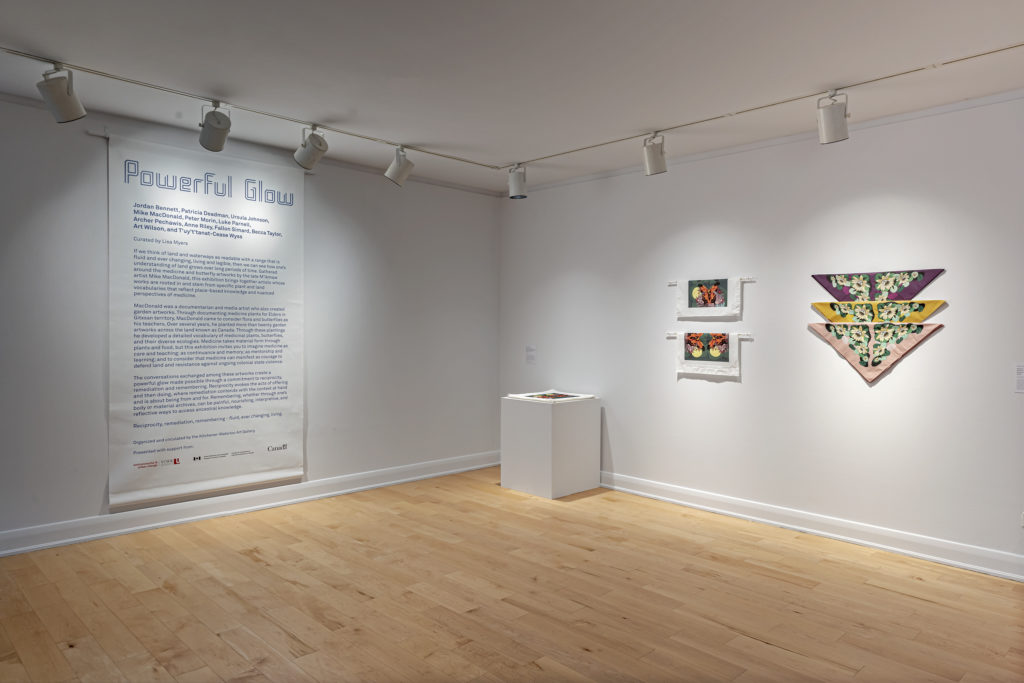
If we think of land and waterways as readable with a range that is fluid and ever changing, living and legible, then we can see how one’s understanding of land grows over long periods of time.

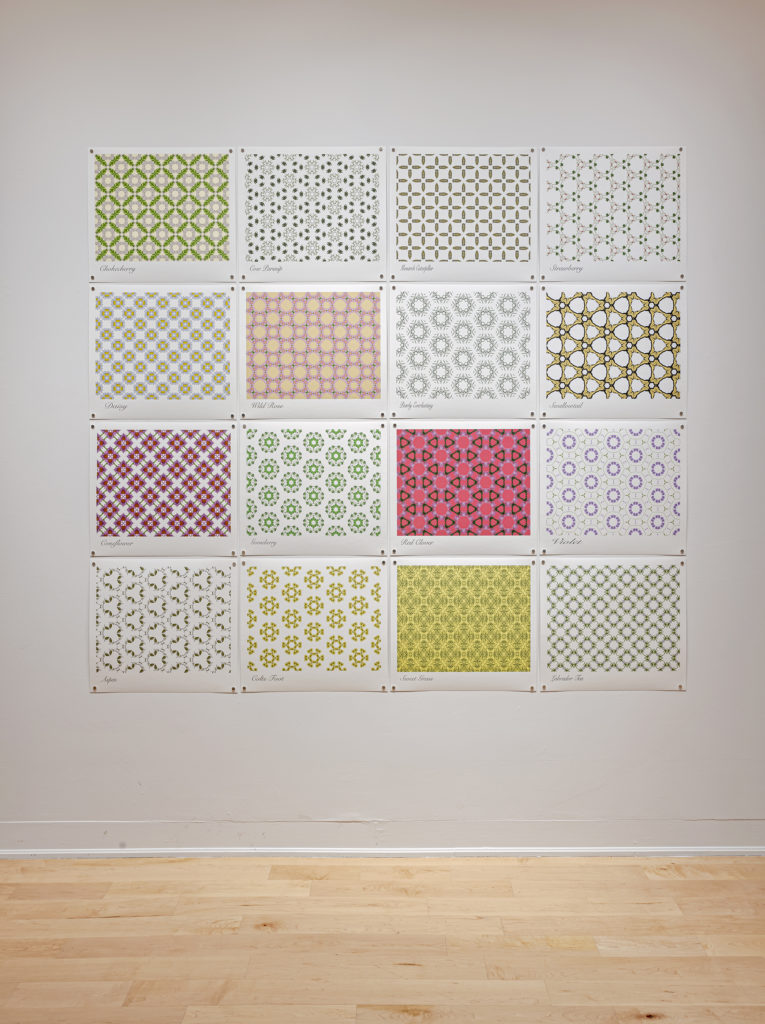
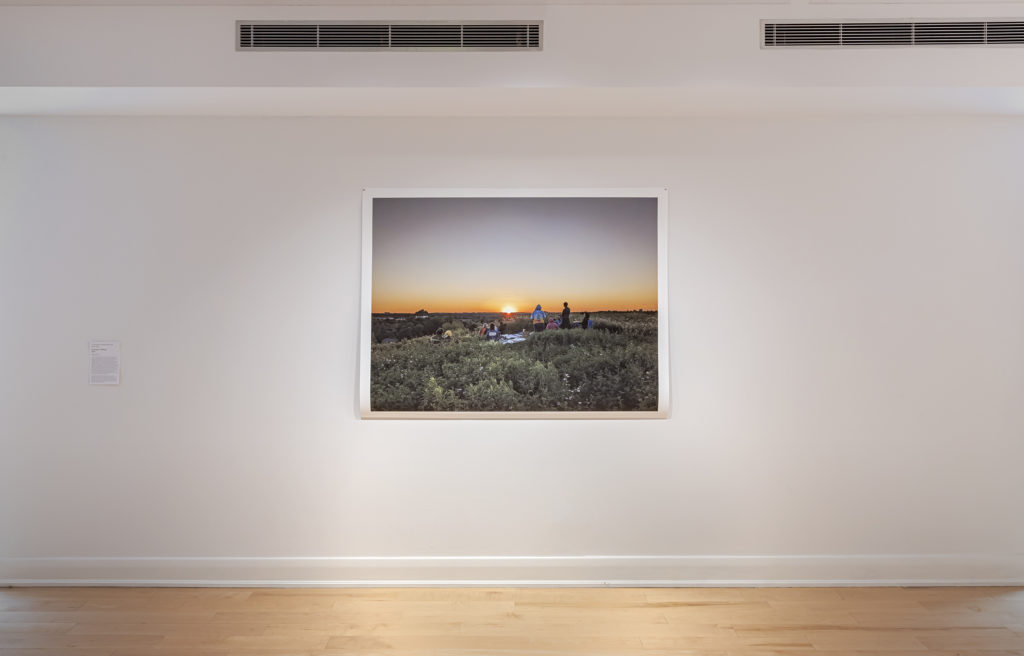
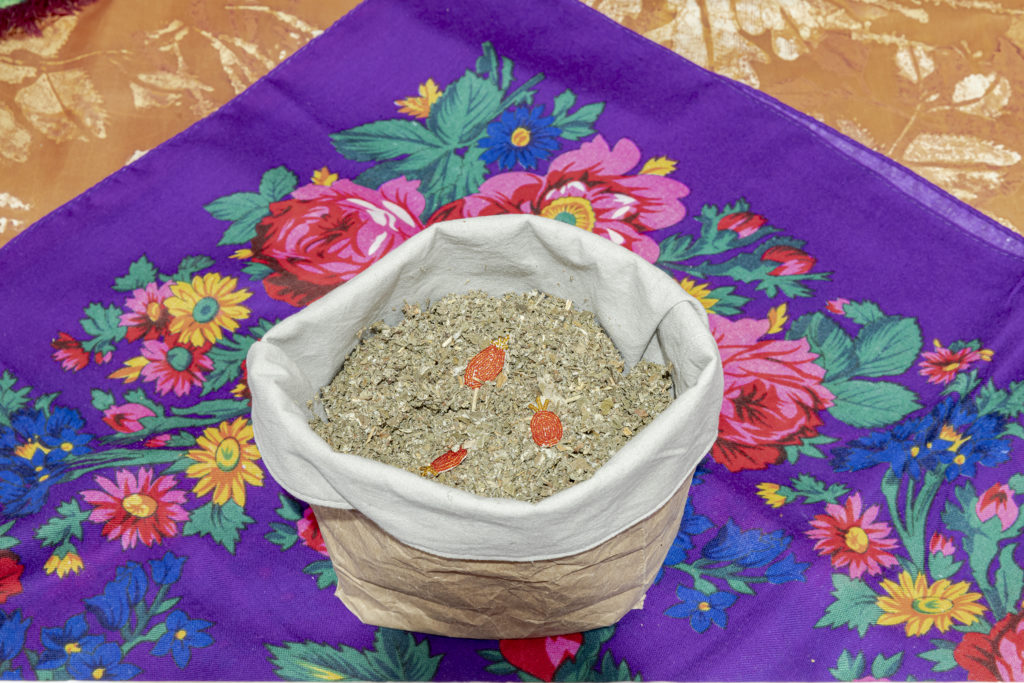
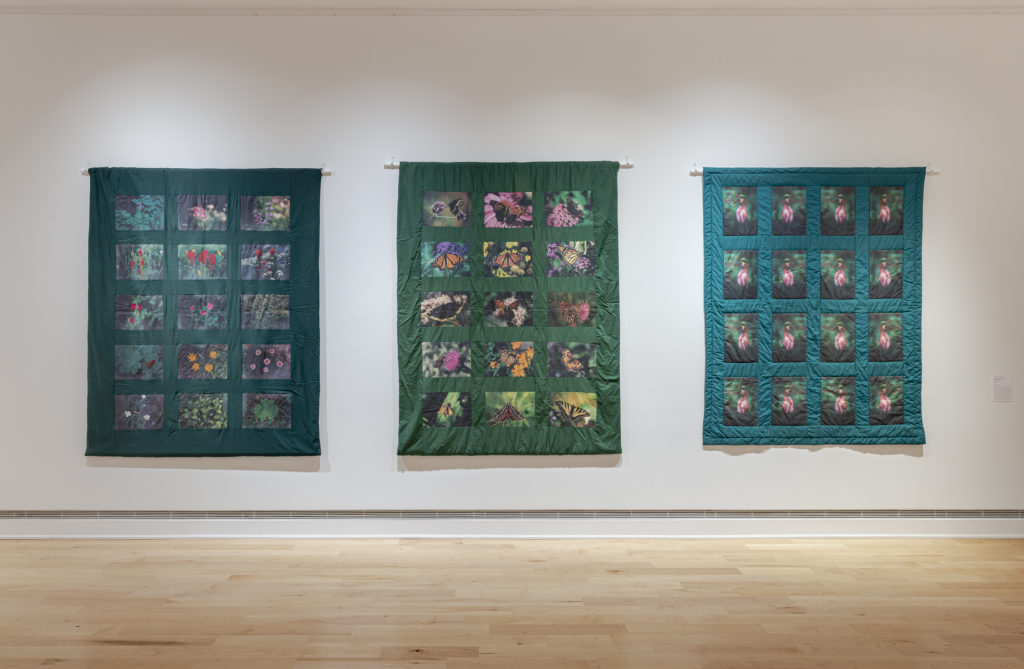
Gathered around the medicine and butterfly artworks by the late Mi’kmaw artist Mike MacDonald, this exhibition brings together artists whose works are rooted in and stem from specific plant and land vocabularies that reflect place-based knowledge and nuanced perspectives of medicine.

MacDonald was a documentarian and media artist who also created garden artworks. Through documenting medicine plants for Elders in Gitxsan territory, MacDonald came to consider flora and butterflies as his teachers. Over several years, he planted more than twenty garden artworks across the land known as Canada. Through these plantings he developed a detailed vocabulary of medicinal plants, butterflies, and their diverse ecologies. Medicine takes material form through plants and food, but this exhibition invites you to imagine medicine as care and teaching; as continuance and memory; as mentorship and learning; and to consider that medicine can manifest as courage to defend land and resistance against ongoing colonial state violence.

The conversations exchanged among these artworks create a powerful glow made possible through a commitment to reciprocity, remediation and remembering. Reciprocity evokes the acts of offering and then doing, where remediation contends with the context at hand and is about being from and for. Remembering, whether through one’s body or material archives, can be painful, nourishing, interpretive and reflective ways to access ancestral knowledge.

Reciprocity, remediation, remembering – fluid, ever changing, living.

Looking Back

Rooting into Mike MacDonald’s work with butterflies, butterfly gardens and the passionate defence of the environment that inspired his life’s work, we invite you to explore this archived version of the artist’s website. This site was recognized with the Aboriginal Achievement Award for New Media in 2000, alongside MacDonald’s essay “Indians in Cyberspace.” Engage materials about plants, butterflies and some of the work featured in Powerful Glow.

 Installation of Powerful Glow at the Robert McLaughlin Gallery, 2022. Images by Toni Hafkenscheid.

Loose Parts

Join us for a Thursday Curatorial Tour of this exhibition.

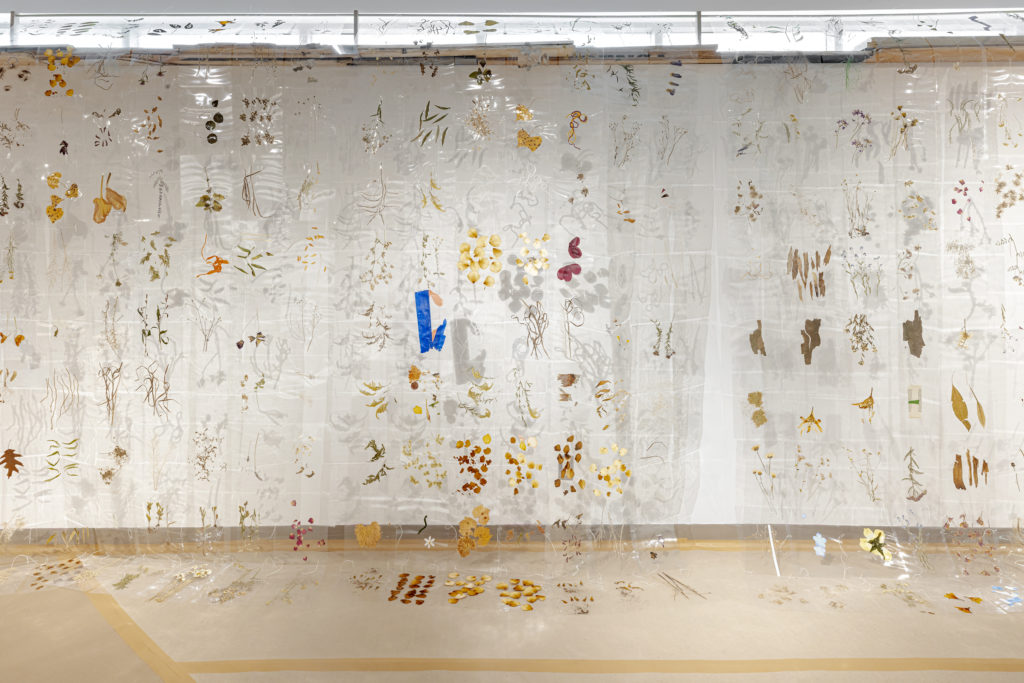
Upheaval is like an earthquake. Whether from external events or personal growth, it can shake inner worlds, deconstruct long-held patterns, and free ideas from tight grips. In its aftermath, formerly rigid orders are scattered and frayed, appearing more fluid than before; within this creative threshold, the pieces left behind beg for new orientations and arrangements. A loving embrace of queerness and being in flux, the exhibition Loose Parts takes pleasure in the beauty, openness, and potential of in-between spaces and holding things lightly. Artists sophia bartholomew, Akash Inbakumar, and Justin Mezzapelli do this with intention, creating laborious works that unfasten and reorder social structures and conceptions of self through a queer lens.

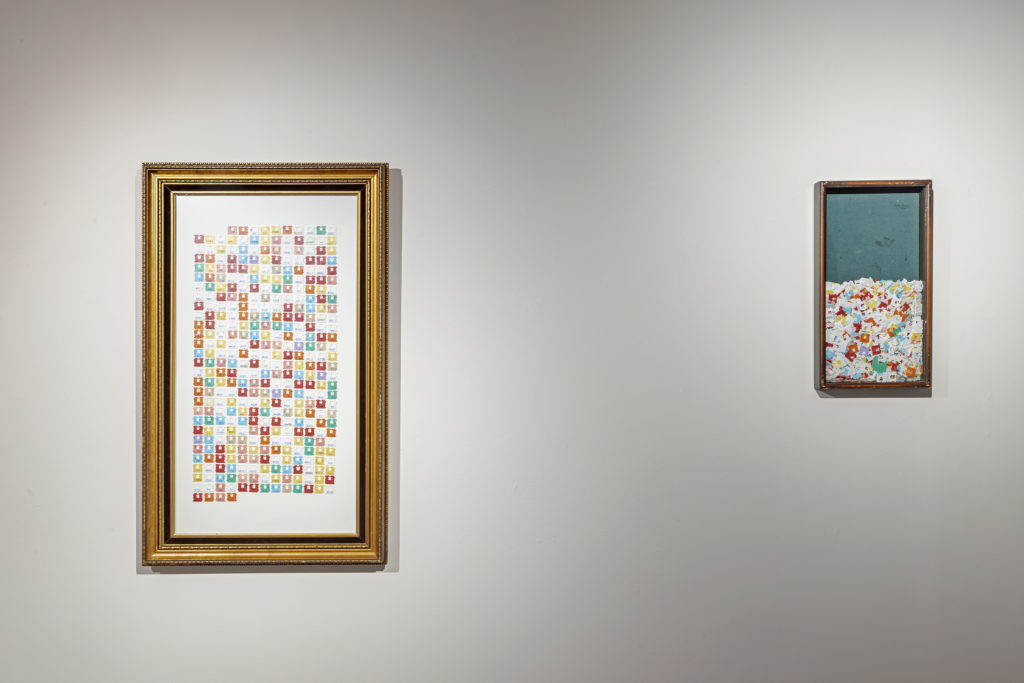
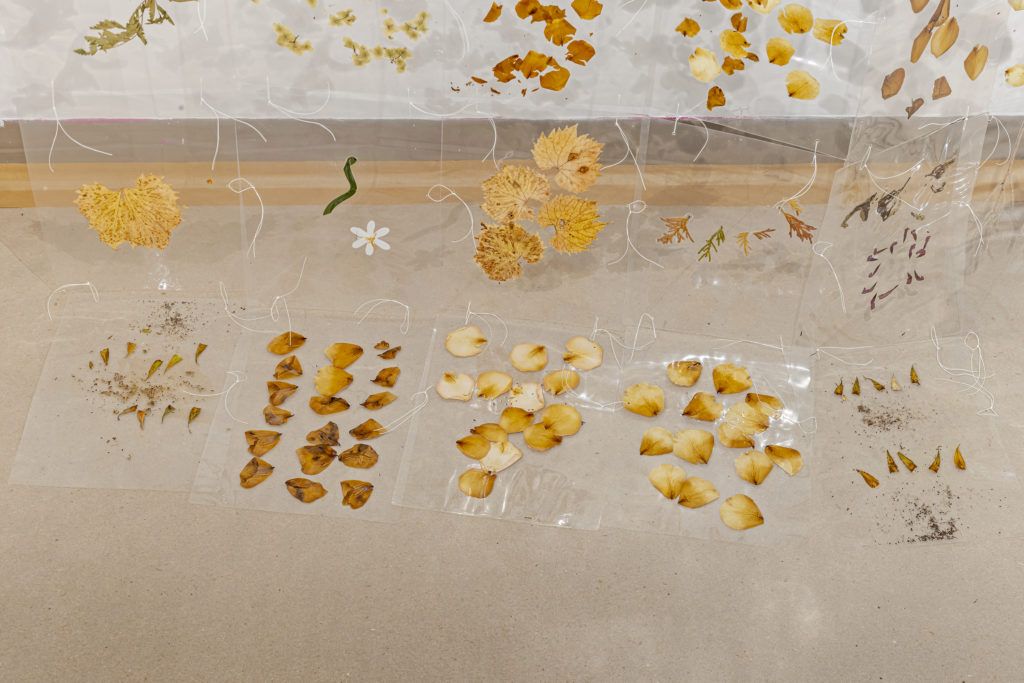
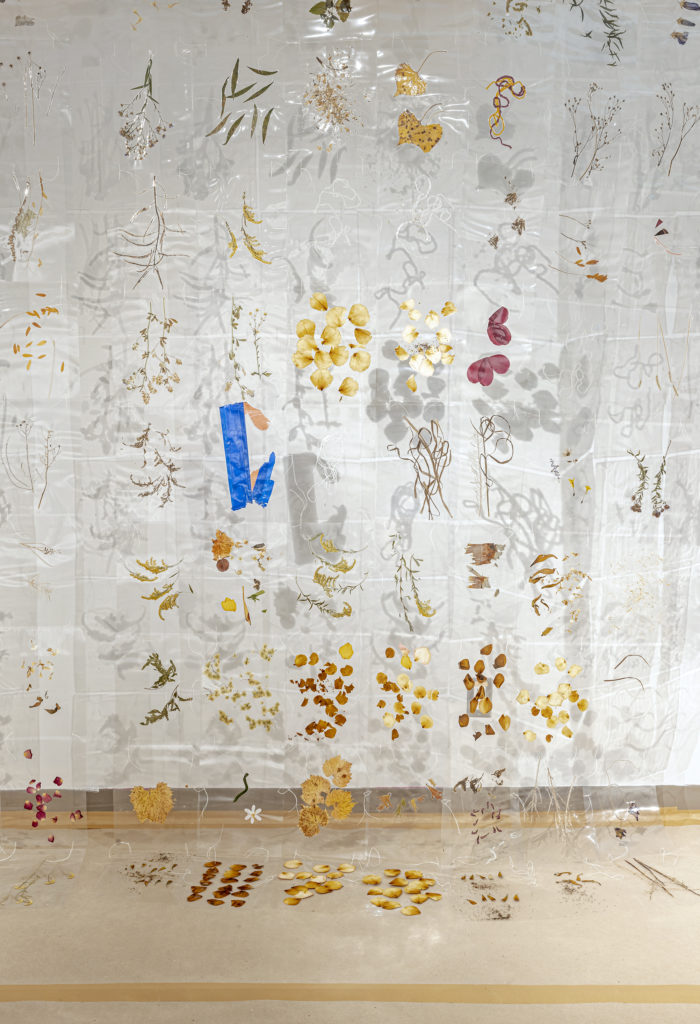
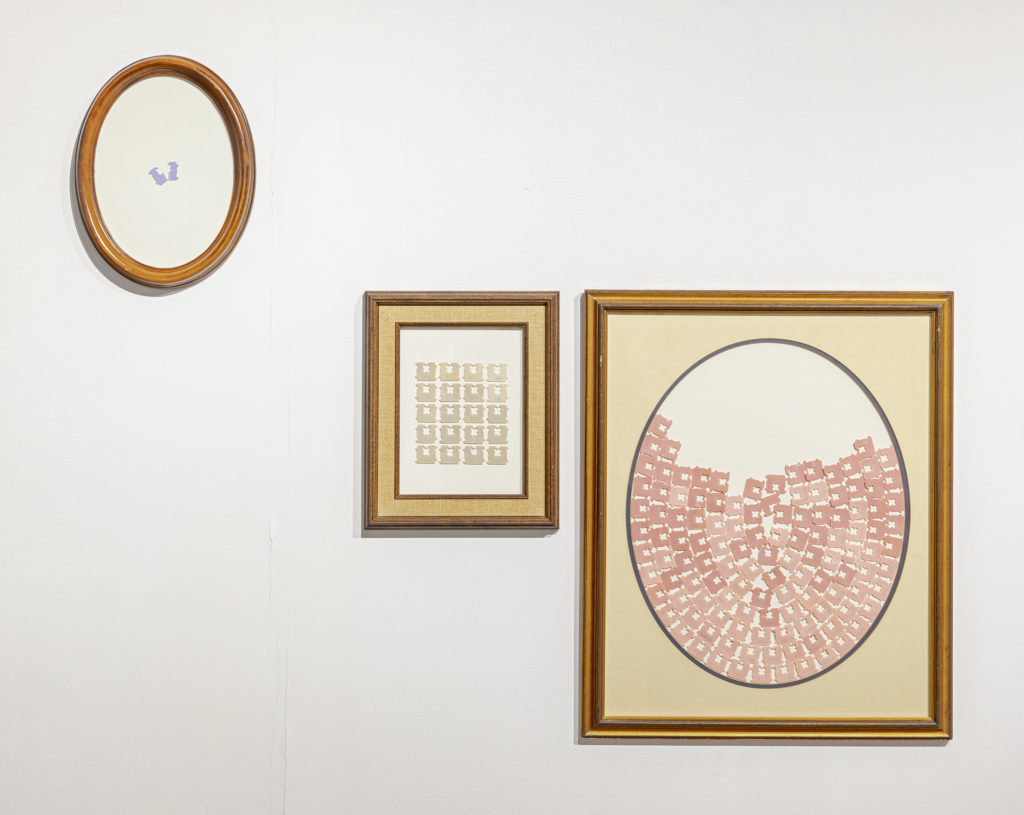
In an early educational context, the theory of loose parts is a learning strategy that encourages the development of creative problem-solving skills through tactile play. Adopted as the title of this exhibition, the spirit of loose parts is carried into a collection of artworks that engage with repetitive acts of assembly. In this case, the artists work with everyday objects such as flower petals, pine needles, bread tags, and paper. Gathering and sorting, covering and weaving, their provisional installations propose a way of relating with ourselves and others that is imbued with curiosity and flexibility and is attentive to the inevitable condition of impermanence. 

Seeking kinship and wisdom in ancient mythologies, art making processes, and personal experiences of becoming, the works in this exhibition yield to, rather than resist, uneven ground. Whether by choice or necessity, grief is a space where we lose and let go of things as they are. Loose Parts proposes that these familiar tools, held at arm’s length, might be the building blocks for creating the world one wants to live in. It is an invitation to come home to yourself and carve out space for your flourishing.

Artists Bios:

sophia bartholomew works outwards from the ruins and runes of their own cultural inheritance, adapting found and salvaged materials to create material-spiritual constructions. Their sculpture and installation work exists as part of an open and living system – borrowing its poetics from craft patterns and junk piles, stories and sagas, improvised adaptations and decisions of necessity. sophia is descended from Norwegian immigrants on Treaty 3 territory in rural Northwestern Ontario and English and Irish settlers in so-called Toronto. They recently completed their MFA studies at the University of Guelph.

Akash Inbakumar is an interdisciplinary artist, primarily working in textiles, based in Tkaronto. Their practice explores personal racialized queer narratives and material kinship, grounded in craft methodology. Inbakumar graduated from OCAD University in 2020 and has since completed a residency at Xpace Cultural Center and is currently starting their second year of the Harbourfront Center: Craft and Design residency. They have shown work at Patel Brown, Harbourfront Center, Xpace, and Artscape Gibraltar Point.

Justin Mezzapelli is an interdisciplinary artist interested in poetics, domesticity, multiplicity, and queerness. The intersections of these domains emerge in his practice while he draws on the mundane to organize meaning. His work manifests as found material and image-based examinations of subdued identity, often in transitory states. Employing ordinary objects or knowledge as semiotic tools, he delineates the appearance of selfhood parallel to distinctly unassuming worlds. Justin holds a BFA in Integrated Media from OCAD University. He is currently based in Whitby, Ontario.

Installation of Loose Parts at the Robert McLaughlin Gallery, 2022. Images by Toni Hafkenscheid.

The Beyond Within

Organized and produced in partnership with the Kitchener-Waterloo Art Gallery.

This exhibition opens at Illingworth Kerr Gallery in Calgary, January 19, 2023

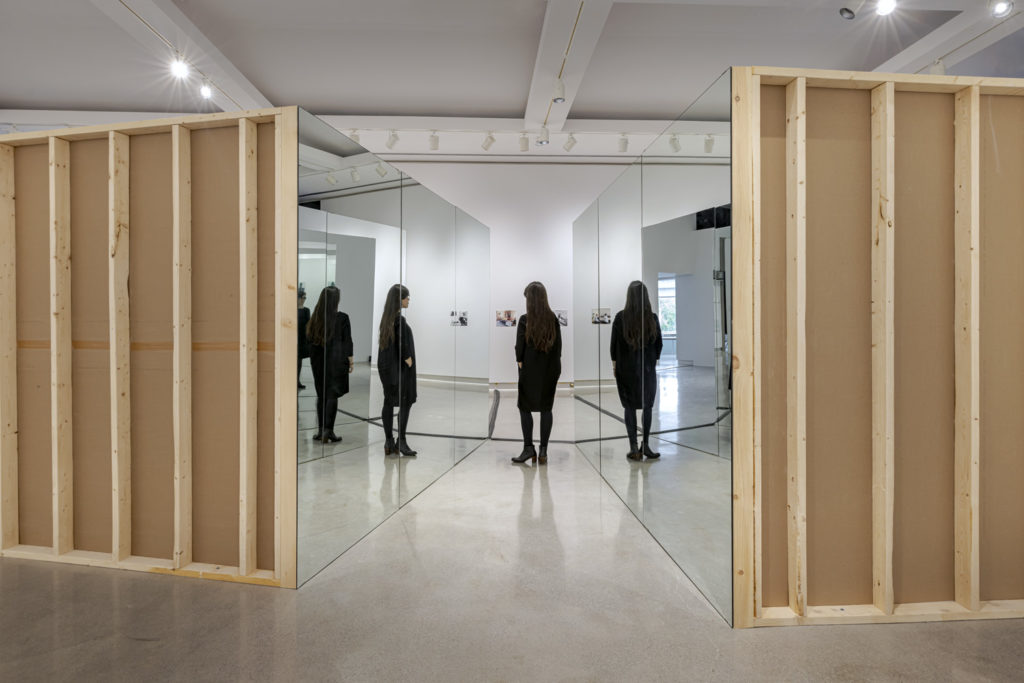
As a surface with only one side, the Mobius strip resists orientation. To trace its surface is to experience left becoming right, outside flipping in, and time assuming the shape of an infinite loop. While its perimeter is defined, it is the twist in the loop that prevents predictability. Within static institutions and other familiar containers, is it possible to experience a similar twist – a radical detour – that encourages us to build our worlds anew?

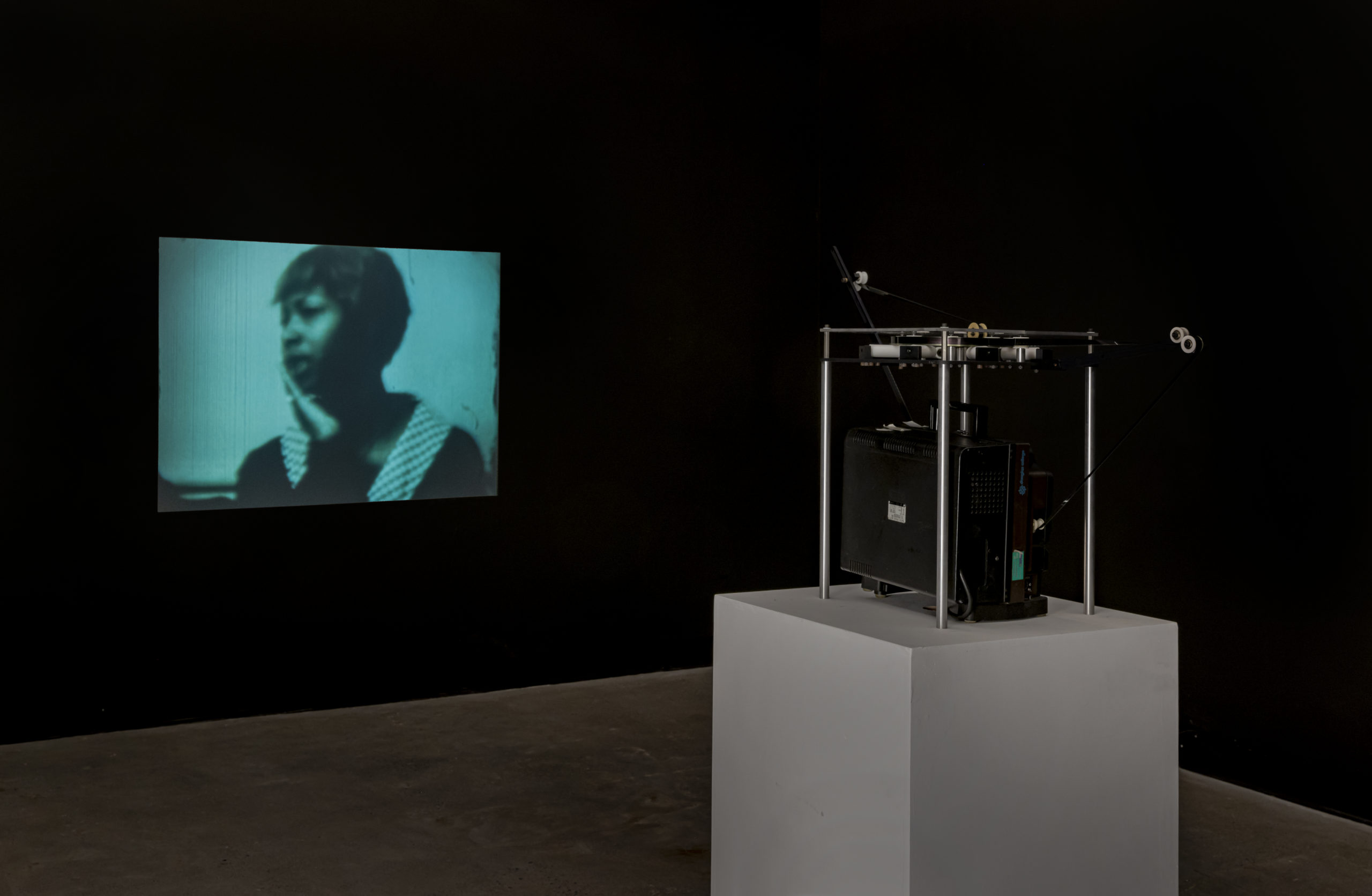
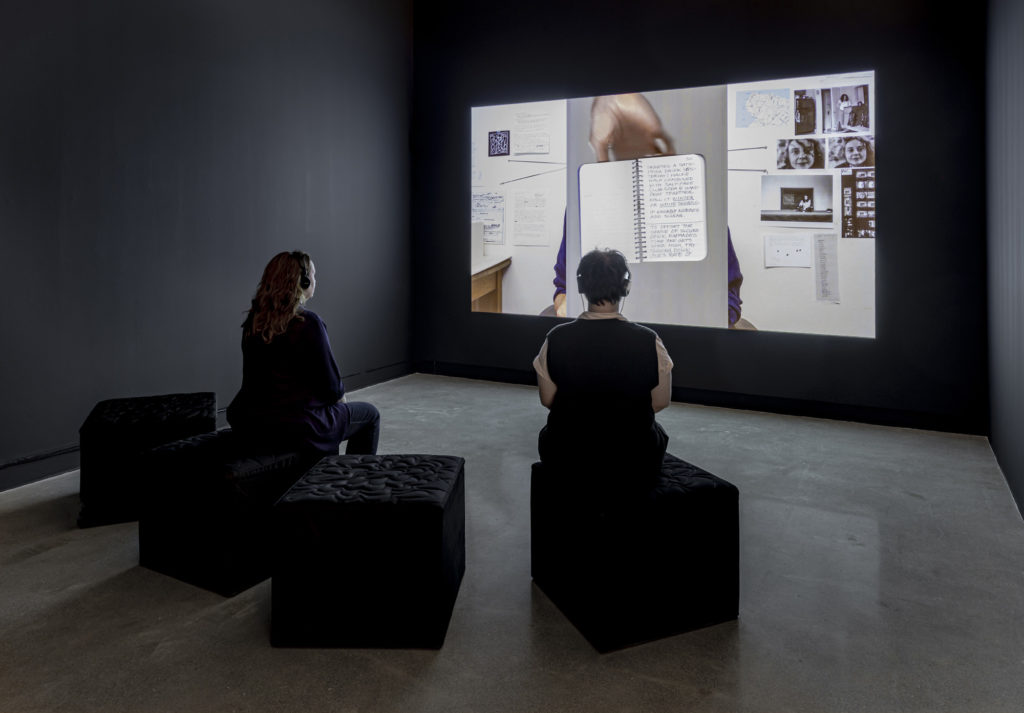
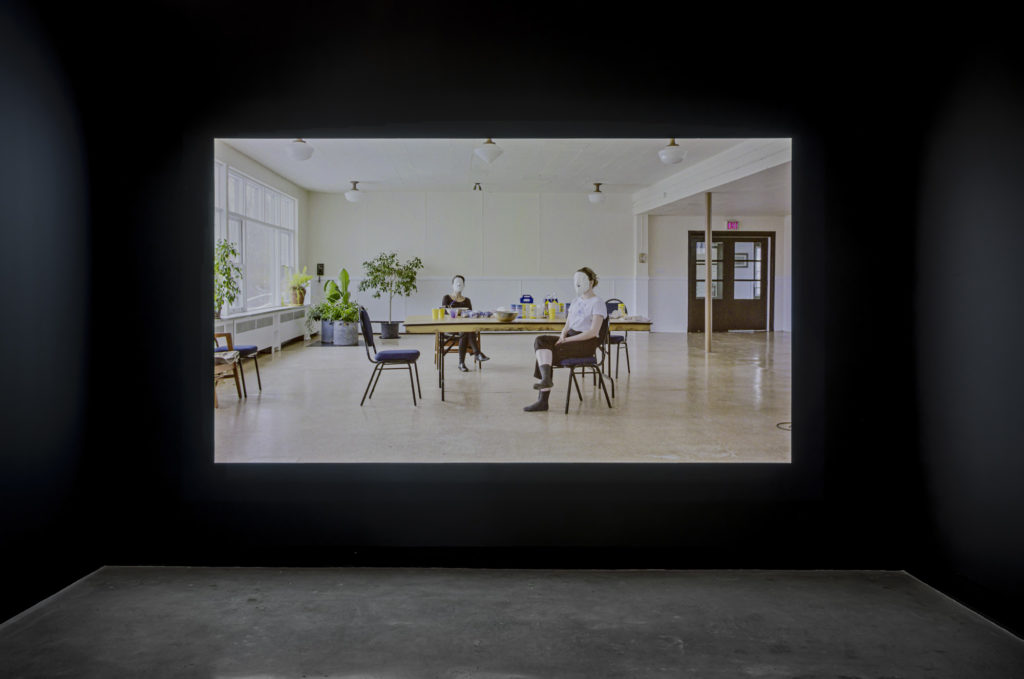
Underpinned by feminist conceptions of the everyday as a basis for political engagement with the world, The Beyond Within proposes strategies for reorientation. In two videos made in collaboration with Paris-based artist Maïder Fortuné, pedagogical roles are underwritten by radical forms of intimacy. OUTHERE (For Lee Lozano) incorporates documentation from a 1971 lecture at the Nova Scotia College of Art and Design alongside archives and an astrological reading to give form to an influential recluse: the late conceptual artist Lee Lozano. In Communicating Vessels, friendship and artmaking become productive, if precarious, portals through which to escape the isolation of the self.

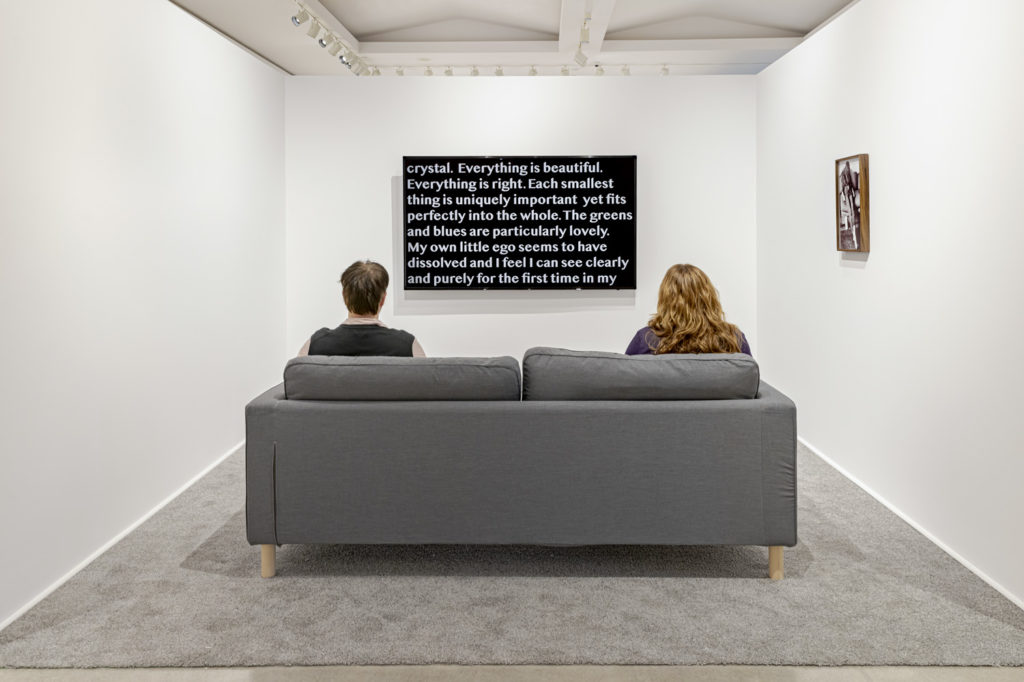
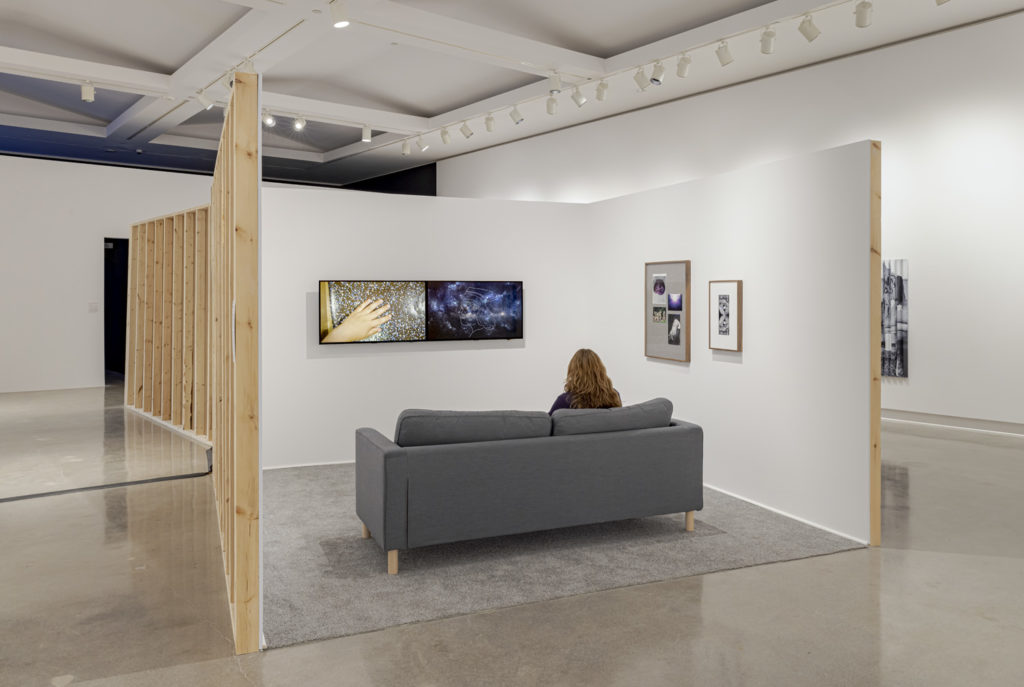
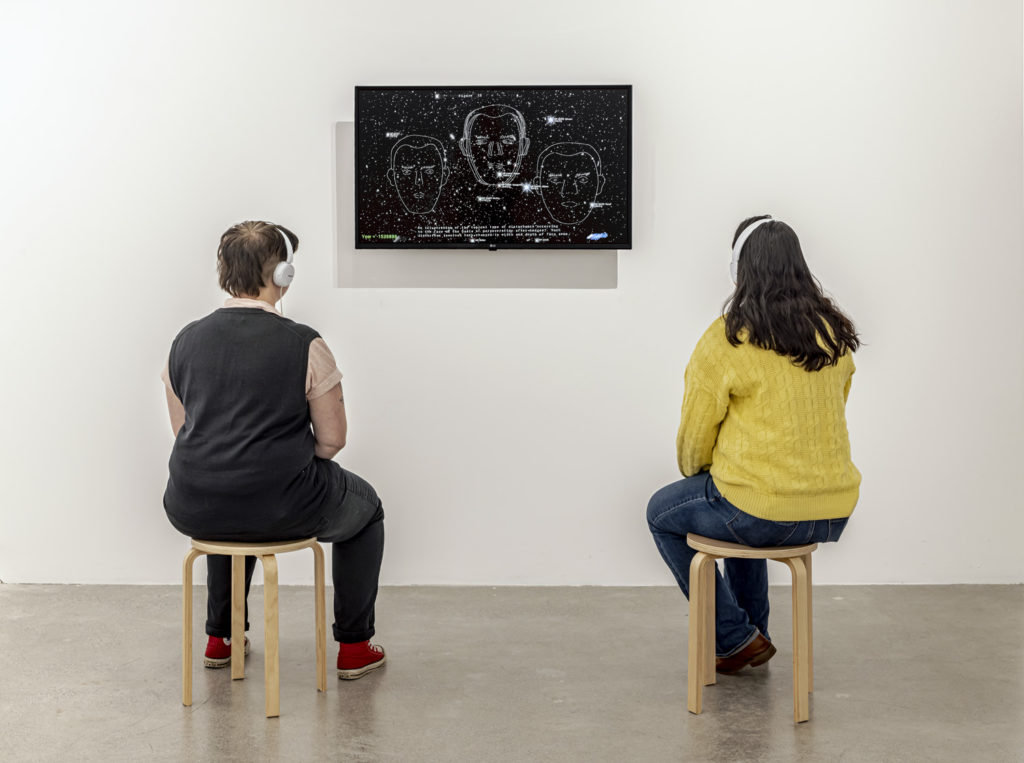
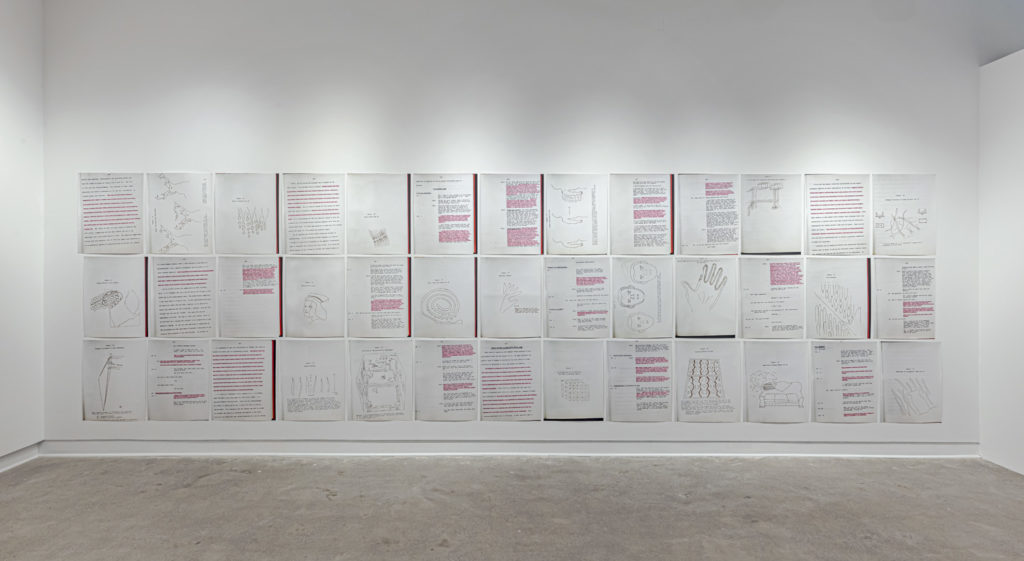
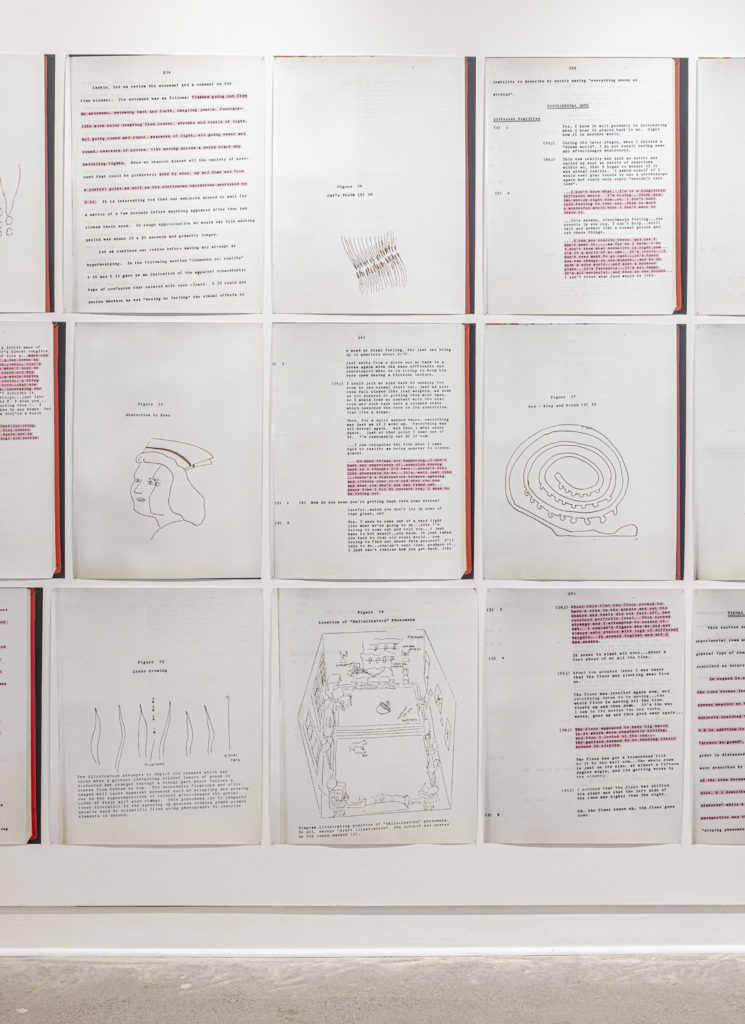
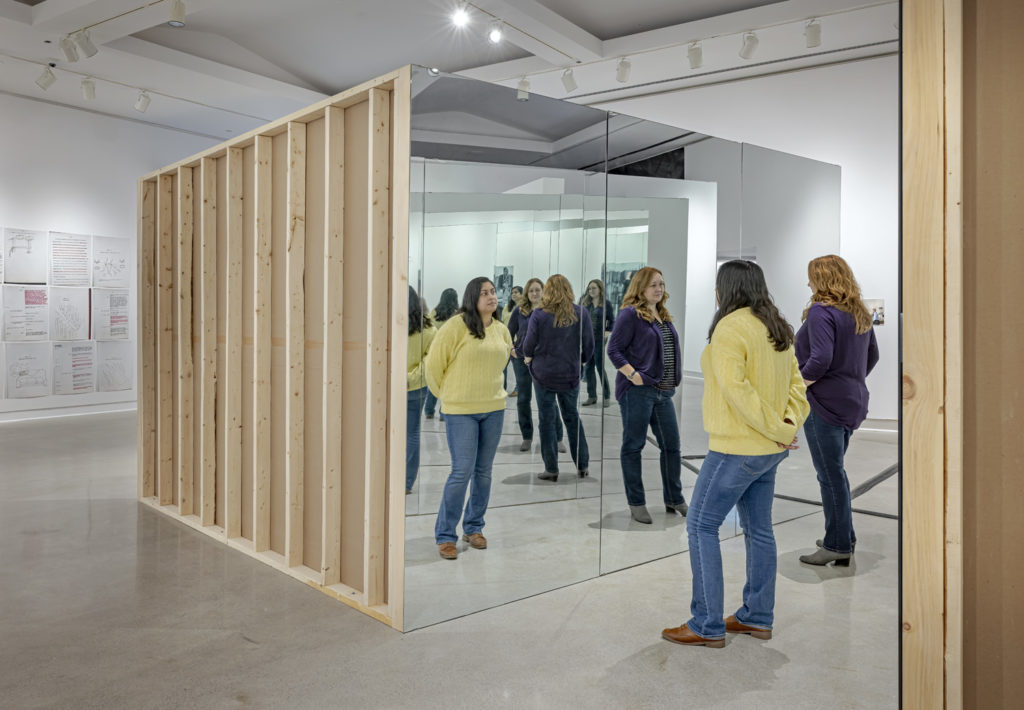
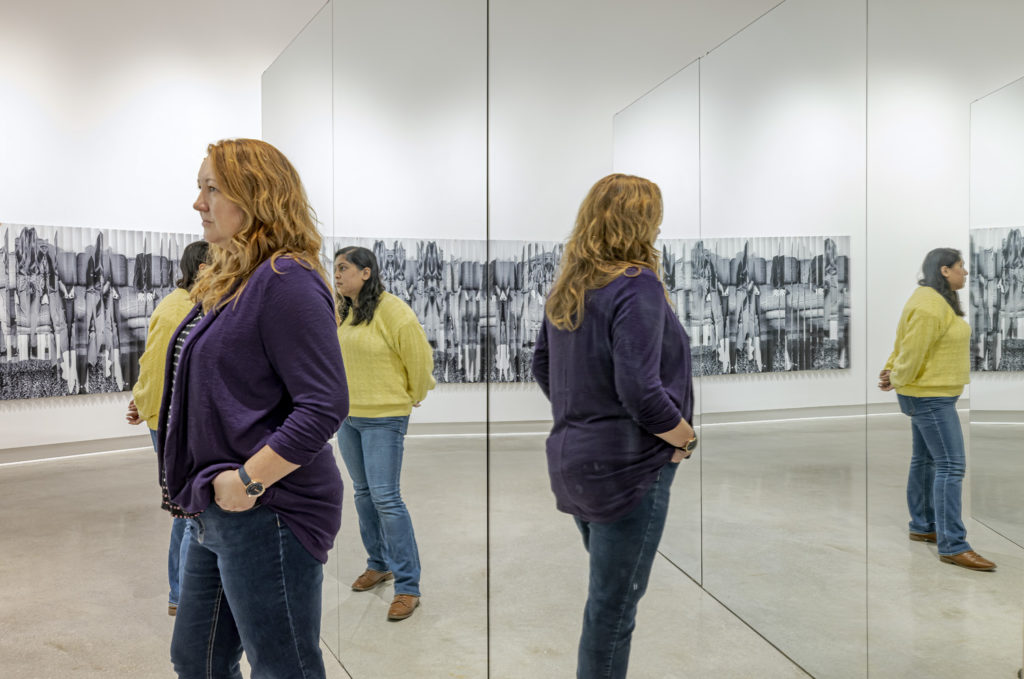
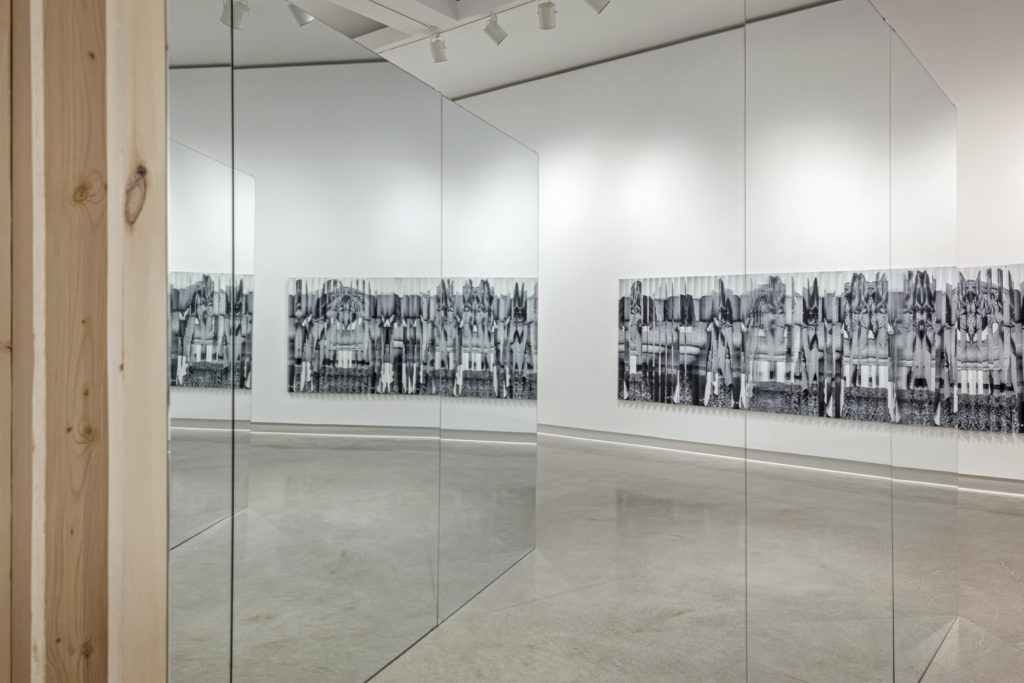
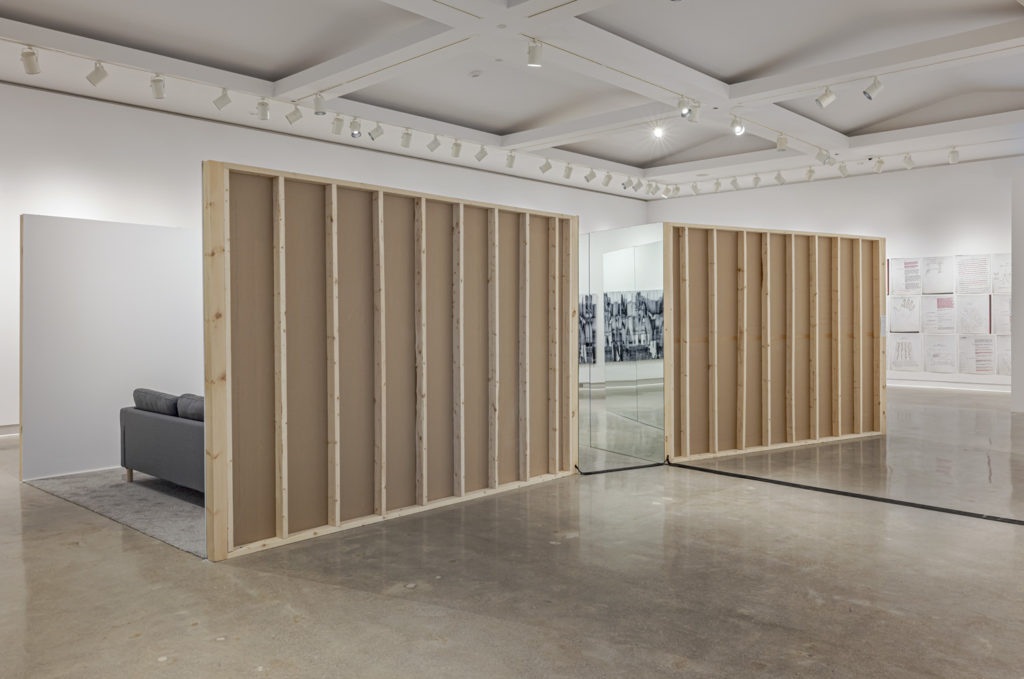
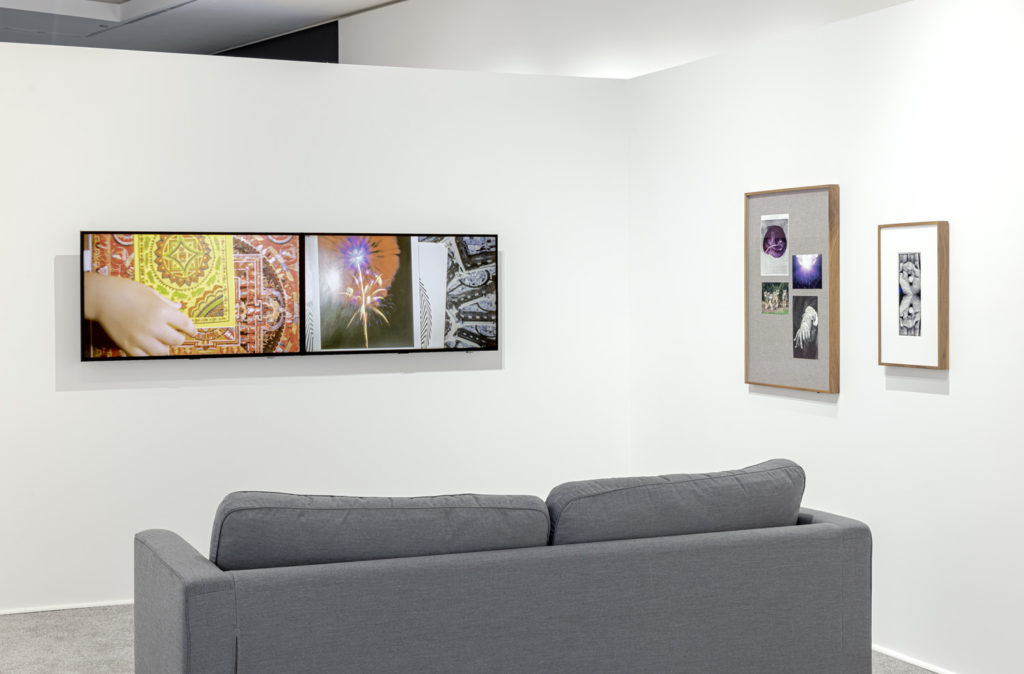
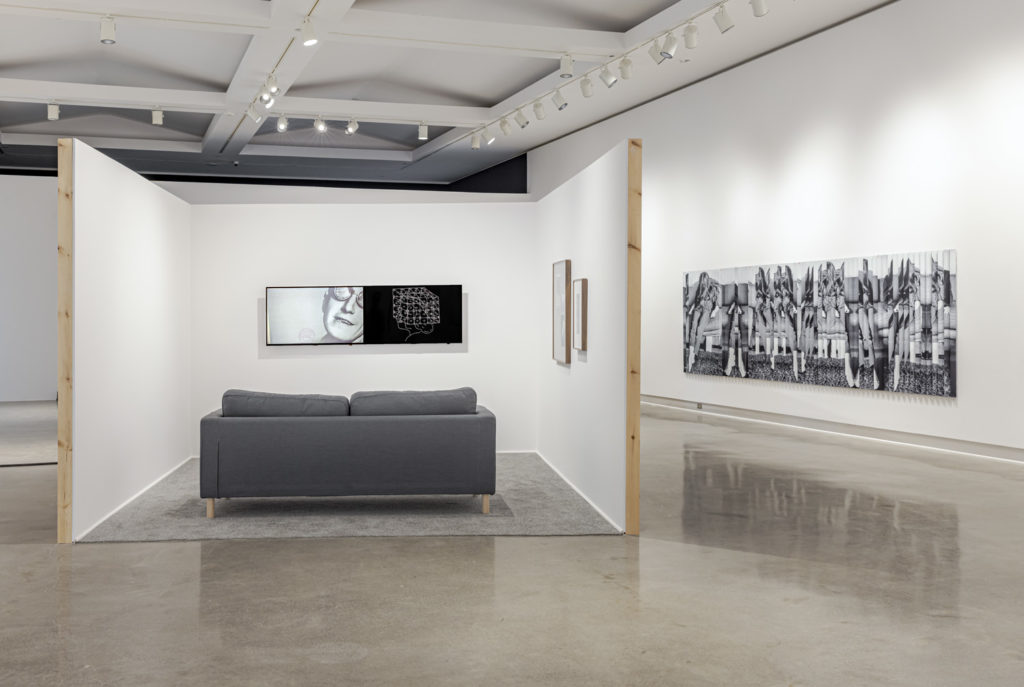
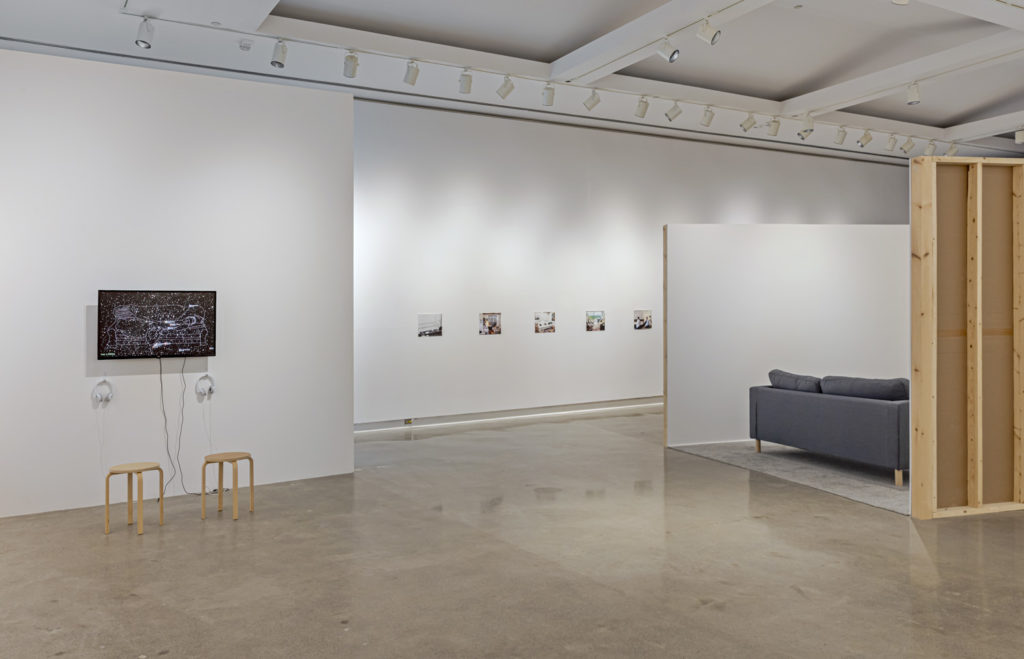
Psychedelic experience as a means to dissolve the ego and yield new models of collectivity is central to the new installation, Set and Setting. This work is informed by historical and contemporary psychedelic trials performed within research settings. Juxtaposing animated drawings sourced from early trial documents and architectural sets that recall institutional examination rooms, Set and Setting suggests that the boundary between subject and viewer is not only thin, but porous and continuously shifting. 


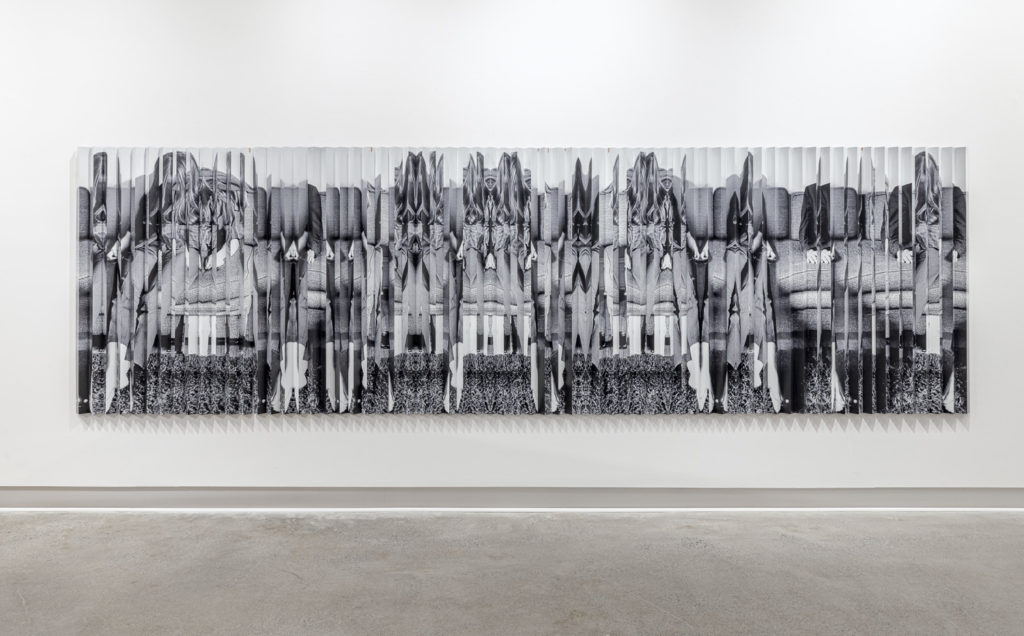
By making use of radical and lateral modes of thinking and storytelling, MacDonell affirms how art can be both a necessary clarifier and serve as an essential tool in world building.

Annie MacDonell is a visual artist and filmmaker. Her early training was in photography, and the image continues to play a central role in her projects. Her work also includes installation, sculpture, writing, and performance. In recent years, film has become a focus. Her films (sometimes produced with collaborator Maïder Fortuné) are shaped by feminists principles of politics as a daily practice. .

She received a BFA from Ryerson University in 2000, followed by graduate studies at Le Fresnoy, Studio National des Arts Contemporains, in France. Her films “Book of Hours” (2019) and “Communicating Vessels” (with Maïder Fortuné, 2020) have screened extensively internationally. Recent solo shows have been held at Gallery 44, Parisian Laundry, the AGO, and the Art Gallery of Mississauga. She has participated in group shows at The Art Museum of the University of Toronto, CAG Vancouver and Mackenzie Art Gallery. Recent performances have been presented at Nuit Blanche Toronto, le Centre Pompidou and the Toronto International Film Festival. In 2012 she was short-listed for the AGO AIMIA prize for photography, and she was long listed for the Sobey Art Award in 2012, 2015 and 2016. In 2020, she and Maïder Fortuné won the Tiger Award for Best Short Film at the Rotterdam International Film Festival, for their film “Communicating Vessels”.
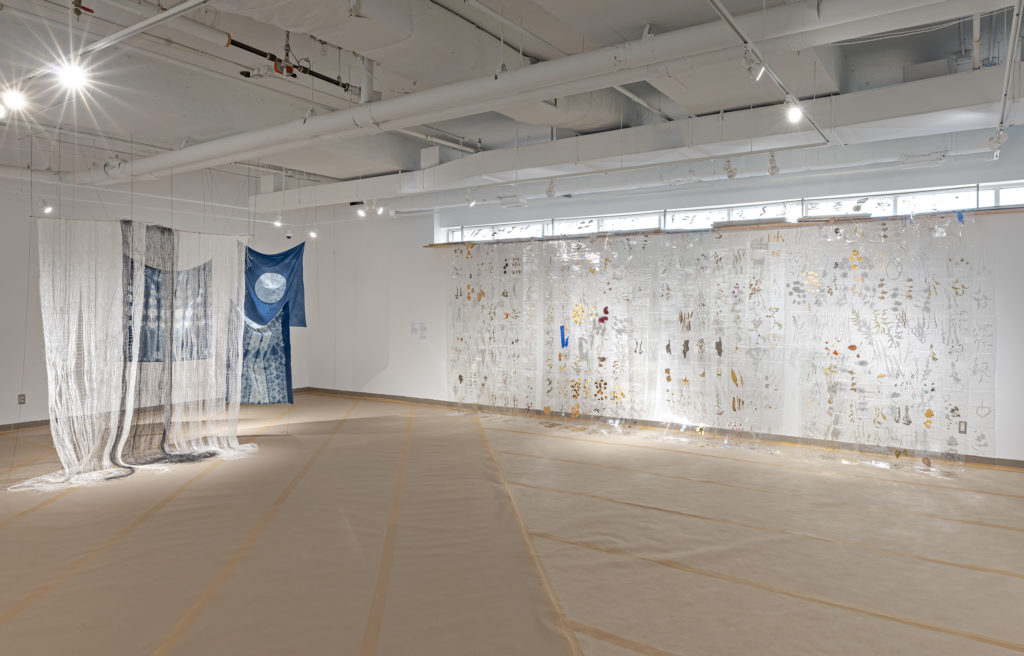
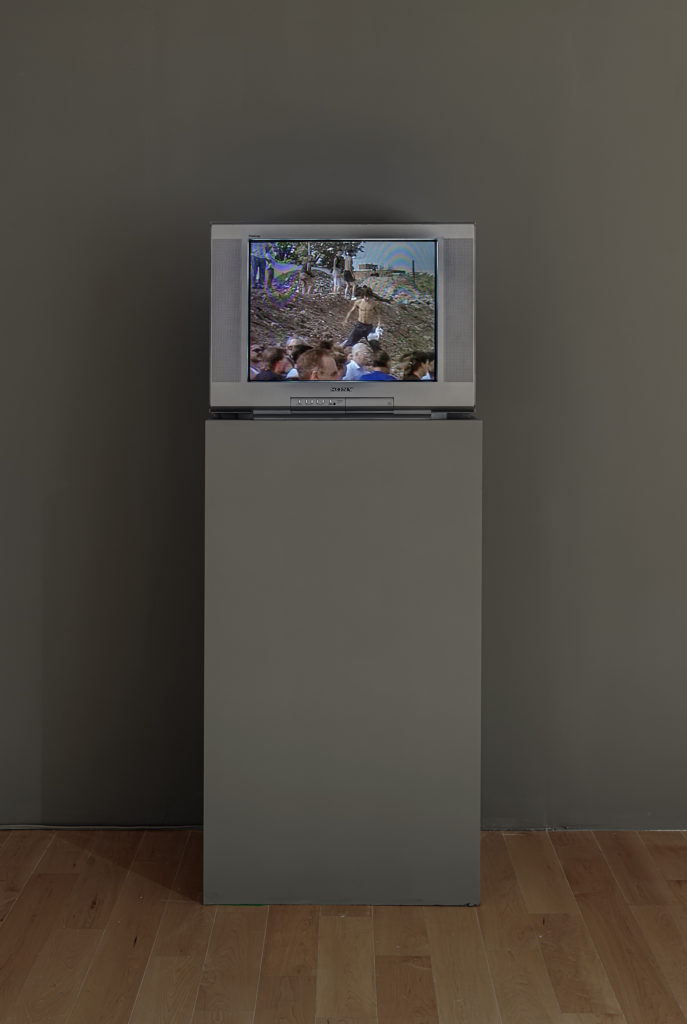
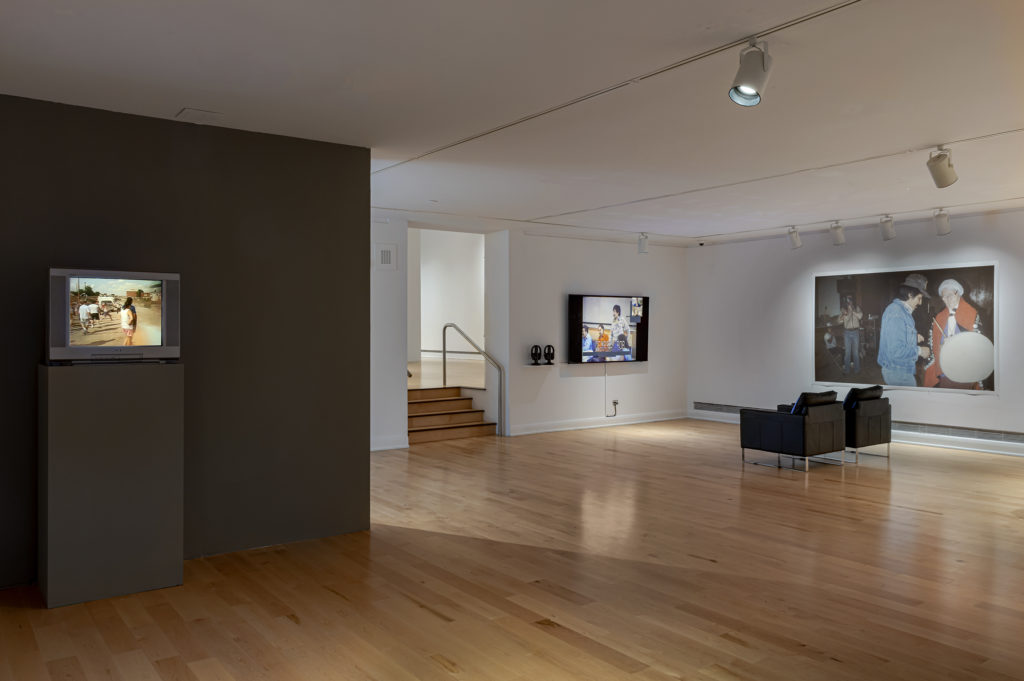
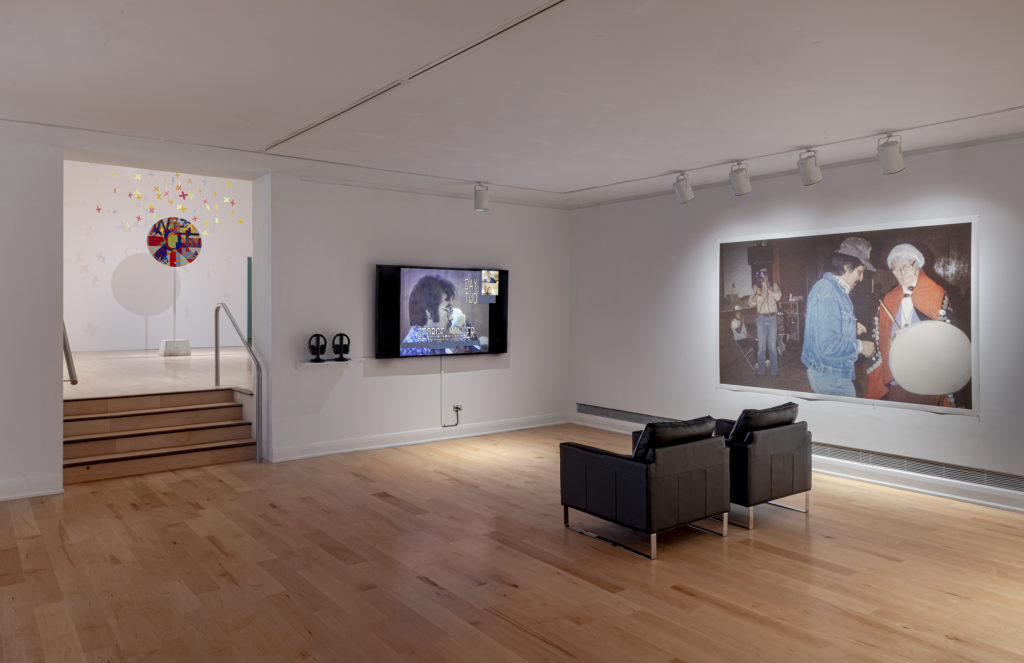
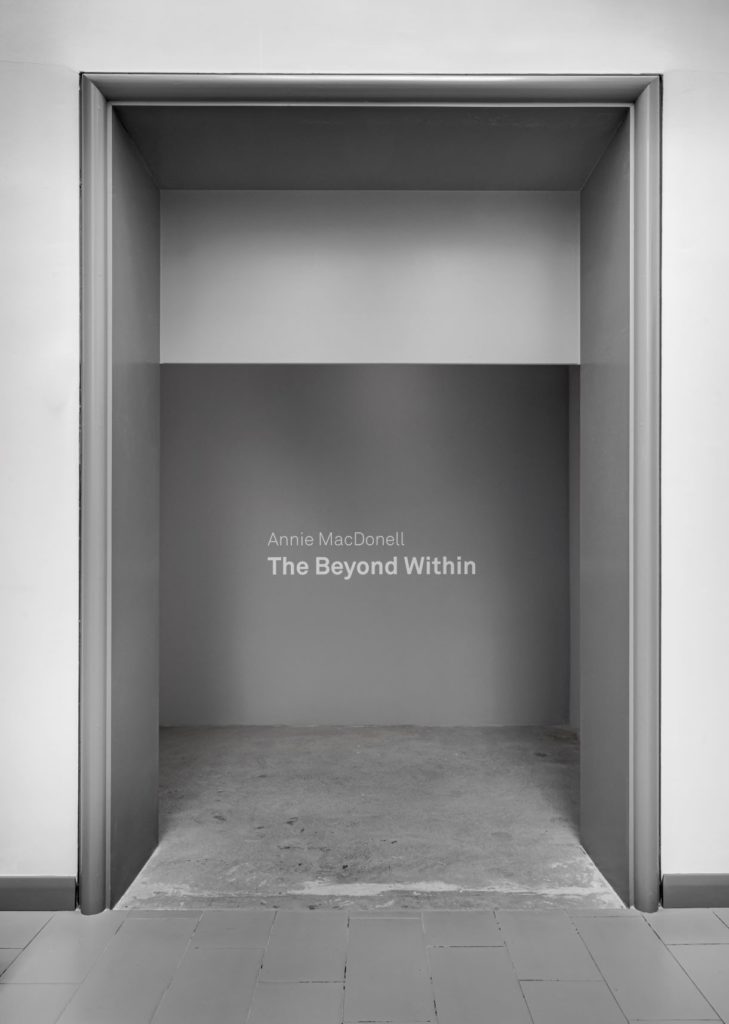
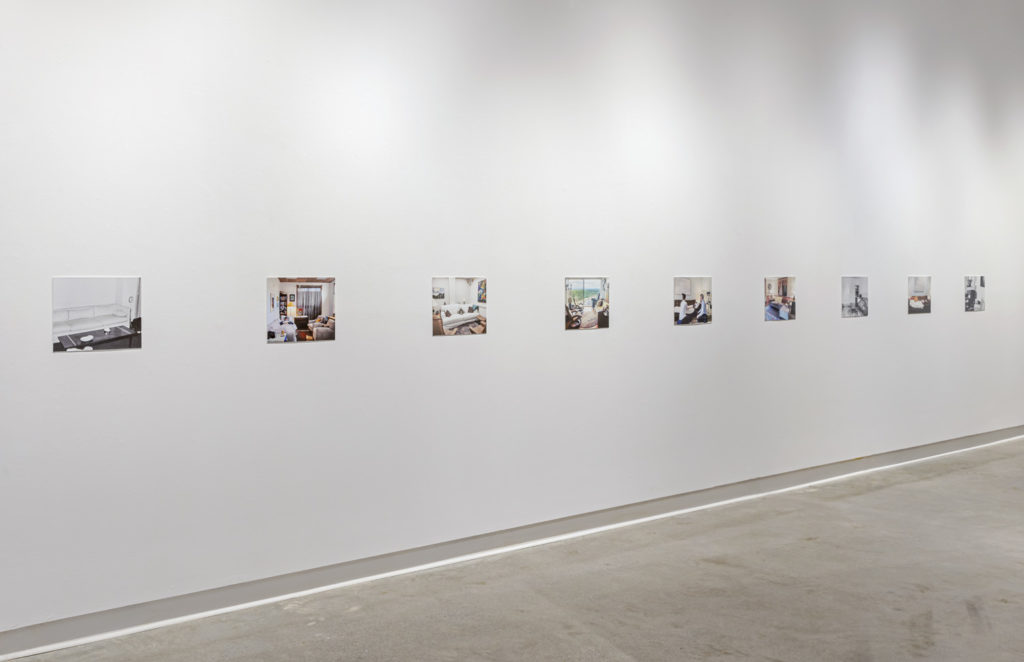
Installation of Annie MacDonell: The Beyond Within at the Robert McLaughlin Gallery, 2022. Images by Toni Hafkenscheid.

True Currency

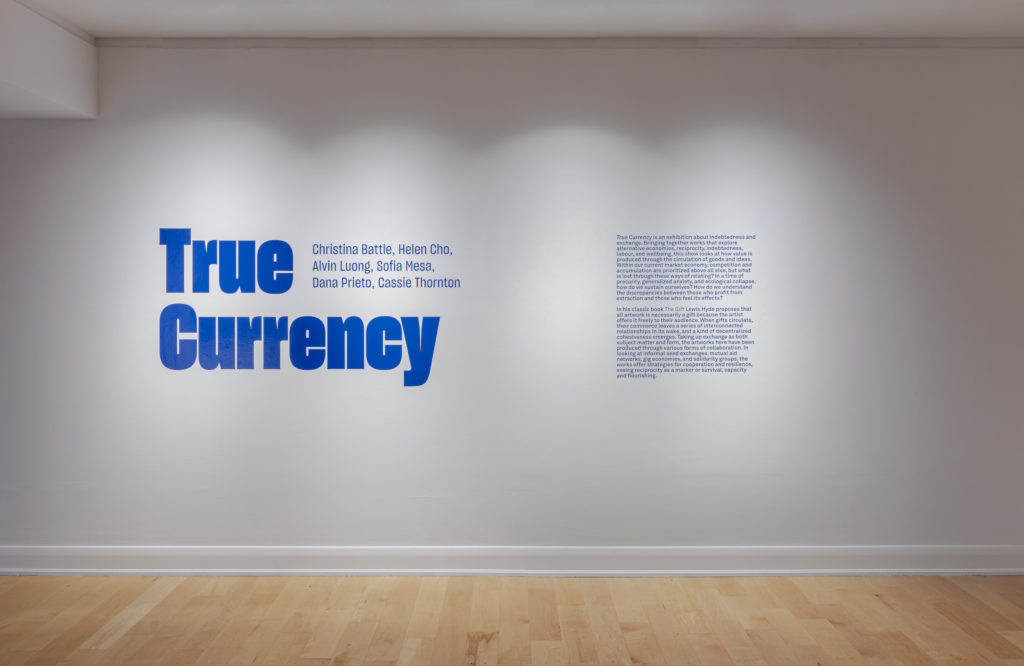
True Currency is an exhibition about indebtedness and exchange. Bringing together works that explore alternative economies, reciprocity, indebtedness, labour, and wellbeing, this show looks at how value is produced through the circulation of goods and ideas. Within our current market economy, competition and accumulation are prioritized above all else, but what is lost through these ways of relating? In a time of precarity, generalized anxiety, and ecological collapse, how do we sustain ourselves? How do we understand the discrepancies between those who profit from extraction and those who feel its effects?

In his classic book, The Gift, Lewis Hyde proposes that all artwork is necessarily a gift because the artist offers it freely to their audience. When gifts circulate, their commerce leaves a series of interconnected relationships in its wake, and a kind of decentralized cohesiveness emerges. Taking up exchange as both subject matter and form, the artworks here have been produced through various forms of collaboration. In looking at informal seed exchanges, mutual aid networks, gig economies, and solidarity groups, the works offer strategies for cooperation and resilience, seeing reciprocity as a marker or survival, capacity and flourishing.

Christina Battle is an artist based in amiskwacîwâskahikan, (also known as Edmonton, Alberta), within the Aspen Parkland: the transition zone where prairie and forest meet. Her practice focuses on thinking deeply about the concept of disaster: its complexity, and the intricacies that are entwined within it. Much of this work extends from her recent PhD dissertation (2020) which looked closer to community responses to disaster: the ways in which they take shape, and especially to how online models might help to frame and strengthen such response. She is currently the Online Editor for BlackFlash magazine, dedicated to presenting critical opinions, urgent issues and divergent artistic practices from across the prairies, Canada, and beyond. She collaborates with Serena Lee as SHATTERED MOON ALLIANCE and has exhibited internationally in festivals and galleries as both artist and curator, most recently at: The MacKenzie Art Gallery (Regina), The Art Gallery of Southwestern Manitoba (Brandon), The Boulder Museum of Contemporary Art (Colorado), Latitude 53 (Edmonton), The John & Maggie Mitchell Gallery (Edmonton), Harbourfront Centre (Toronto),  Capture Photography Festival (Vancouver); Forum Expanded at the Berlinale (Berlin), Blackwood Gallery (Mississauga), Trinity Square Video (Toronto), and Untitled Art Society (Calgary).

Helen Cho is a Pickering-based artist whose practice spans sculpture, video, performance, drawing, text and photography, and draws from translations of language, tradition and the sites and materials of everyday habits. Her artistic practice contemplates the ever-shifting emotional landscapes of migration, language, memory, and representation. It considers objects, sites, transactions, and mass-produced materiality of everyday life as contained within human desire and the attendant struggle for connection. Cho holds an MA in Fine Art from Goldsmiths College, University of London (UK) and has exhibited internationally. Her artworks have been exhibited at Kunstlerhaus Bethanien, Berlin; Kunstverein Wolfsberg, Wolfsberg; Kumho Museum, Seoul; National Musuem of Contemporary Arts, South Korea; SFU Galleries, Vancouver; Articule, Monteral; Galerie Martin van Zomeren, Amsterdam; and Galerie Magnus Müller, Berlin, among others. She has participated in artists-in-residences at Ssamziespace, Seoul; the Banff Centre, Banff; and European Ceramic Work Centre, Oisterwijk, the Netherlands.

Alvin Luong (梁超洪) creates artworks based on stories of human migration, land, and dialogues from the diasporic working class communities that he lives and works with. These stories are combined with biography to produce artworks that reflect upon issues of historical development, political economy, and social reproduction; and how these issues intimately affect the lives of people. In 2021, the artist was Artist-In-Residence at the Art Gallery of Ontario (Toronto), screened work at The Polygon Gallery in a co-presentation with Centre A (Vancouver), and presented solo exhibitions at Modern Fuel Artist-Run-Centre (Kingston, CA) and The New Gallery (Calgary); and produced and co-wrote a book published by The New Gallery Press (Calgary).

Sofia Mesa (b. 1995 Bogota, Colombia) is a multidisciplinary artist working with the cyanotype process, photography, drawing,  sculpture and furniture design. Her cyanotype work began as a way to tangibly document/photograph/imprint bodies due to the weight of the body being an integral facet to the creation of the image. She is interested in proof of life, conserving it, and material exploration. She often works with various collaborators, the sun and the water being two principal ones,  non-artists and community members. She has exhibited in various museums, galleries and artist run spaces in Toronto and New York City such as The Art Gallery of Ontario; Gallery TPW; Galley 44; The KUBE (NYC) and was commissioned by Contact Photography Festival in 2017 to create a public installation “Guardians” at Allan Gardens: a collection of artworks that displayed the necessity and reality of community. Sofia lives and works between New York City and Medellin. 

Dana Prieto (born in 1984, Argentina; lives in Toronto, Canada) is an artist and educator with a site-responsive art practice that manifests in installation, performance, writing and diverse collaborations. Her work examines our intimate and collective entanglements with colonial institutions and power structures, calling for careful attention to ways of relating, thinking, making and consuming in the Anthropocene. Dana holds a Master of Visual Studies from the University of Toronto, and her work has been presented in national and international galleries, public spaces and informal cultural venues.

Cassie Thornton an artist and activist who makes a “safe space” for the unknown, for disobedience, and for unanticipated collectivity. She uses social practices including institutional critique, insurgent architecture, and “healing modalities” like hypnosis and yoga to find soft spots in the hard surfaces of capitalist life. Cassie has invented a grassroots alternative credit reporting service for the survivors of gentrification, has hypnotized hedge fund managers, has finger-painted with the grime found inside banks, has donated cursed paintings to profiteering bankers, and has taught feminist economics to yogis (and vice versa). Her new book, The Hologram: Feminist, Peer-to-Peer Health for a Post-Pandemic Future, is available from Pluto Press. She is currently the co-director of the Re-Imagining Value Action Lab in Thunder Bay, an art and social centre at Lakehead University in Ontario, Canada.

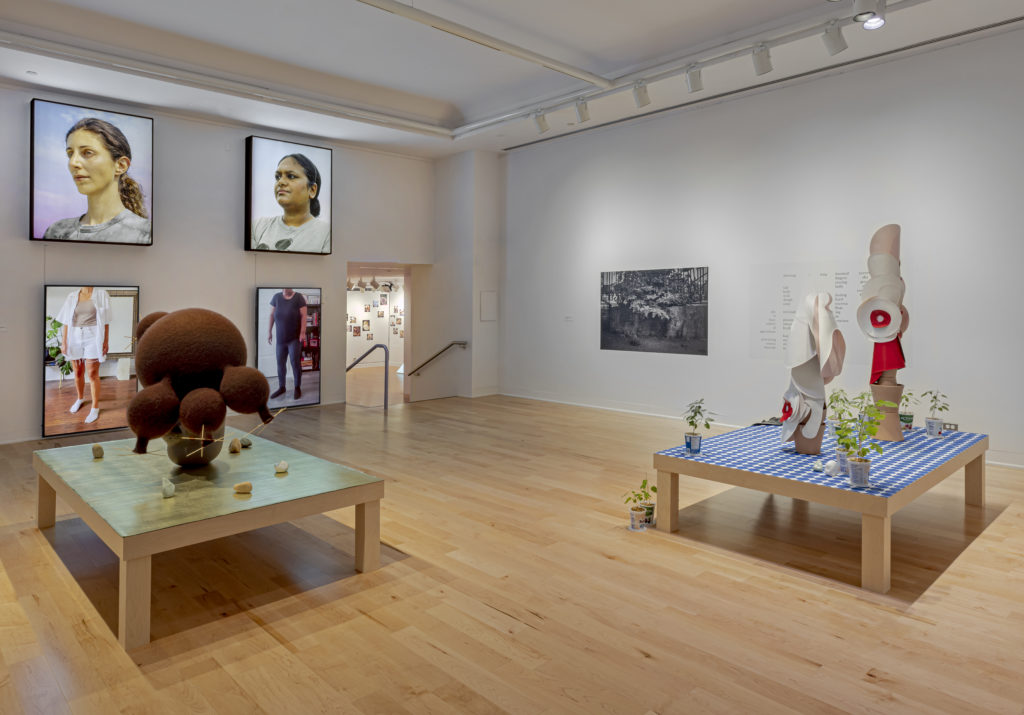
Installation of True Currency at the Robert McLaughlin Gallery, 2022. Photos by Toni Hafkenscheid.

Elemental: Oceanic

“Have patience with everything that remains unsolved in your heart… live in the question.”

– Rainer Maria Rilke, Letters to a Young Poet

Tune in to a conversation between Tim Whiten and Erika DeFreitas, filmed at Whiten’s Toronto studio. During this recorded talk, both discuss their creative process, reflect on influences, and share recent work related to their shared interests in metaphysics, art, and ritual practices.

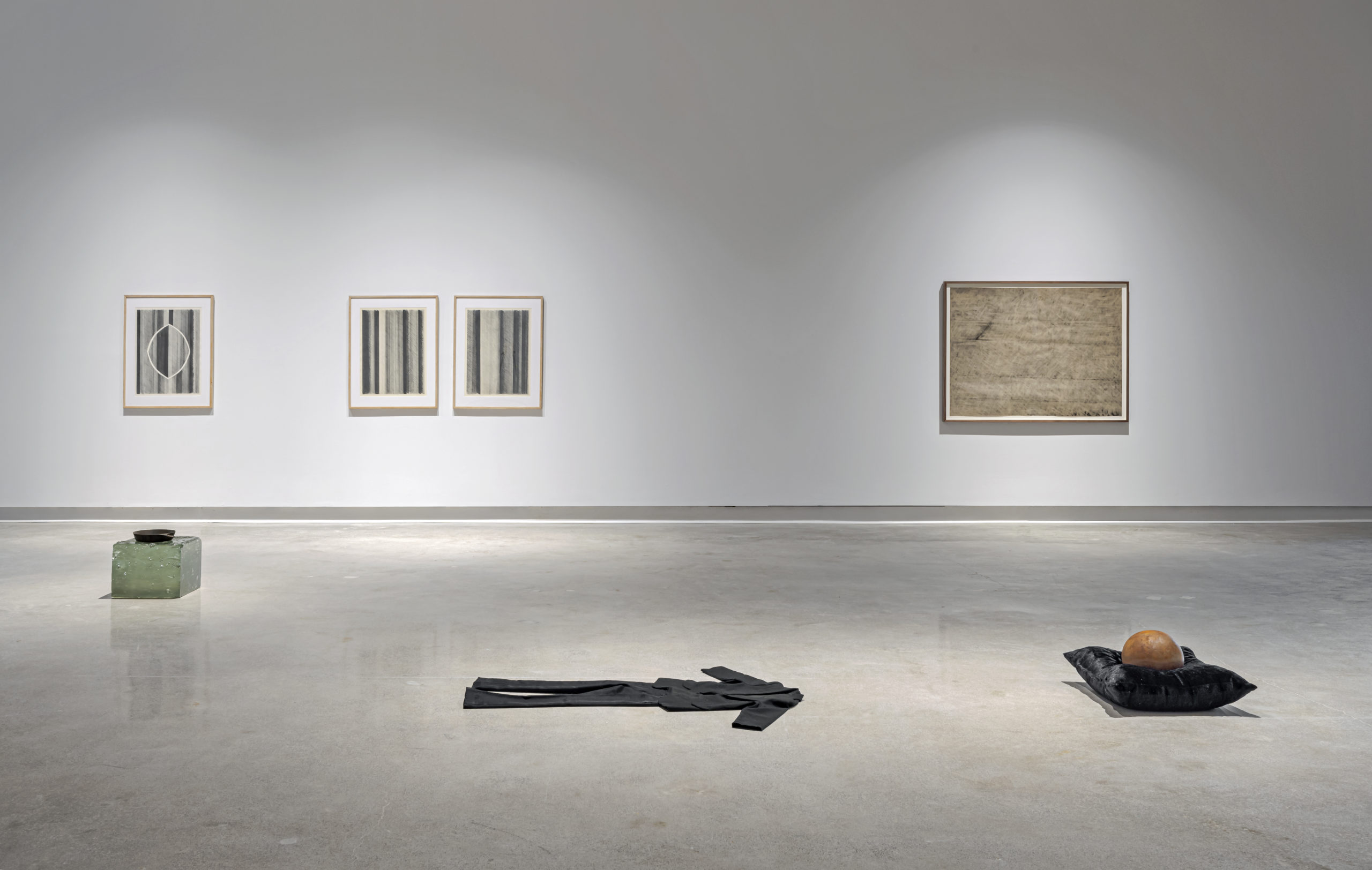
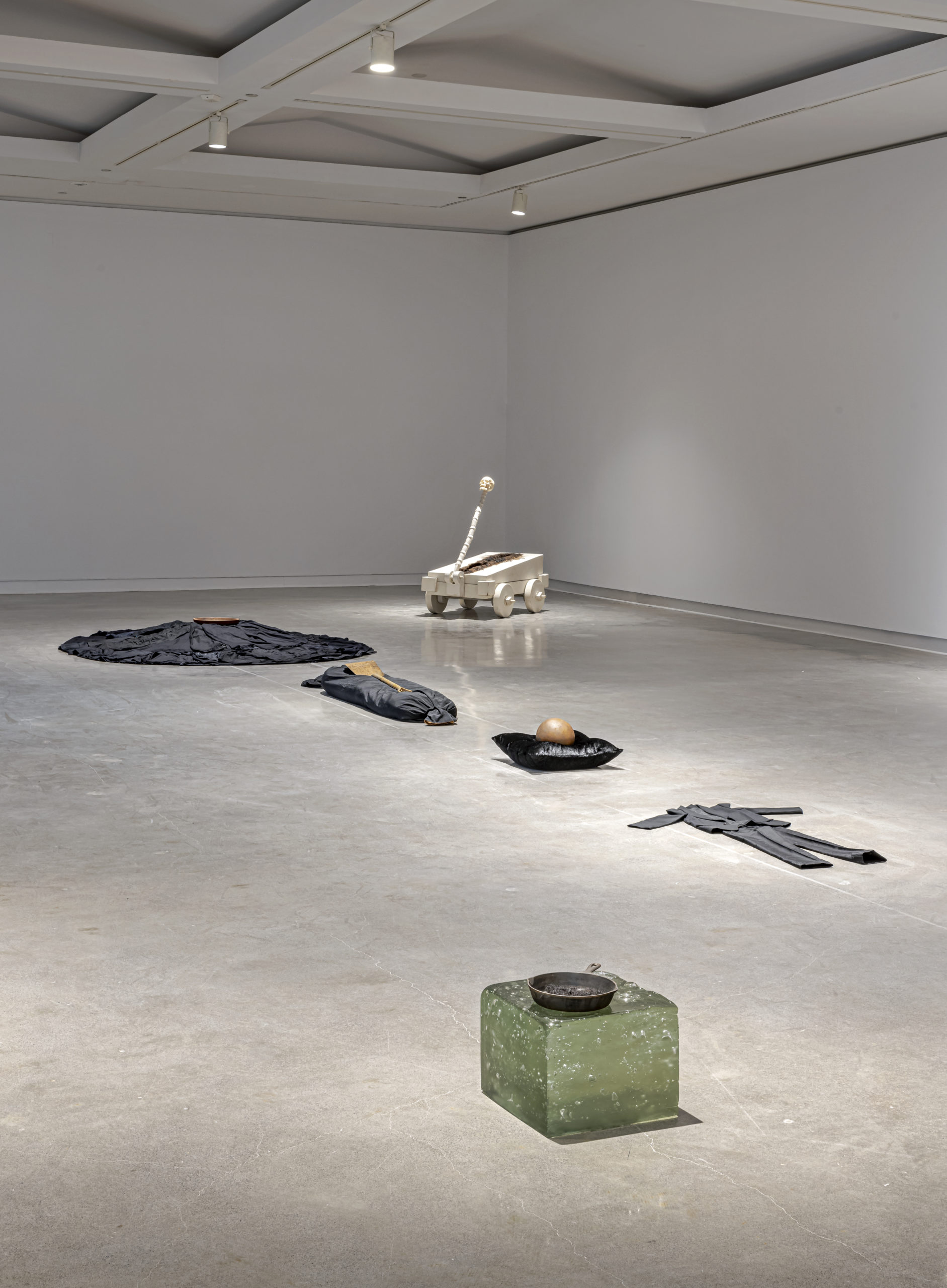
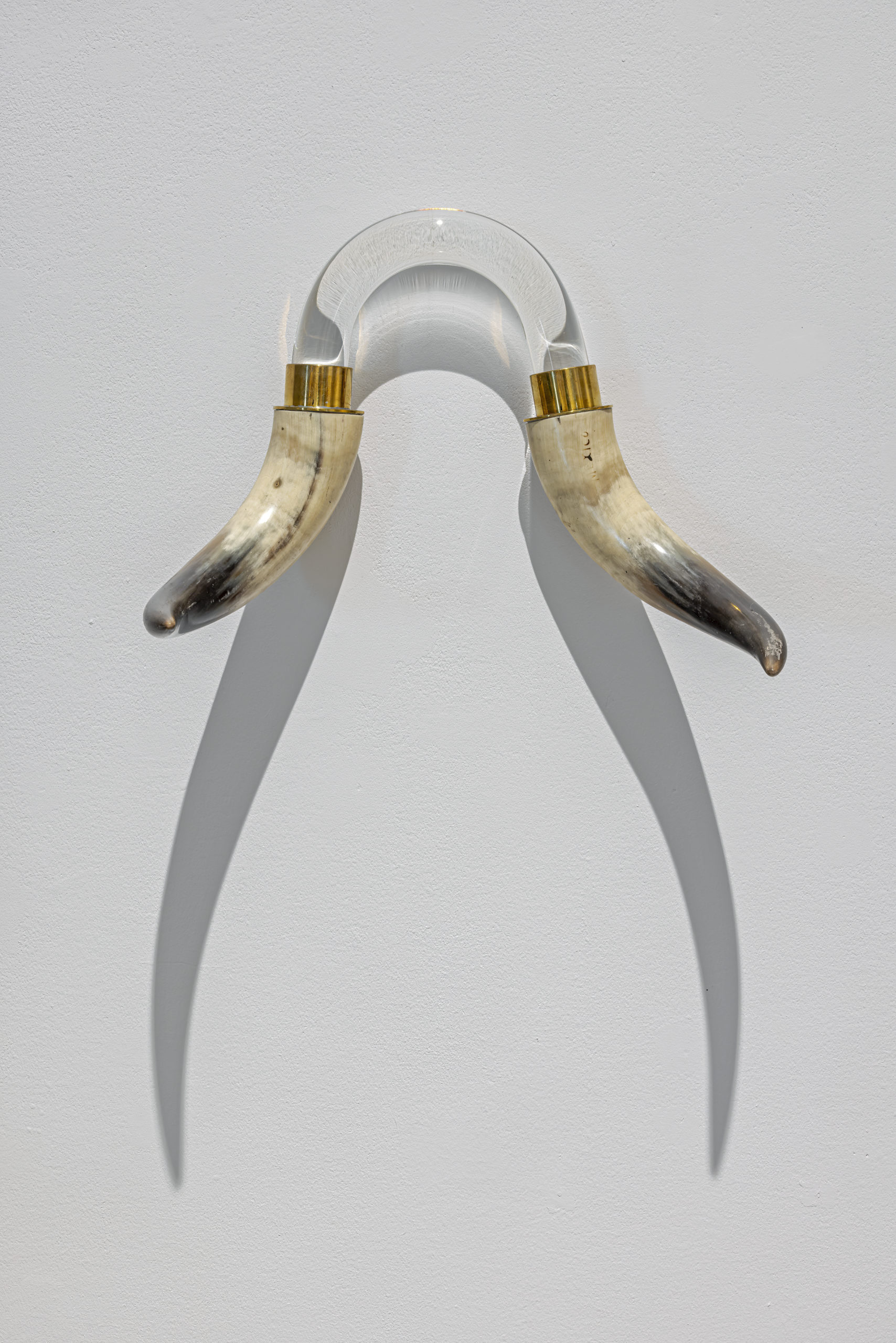
Tim Whiten’s broad and prolific creative practice reflects a life devoted to pursuing the nature of consciousness and the human condition. Drawing from over fifty years of production, this exhibition features sculptures and works on paper from the early 1970s to the present, representing material explorations of ritual, embodiment, ancestral knowledge, and transcendence. His work acts as a living question, attempting to reveal what cannot be seen and uniting the physical with the divine.

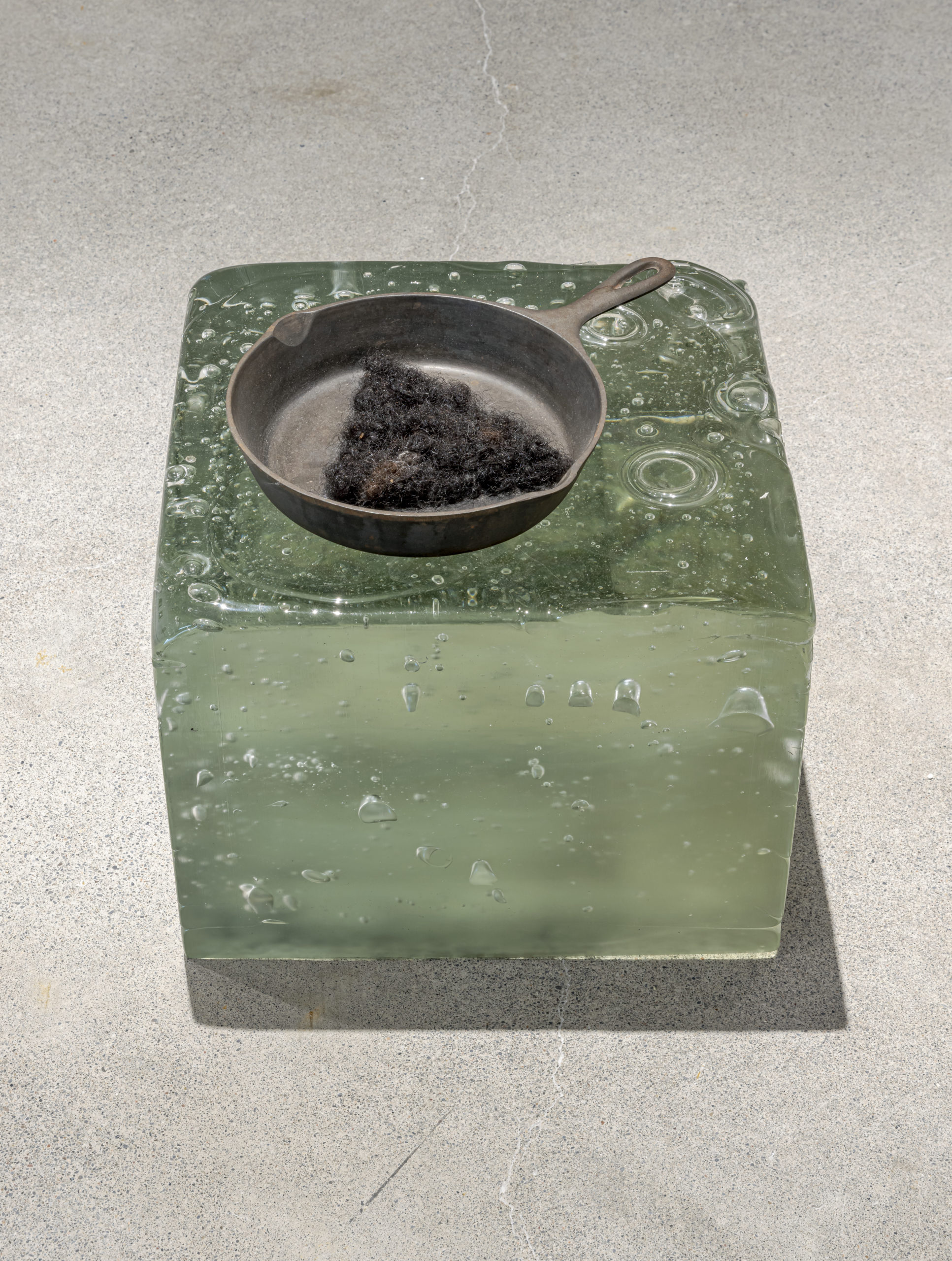
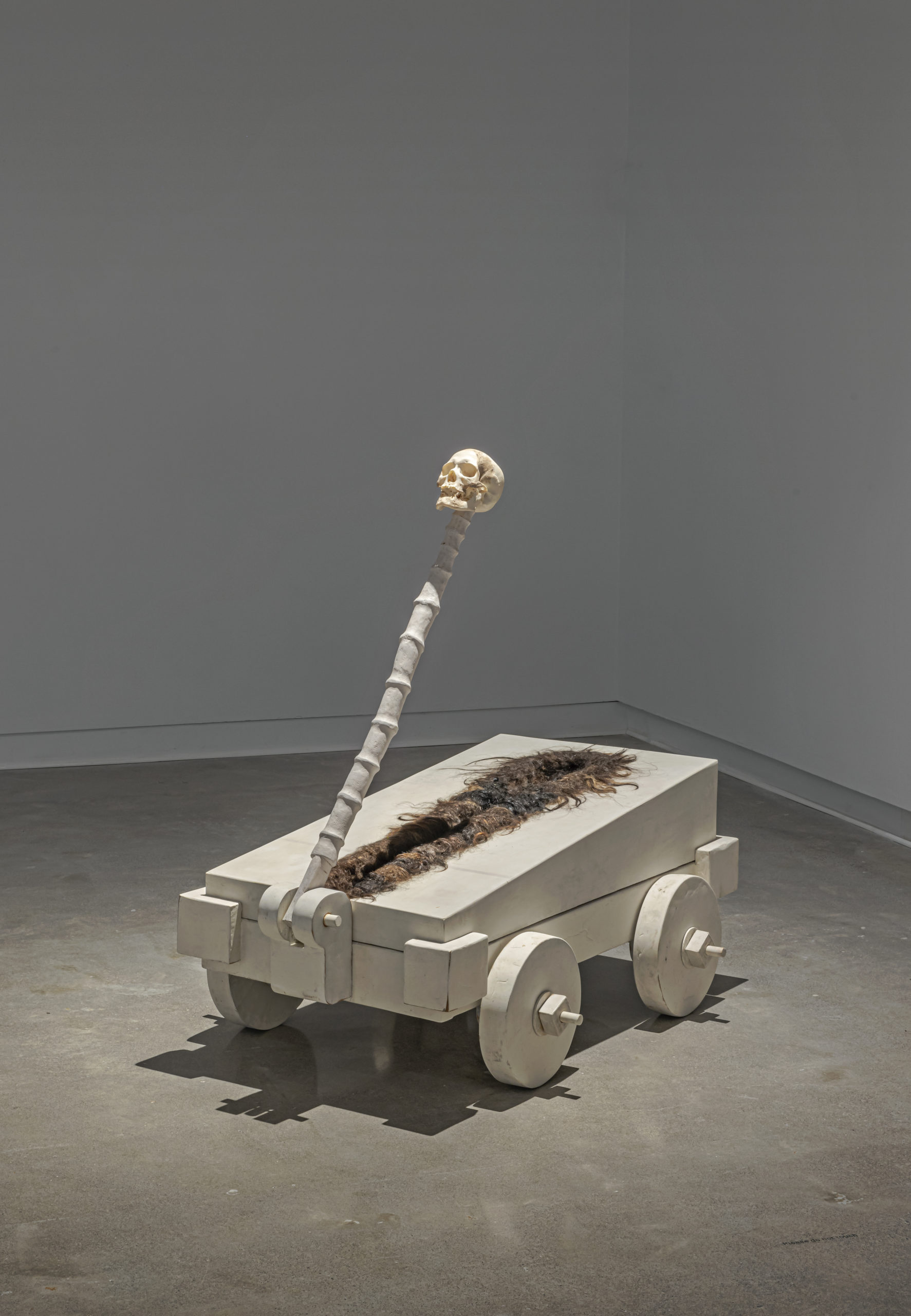
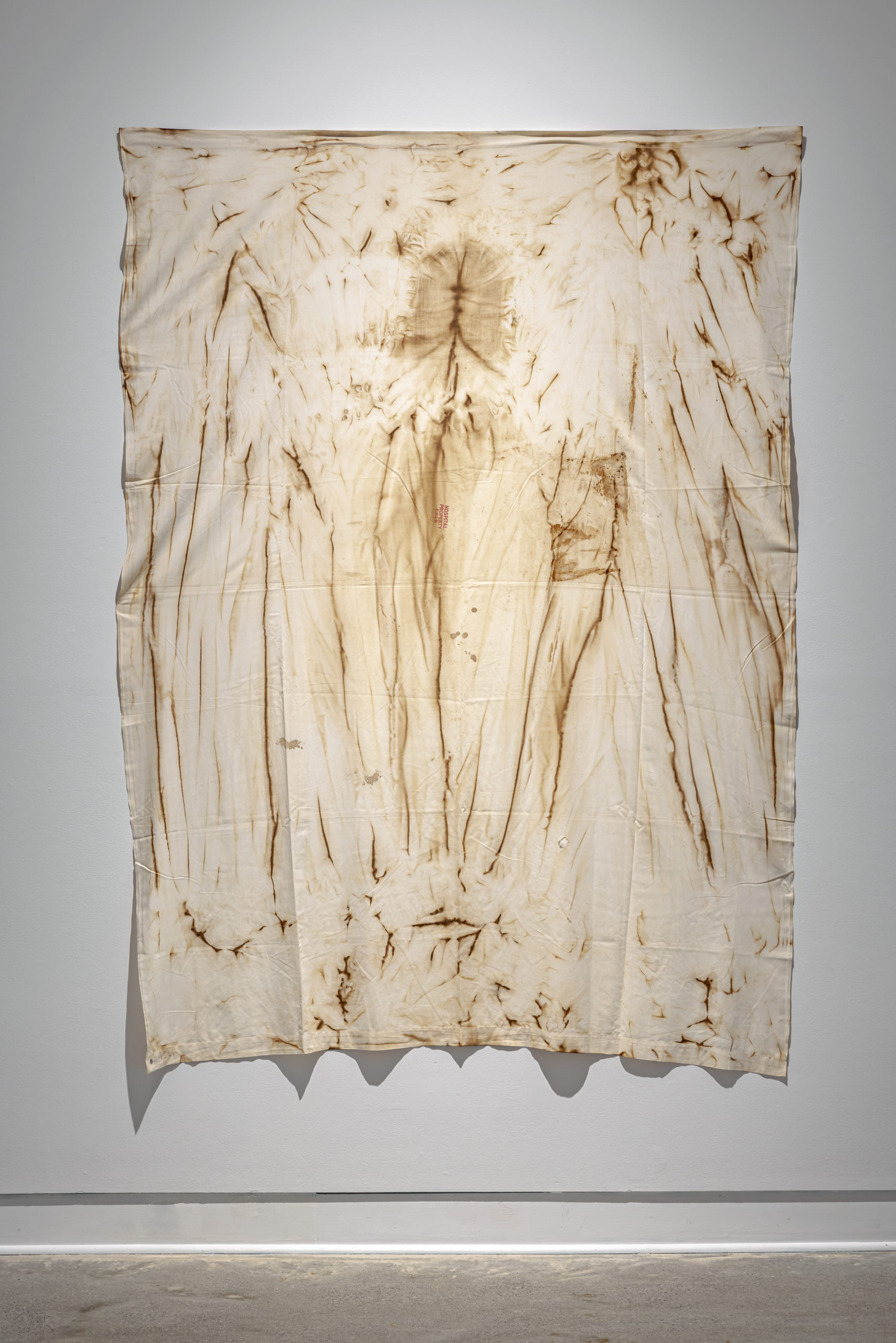
Elemental is part of an expanded, multi-venue retrospective and collaborative publication celebrating Tim Whiten’s career, developed in partnership between the Art Gallery of Peterborough, Art Gallery of York University, Robert McLaughlin Gallery, and McMaster Museum of Art from 2022 to 2023. This series of exhibitions are thematically united by the classical elements of air, water, earth, and fire – referencing Whiten’s interest in alchemical practices. Elemental: Oceanic focuses on the element water and its associations with emotions, intuition, imagination, and the infinite. The oceanic has also been a concept used by mystics and theologians to describe the feeling of the eternal, and the ineffable experiences of unity and oneness between all beings. In this exhibition, Whiten’s drawings and sculptural works reflect this energy through a refined pallet of natural materials—leather, bone, glass, iron, graphite and cloth—which become charged with connotative potential. Referencing the cyclical nature of life, the work is a reminder that to live with the remembrance of death is to live fully and expansively.
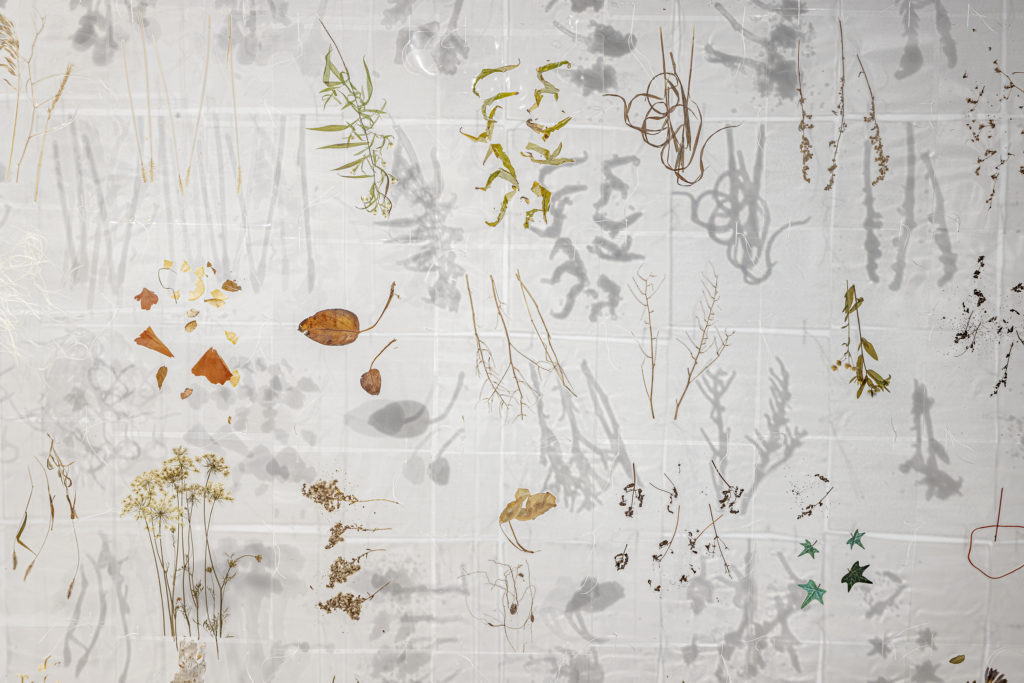
Tim Whiten was born in Inkster, Michigan in 1941. In 1964, he received a B.S. from Central Michigan University, College of Applied Arts and Science, and in 1966 completed his M.F.A. at the University of Oregon, School of Architecture and Allied Arts. After immigrating to Canada in 1968, he taught in the Department of Visual Arts at York University for 39 years. An award-winning educator, he was also Chair of the University’s Department of Visual Arts where he is currently Professor Emeritus. Since 1962, he has had work presented in exhibitions throughout North America and internationally and it is included in numerous private, public, and corporate collections, such as the National Gallery of Canada, the Art Gallery of Ontario, and the Fine Arts Museums of San Francisco (both the de Young and the Legion of Honor/ Achenbach Foundation for the Graphic Arts). Based in Toronto, Tim Whiten is represented by Olga Korper Gallery.

Images: Tim Whiten – Elemental: Oceanic at The Robert McLaughlin Gallery, 2022. Documentation by Toni Hafkenscheid.

Taskoch pipon kona kah nipa muskoseya, nepin pesim eti pimachihew | Like the winter snow kills the grass, the summer sun revives it

Taskoch pipon kona kah nipa muskoseya, nepin pesim eti pimachihew | Like the winter snow kills the grass, the summer sun revives it features seven Indigenous artists who create work in an Indigenous language from each of the major geographic regions of what is now known as Canada—Anishinaabemowin, Komqwejwi’kasikl, Michif, nēhiyawēwin, Nitsiipowahsiin, Tāłtān, and Uummarmiutun. The exhibition celebrates and centres Indigenous language revitalization and ways of knowing. Taskoch pipon kona kah nipa muskoseya, nepin pesim eti pimachihew aims to address and initiate a discussion on how Indigenous languages intertwine with Indigenous epistemologies and how the dormancy and extinction of Indigenous languages leads to a hindrance of culture and knowledge. Bringing together emerging and established Indigenous artists based in so-called Canada, the exhibition gives space back to those artists whose practices deal with Indigenous languages in each of their visibilities, vulnerabilities, and regional voices.

Taskoch pipon kona kah nipa muskoseya, nepin pesim eti pimachihew Like the winter snow kills the grass, the summer sun revives it is presented alongside Mamanaw Pekiskwewina Mother Tongues: Dish With One Spoon Territory.

Taskoch pipon kona kah nipa muskoseya, nepin pesim eti pimachihew | Like the winter snow kills the grass, the summer sun revives it is curated by Missy LeBlanc and is organized and circulated by TRUCK Contemporary Art.

We acknowledge the support of the Canada Council for the Arts and the Ontario Trillium Foundation for this project.

Canada council logo

Undeliverable

Co-presented by Tangled Art + Disability and The Robert McLaughlin Gallery

RMG: September 18, 2021 – February 13, 2022
Tangled Art + Disability: September 17 – October 29, 2021

Undeliverable is a continuation of artist Carmen Papalia’s curatorial practice. Envisioning curation as a form of care, the exhibition brings together six artists from the Mad, Deaf and disability community, Vanessa Dion Fletcher, Chandra Melting Tallow, Jessica Karuhanga, jes sachse, Aislinn Thomas, and Carmen Papalia with Heather Kai-Smith, re-envisioning the museum around the demands and desires of the disabled body/mind. Presented across two spaces – Tangled Art + Disability and The Robert McLaughlin Gallery – the exhibition features ambitious new work that challenges institutional structures and centres mutual accountability.

Kindly note that both the RMG and Tangled Art + Disability are scent free spaces. In order to remain respectful of individuals who may have sensitivity to certain scents or smells, we would like to ask all visitors to help us in creating a fragrance free environment that everyone can enjoy.

Interested in learning more about sensitivity to scents and fragrances? Head over to our Instagram feed for a Takeover by artist Aislinn Thomas that shares more information about how you can help make public spaces more accessible and safe for all those who experience barriers from the toxicants that are in so many personal care, cleaning, building, and fragrance products.

About the Curator and Artists

Carmen Papalia is an artist and disability activist who uses organizing strategies and improvisation to navigate his access to public space, art institutions, and visual culture. His socially-engaged practice expresses his resistance of support options that promote ableist concepts of normalcy, like white canes and other impairment-specific accommodations that only temporarily bridge barriers to participation in an otherwise inaccessible, policy-based system. Papalia designs experiences that invite participants to expand their perceptual mobility and to claim access to public and institutional spaces. Papalia’s walks, workshops, and interventions are an opportunity to model new standards and practices in the area of accessibility.

Heather Kai Smith is an artist who currently lives and works in the unceded Coast Salish Territory known as Vancouver. She completed her MFA at the Emily Carr University of Art and Design (2017), and her BFA in Drawing from the Alberta College of Art and Design (2009). Her current practice explores the potential embedded within archival images of protest, collectivity, and intentional communities activated through drawing, observation and iteration. Rooted in the practice of drawing, her work has lent itself to projects in animation, printmaking, and installation.

Jessica Karuhanga is an African-Canadian artist who works through writing, video, drawing and performance. She has presented her work at The Bentway, Toronto (2019), Nuit Blanche, Toronto (2018), Onsite Gallery at OCAD, Toronto (2018), Museum London, London (2018), Goldsmiths, London, UK (2017) and Art Gallery of Ontario, Toronto (2016). Her writing has been published by C Magazine, Susan Hobbs Gallery and Fonderie Darling. She has been featured in i-D, DAZED, Visual Aids, Border Crossings, Toronto Star, CBC Arts, filthy dreams, Globe and Mail and Canadian Art. She earned her BFA from Western University and her MFA from University of Victoria. She lives and works in Toronto, Canada.

Vanessa Dion Fletcher graduated from The School of the Art Institute of Chicago in 2016 with an MFA in performance, and has exhibited across Canada and the US, including Art Mur (Montreal), Eastern Edge Gallery (Newfoundland), The Queer Arts Festival (Vancouver), and Satellite Art Fair (Miami). Her work is in the Indigenous Art Centre (Gatineau, Quebec), Joan Flasch Artist Book collection, Vtape, and Seneca College. Vanessa is supported by the City of Toronto Indigenous partnerships fund as artist in residence at OCAD University for 2019.

Aislinn Thomas is an interdisciplinary artist whose practice includes video, performance, sculpture, installation, and text. She culls material from everyday experiences and relationships, creating work that ranges from poignant to absurd, and at times straddles both. Her recent works explore the generative nature of disability while pushing up against conventional access measures. Aislinn is a settler of Ashkenazi and British descent. She currently lives and works near the Grand River, on land promised to the Six Nations.

Chandra Melting Tallow is an interdisciplinary artist, musician and writer of mixed ancestry from the Siksika Nation. Their practice confronts the ghosts of intergenerational trauma and their relationship to the body – utilizing both humor and surrealism to subvert oppressive structures of power. They have exhibited across Turtle Island as an installation, sound and performance artist.

jes sachse is an artist, writer and performer whose work addresses the negotiations of bodies moving in public/private space and the work of their care. Their work & writing has appeared in NOW Magazine, The Peak, CV2 -The Canadian Journal of Poetry and Critical Writing, Mobilizing Metaphor: Art, Culture and Disability Activism in Canada, and the 40th Anniversary Edition of Our Bodies, Ourselves. Jes presently lives in Toronto.

Image Description:
Relative Gradient by Vanessa Dion Fletcher. A large, thin circle is made of porcupine quills folded back and forth in a zigzag pattern. The colours of the quill embroidery form a gradient of warm reds, pinks, yellows, browns and whites.

Primary Structures

Bowmanville-based artist Ron Eccles’ abstract paintings draw inspiration from a deep sense of place. Rooted within this community, Eccles is inspired by his frequent drives along the shoreline of Lake Ontario from Bowmanville to Port Hope, enjoying the patterned farmland, weather changes, and seasonal colours. His reflections on time, geography, and light manifest in his geometric and structured abstract paintings.

With a prolific career spanning more than five decades, this exhibition focuses on a series of recent work called “White Line Compositions” and includes additional works created within the last fifteen years. Eccles is trained as a printmaker, which informs his painting process and allows him to create simplicity from complex processes, skillfully building layers within his work. Often working on more than one painting at a time, he begins by grounding the painting in blocks of colours, adding different tones to prevent flatness and create transparency and brilliance. A good example of this is Signal Warning (2020), where the red diptych seems to emit light from the wall. After colour, Eccles begins to build structure with white lines, allowing shapes and forms to bleed through, such as in works like River Ice (2020) or North Northwest (2019). While both titles of these works suggest landscapes, they are not representational works; instead, they conjure up feelings, moods, and recollections of a landscape. These connections to nature and memory are not clear to Eccles in the early stages of his process, and it is only after he lays down a primary structure of colour, line, and form that something cues his memory and a subject is realized. As Eccles says: “The painting process feeds you as much as you feed it, it tells you what to do.”
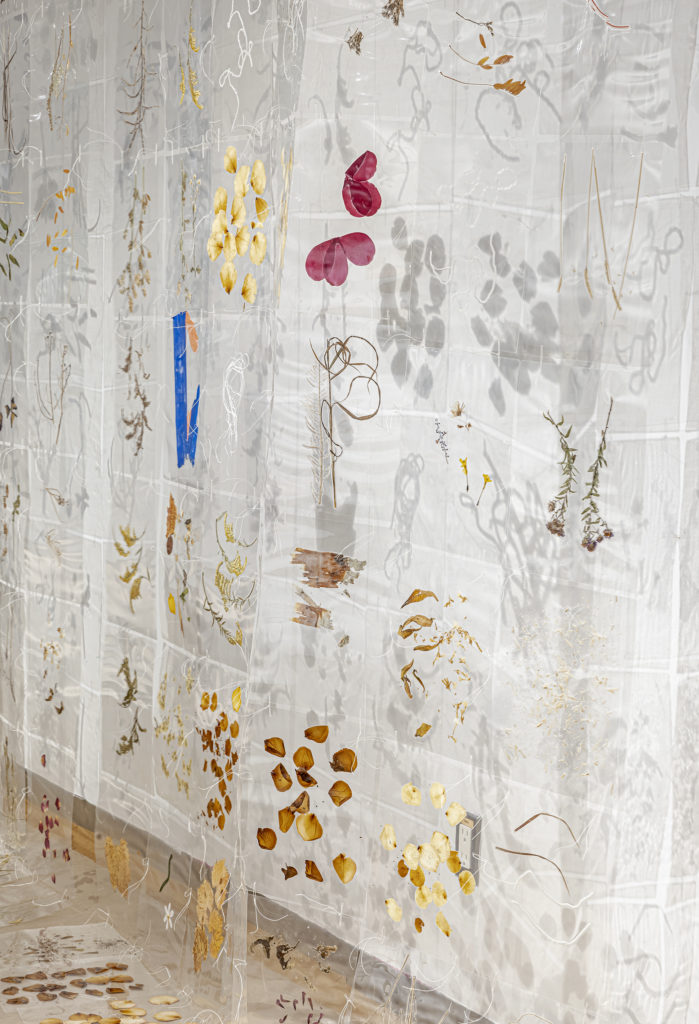
Born in Oshawa, Ron Eccles studied art at the Ontario College of Art (1967), the University of Guelph (B.A., 1970), and the University of Iowa (M.A., 1972). During this time he specialized in printmaking, studying under Frederick Hagan, Walter Bachinski, Gene Chu, and Mauricio Lasanky. In 1972, he moved to Peterborough where he taught drawing at Sir Sandford Fleming College, and would go on to teach printmaking at the Ontario College of Art and the University of Guelph. His work can be found in private, corporate and public collections including the Art Gallery of Peterborough, Blackwood Gallery, Cedar Rapids Museum of Art (Iowa, USA), The Robert McLaughlin Gallery, Canada Council Art Bank, and the Art Gallery of Guelph. His studio and his home are located in Bowmanville, where he lives with his wife and fellow artist, Jane Eccles.

Terra Economicus

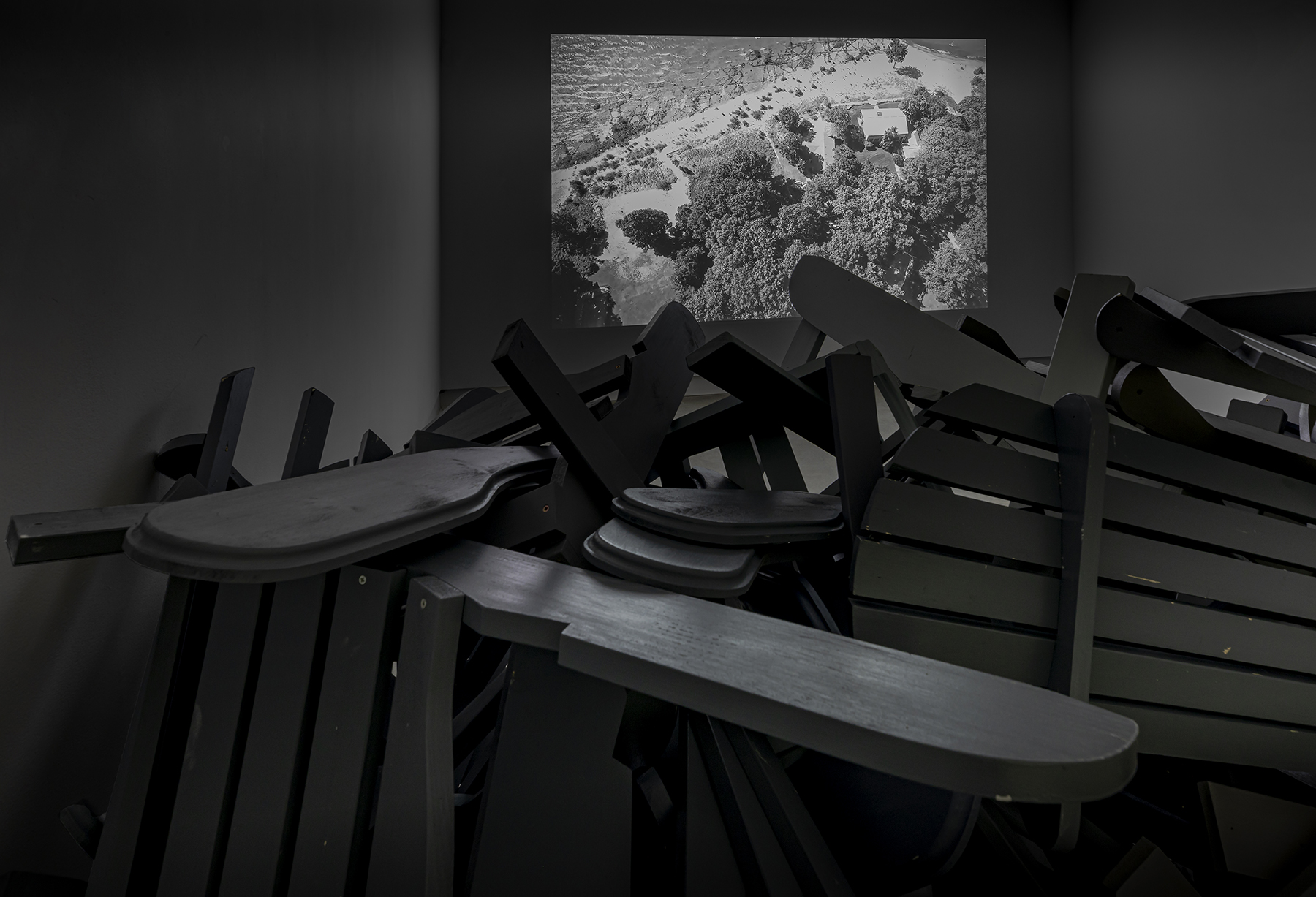
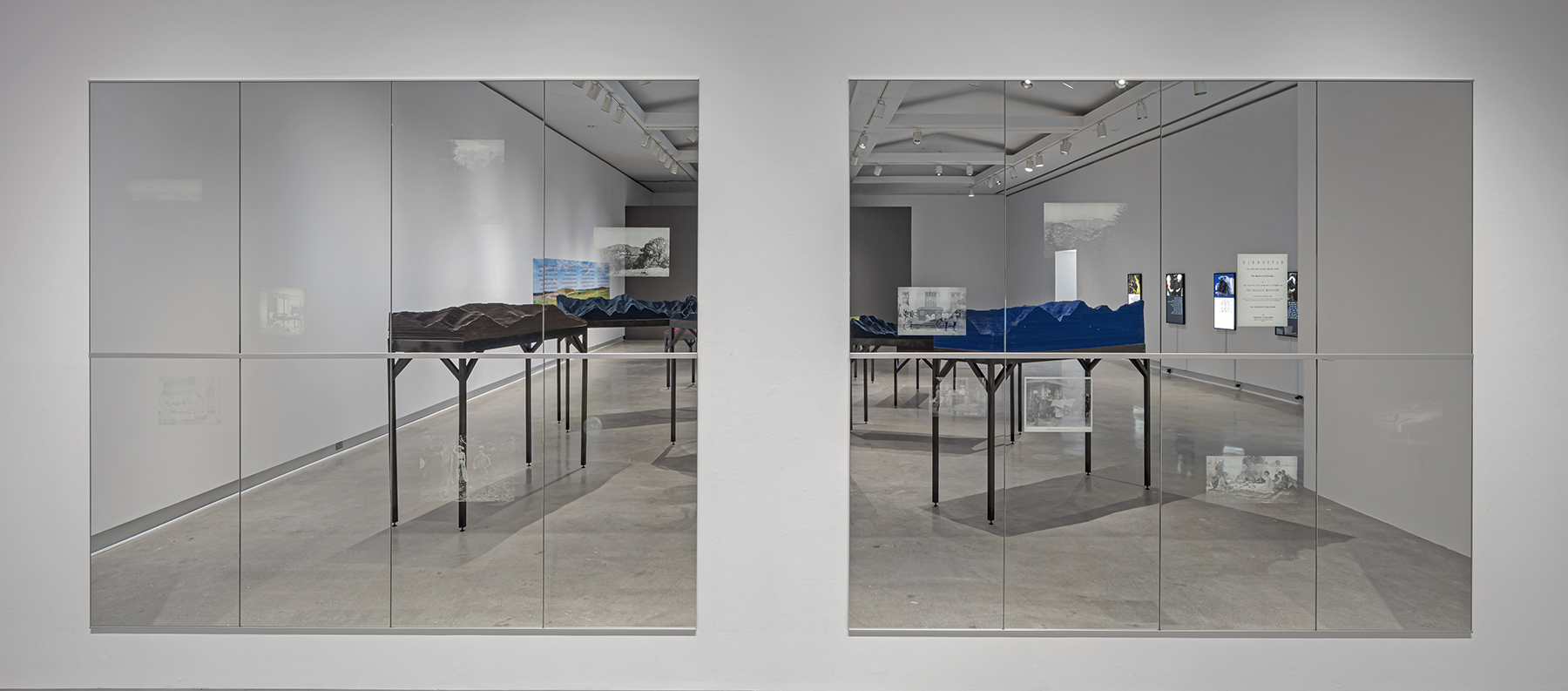
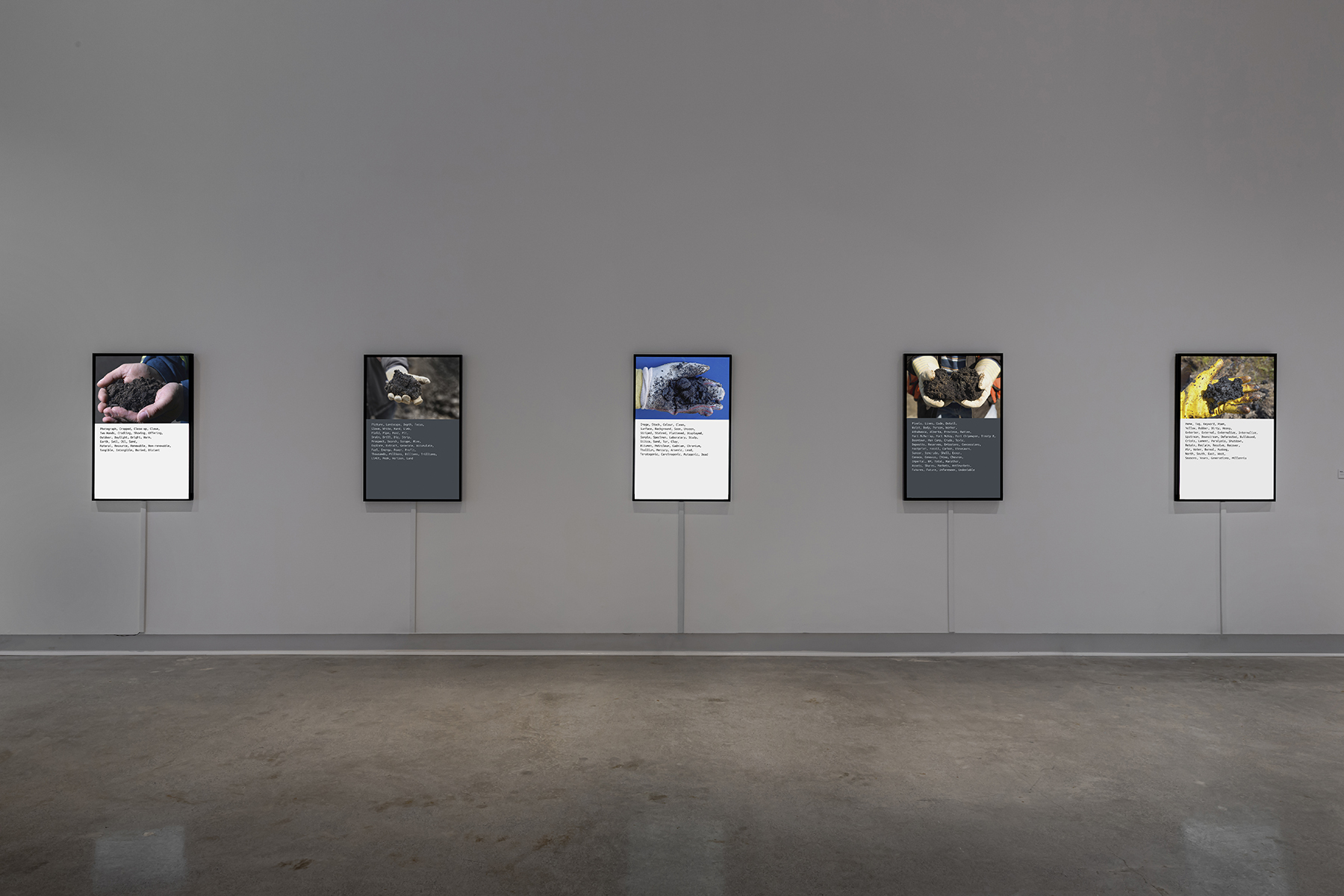
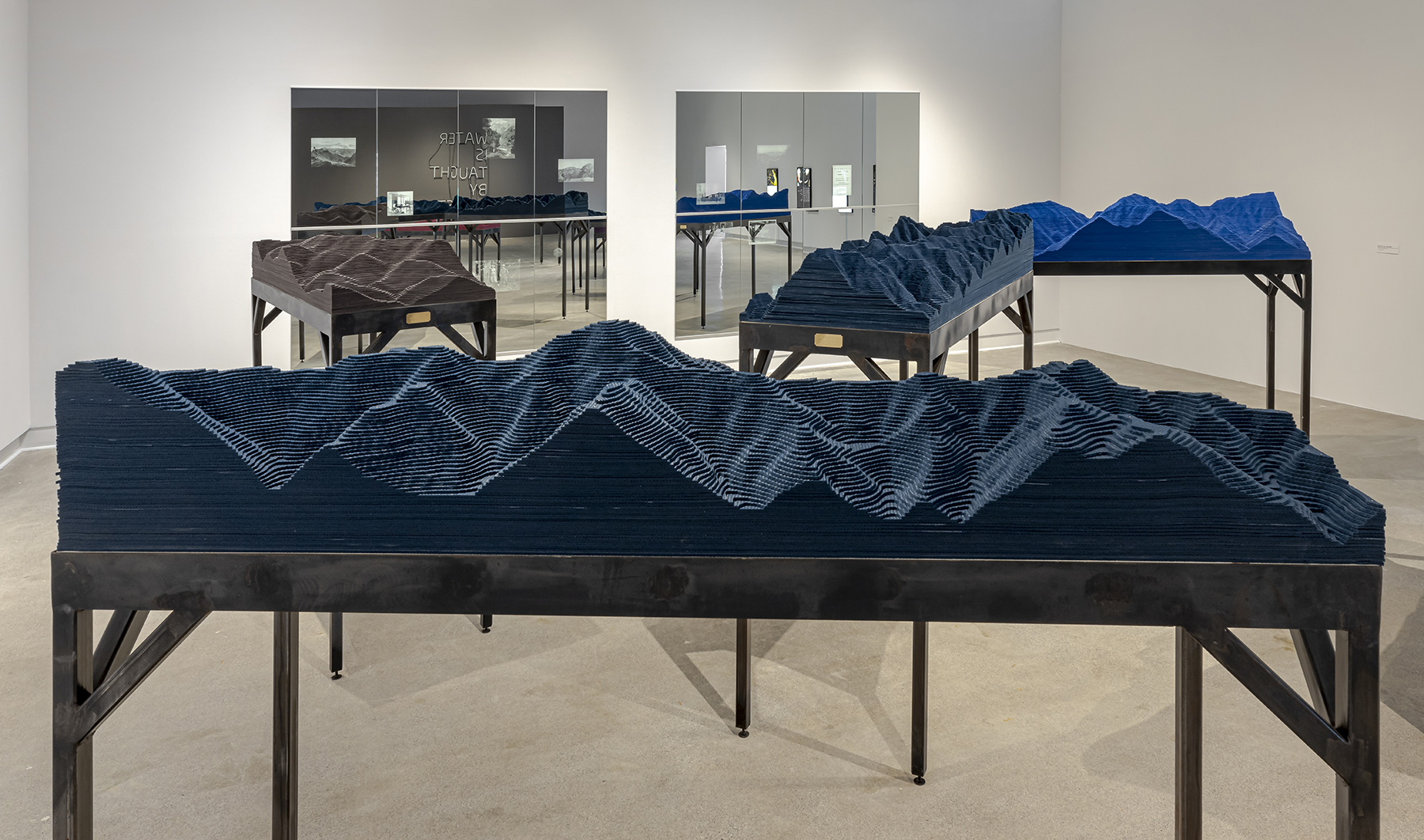
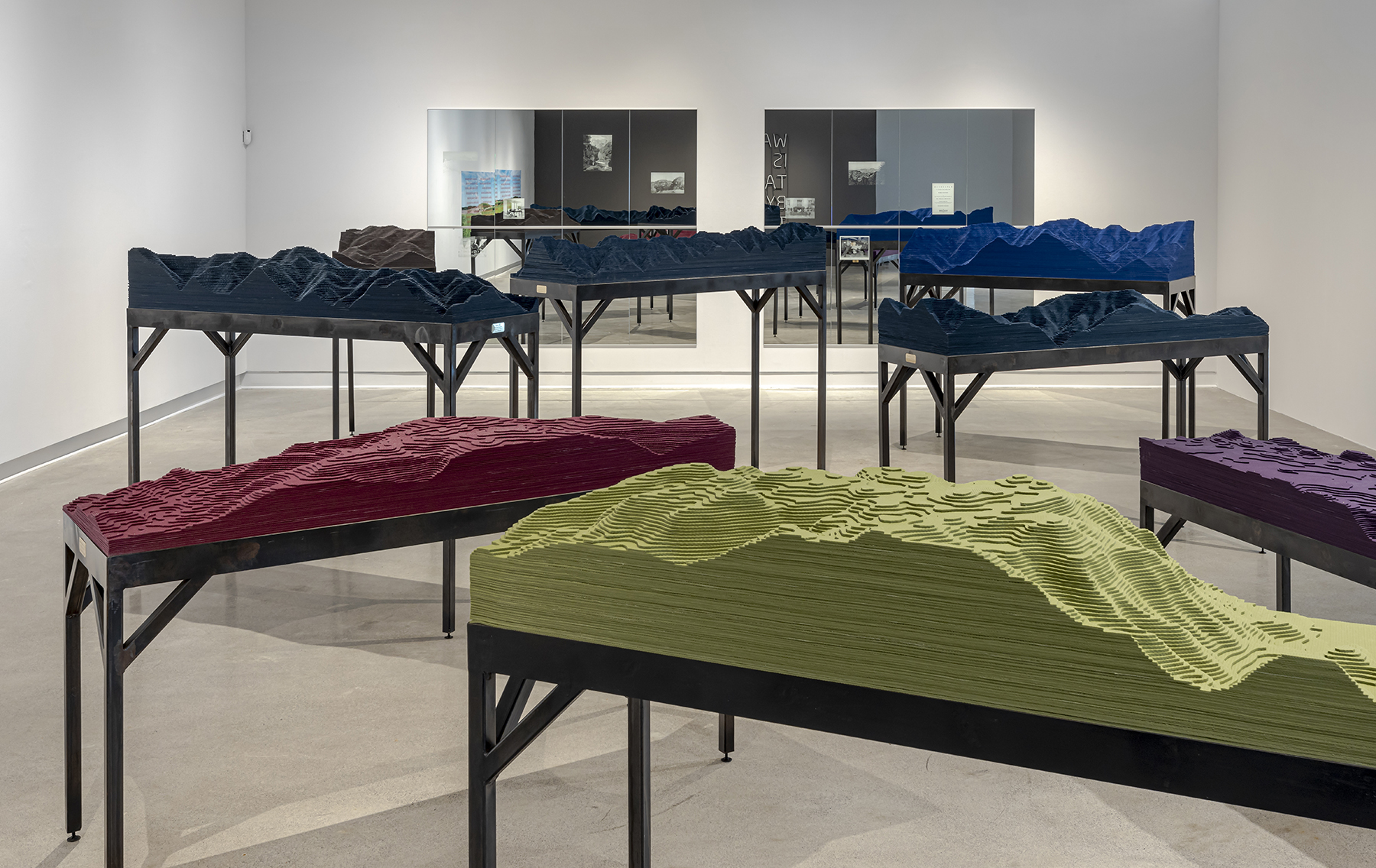
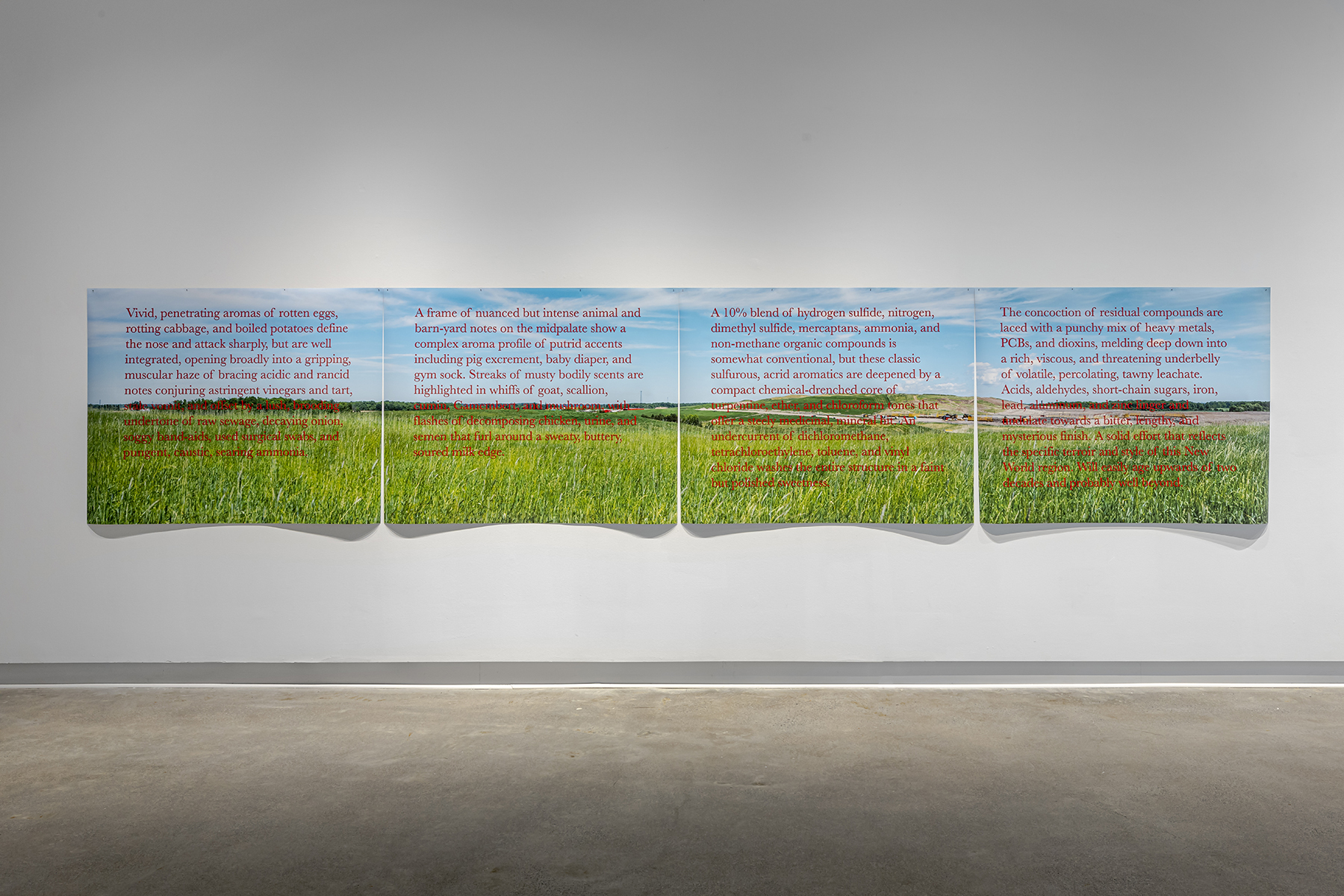
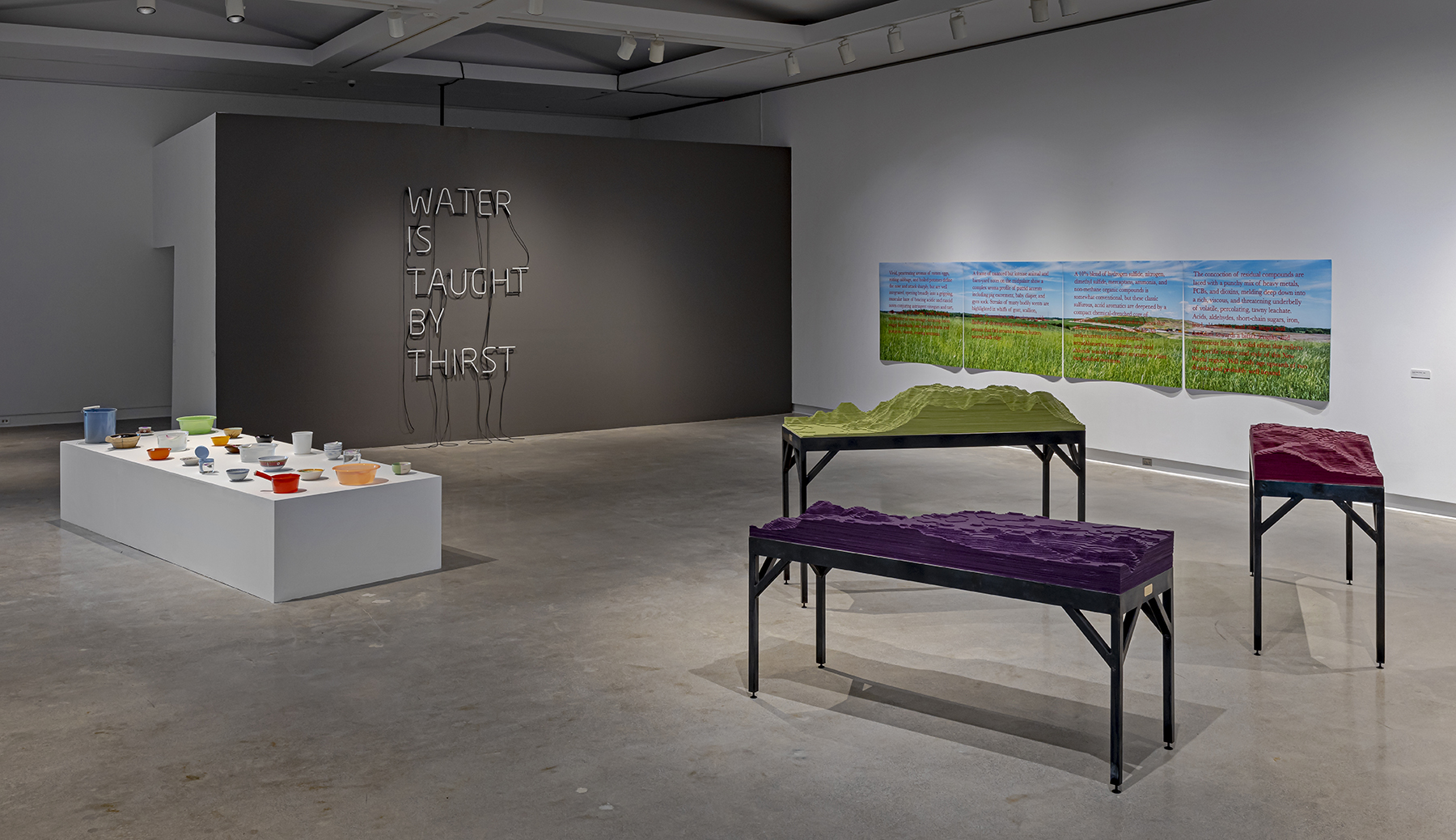
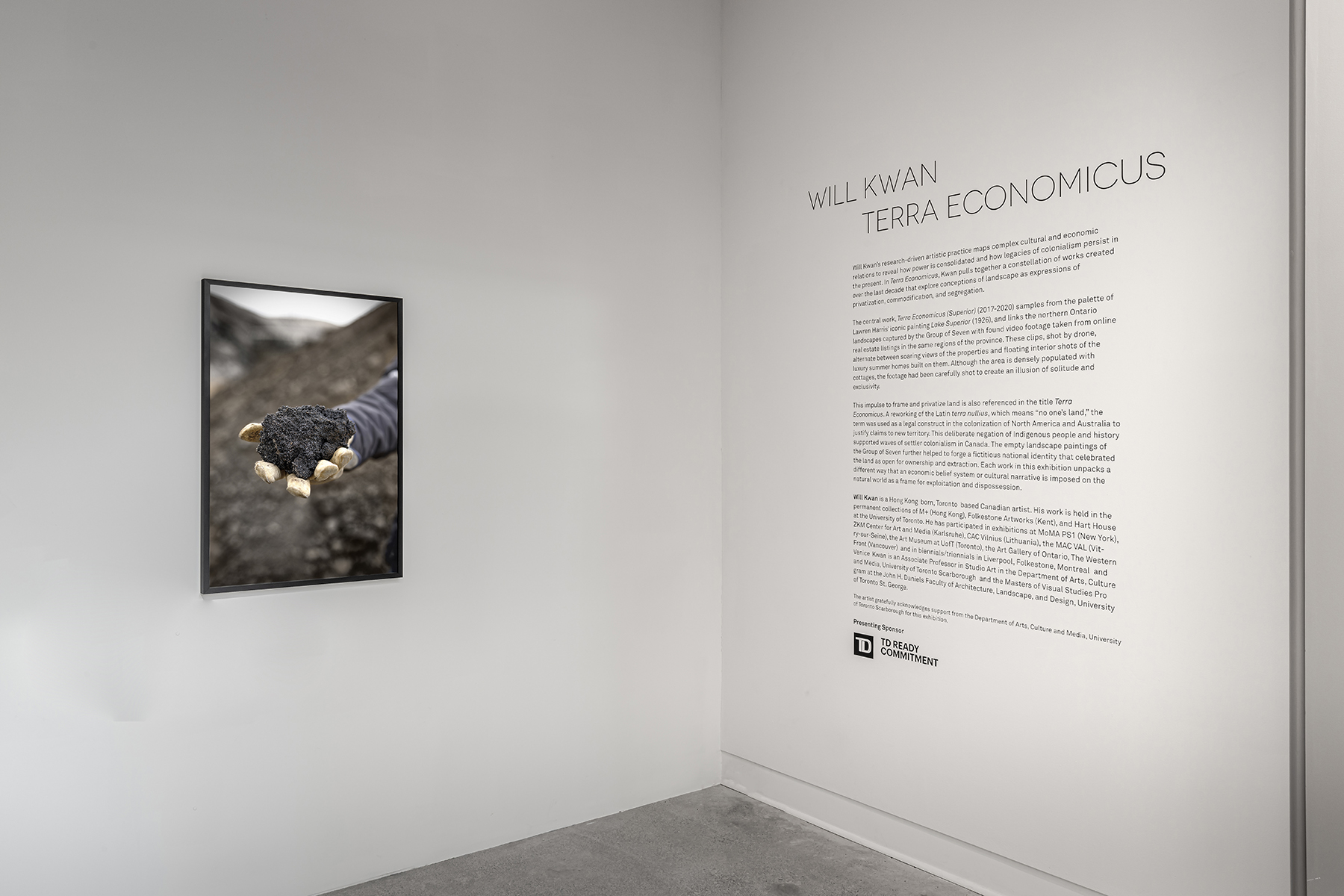
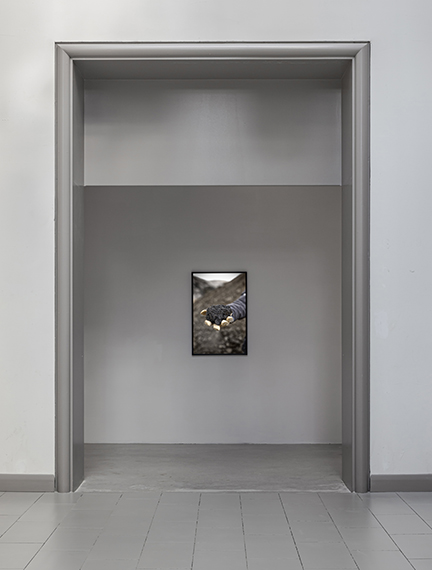
Will Kwan’s research-driven artistic practice maps complex cultural and economic relations to reveal how power is consolidated and how legacies of colonialism persist in the present. In Terra Economicus, Kwan pulls together a constellation of works created over the last decade that explore conceptions of landscape as expressions of privatization, commodification, and segregation.

The central work, Terra Economicus (Superior) samples from the palette of Lawren Harris’ iconic painting Lake Superior (1926), and links the northern Ontario landscapes captured by the Group of Seven with found video footage taken from online real estate listings in the same regions of the province. These clips, shot by drone, alternate between soaring views of the properties and floating interior shots of the luxury summer homes built on them. Although the area is densely populated with cottages, the footage had been carefully shot to create an illusion of solitude and exclusivity.

This impulse to frame and privatize land is also referenced in the title Terra Economicus.  A reworking of the Latin terra nullius, which means “no one’s land”, the term was used as a legal construct in the colonization of North America and Australia to justify claims to new territory. This deliberate negation of Indigenous people and history supported waves of settler colonialism in Canada. The empty landscape paintings of the Group of Seven further helped to forge a fictitious national identity that celebrated the land as open for ownership and extraction. Each work in this exhibition unpacks a different way that an economic belief system or cultural narrative is imposed on the natural world as a frame for exploitation and dispossession.

Will Kwan is a Hong Kong-born, Toronto-based Canadian artist. His work is held in the permanent collections of M+ (Hong Kong), Folkestone Artworks (Kent), and Hart House at the University of Toronto. Kwan has been artist-in-residence at the Centre for Chinese Contemporary Art (Manchester), the Headlands Center for the Arts (Sausalito), the Irish Museum of Modern Art (Dublin) and the Art Gallery of Ontario (Toronto). He has participated in exhibitions at MoMA PS1 (New York), ZKM Center for Art and Media (Karlsruhe), CAC Vilnius (Lithuania), the MAC VAL (Vitry-sur-Seine), the Art Museum at UofT (Toronto), the Art Gallery of Ontario, The Western Front (Vancouver), and in biennials/triennials in Liverpool, Folkestone, Montreal, and Venice. Kwan is an Associate Professor in Studio Art in the department of Arts, Culture and Media, University of Toronto Scarborough, and the Masters of Visual Studies Program at the John H. Daniels Faculty of Architecture, Landscape, and Design, University of Toronto St. George.

Exhibition Publication

View a digital copy of the publication for this exhibition here.

Artist Talk + Q&A

Exhibition Tour with Will Kwan


Will Kwan: Terra Economicus

The artist gratefully acknowledges support from the Department of Arts, Culture and Media, University of Toronto Scarborough for this exhibition.

This exhibition is supported by the TD Ready Commitment.