If you see me, say hello

Opening Reception: Saturday, February 1, 2020, 2PM – 4PM

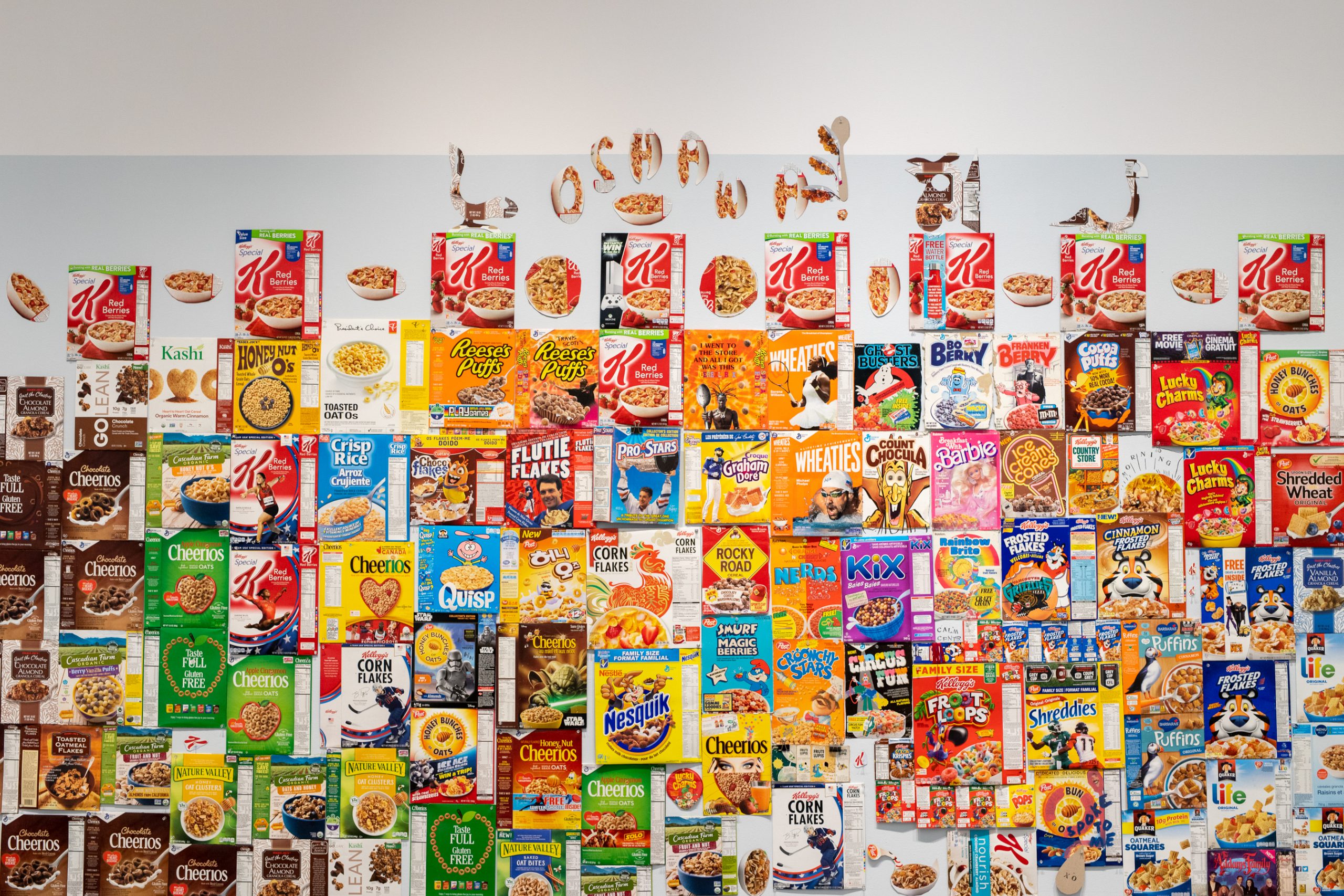
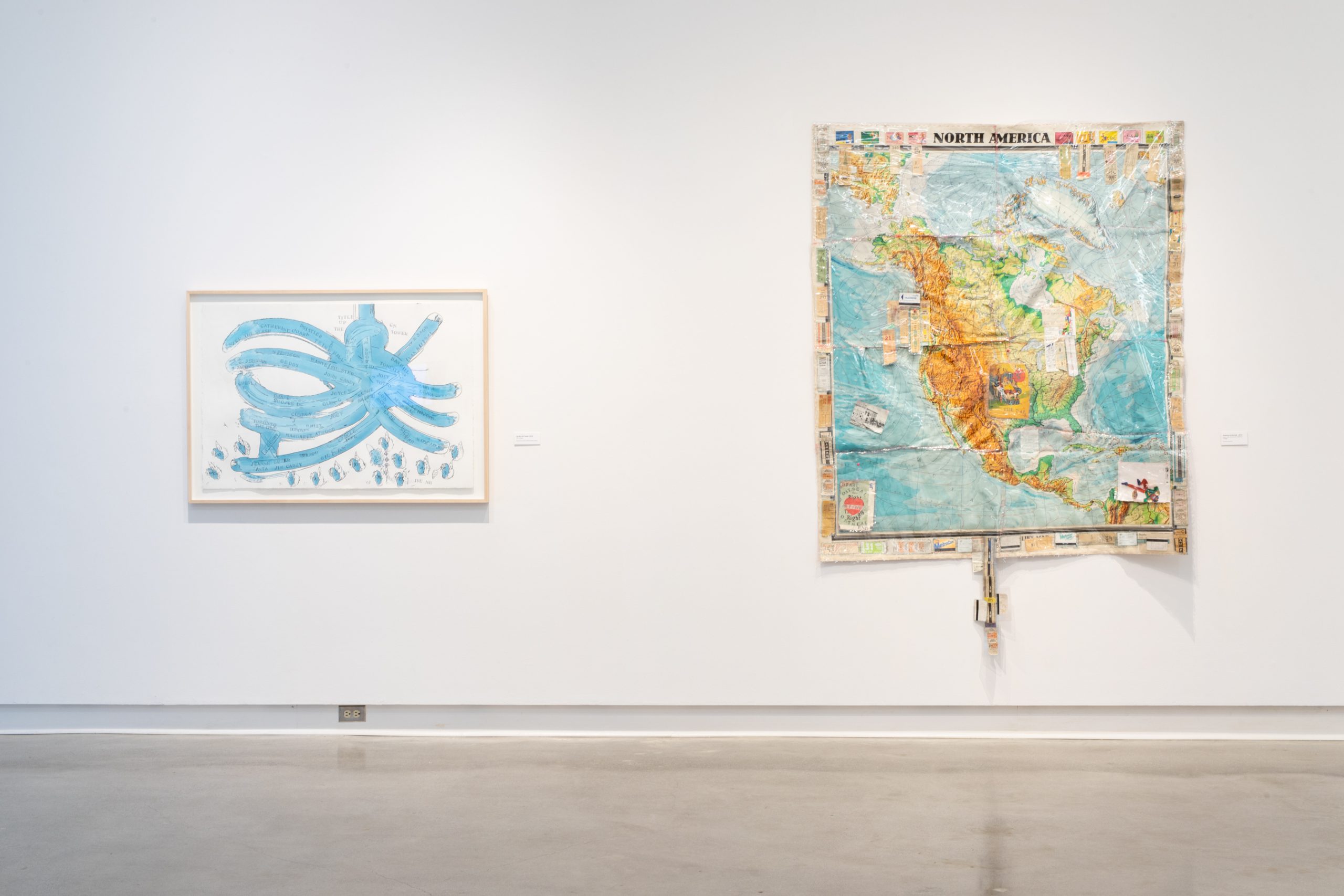
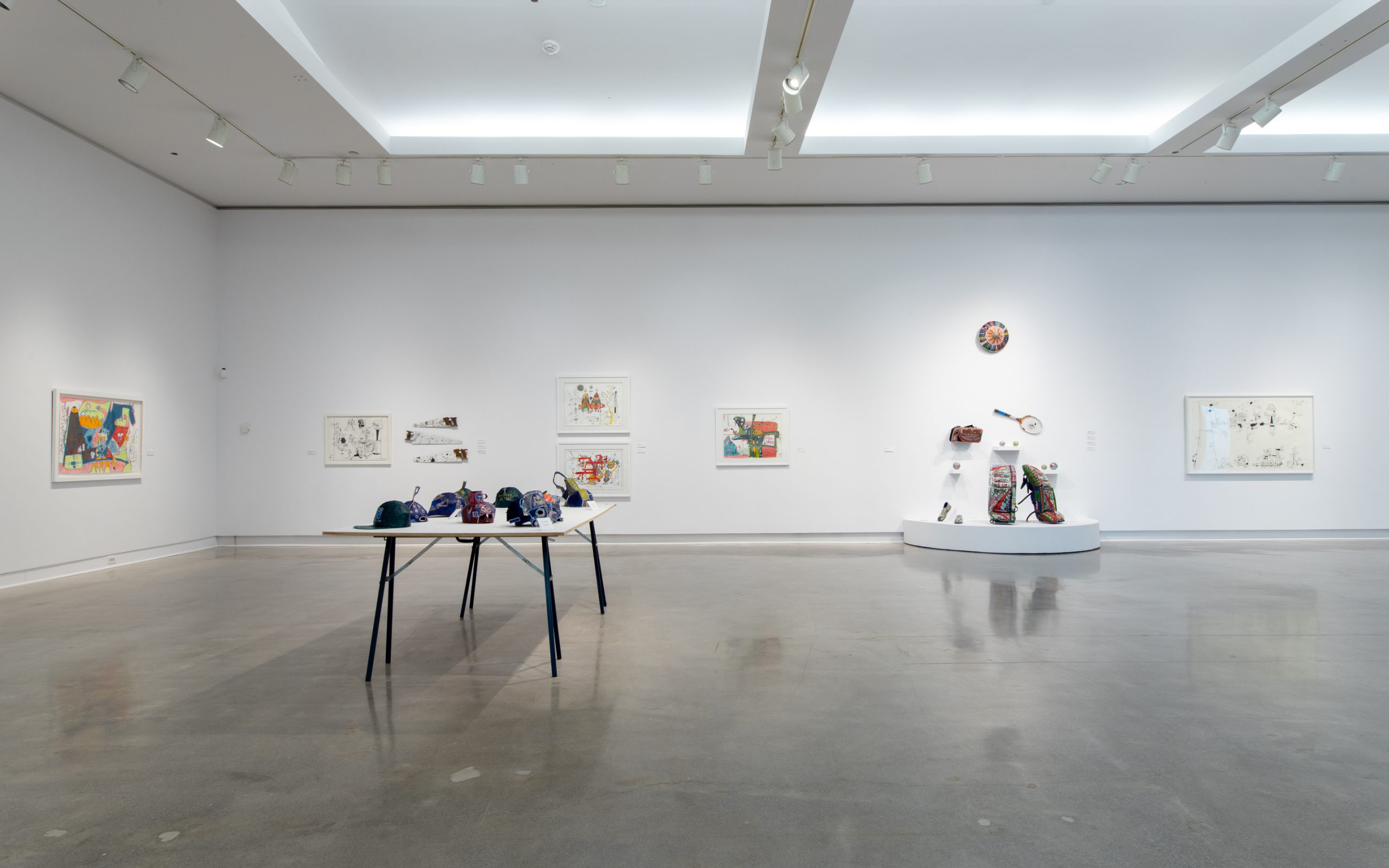
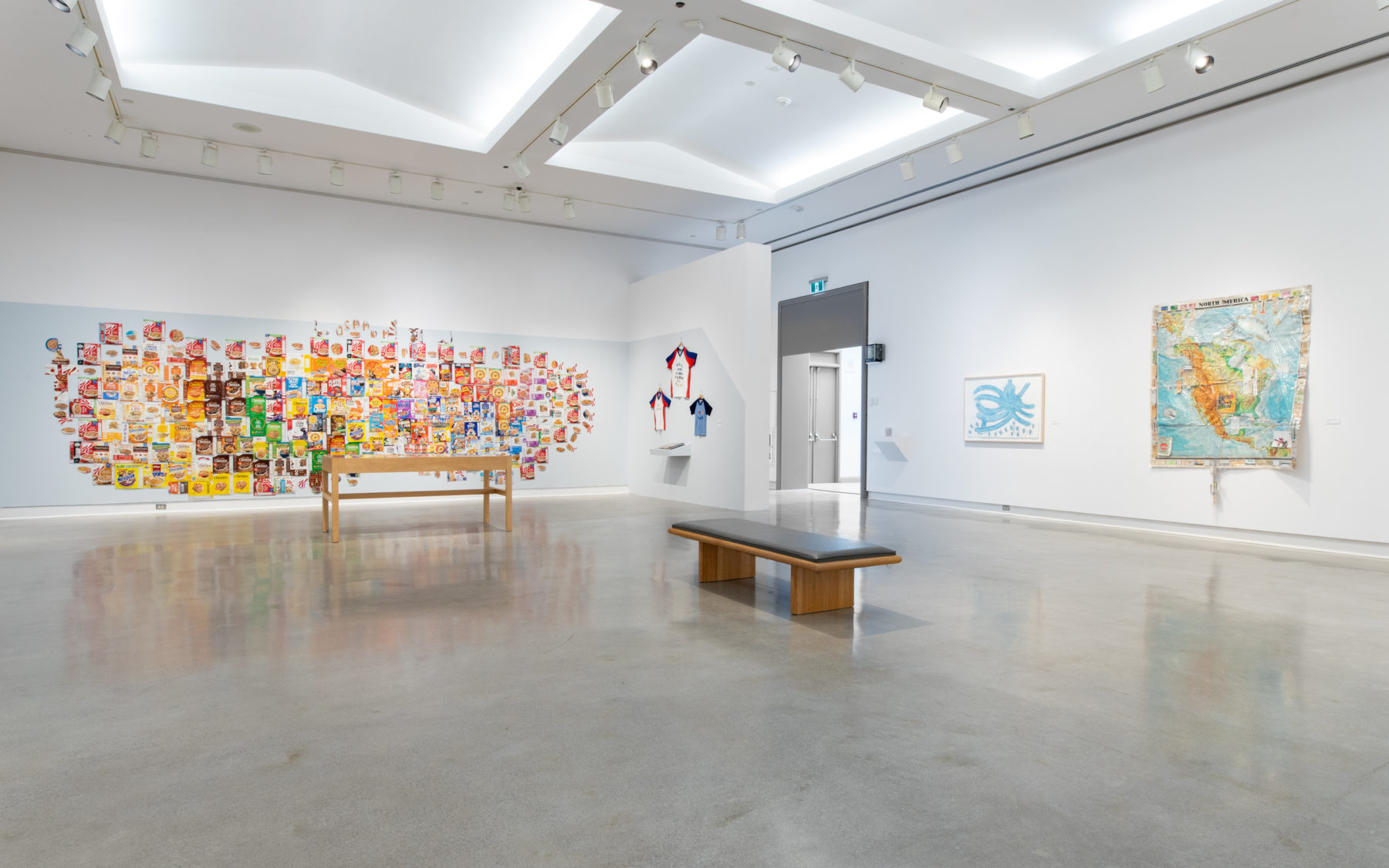
Jason McLean’s expansive and energetic practice spans works on paper, sculpture, mail art, performance, found audio compilations, hand-sewn costumes, and scavenged collections of everyday objects. Best known for his diaristic drawings, which trace the contours of his life through self-reflexive mapping and word play, he charts the world around him with a sense of humour and whimsy, while also deftly capturing the anxiety and precarity of the present moment. As writer Matthew Ryan Smith notes, he is, “a mapper of memory, a cartographer of the everyday, an archivist of minutiae, a chronicler of the prosaic.” Which is to say that McLean’s practice is world making. In his drawings, the surrealist roads and buildings loosely reference the towns and cities he has lived in and are marked with locations of celebrity sightings or important sporting events from his youth, and contain ruminations on everything from real estate speculation to the state of his career. There is an infectious energy and peculiar logic to the ways things are pulled together, reconstituted and presented again. A small sample of Pez dispensers from the now infamous “Felix and Henry’s Pez Museum” (a project started with his sons in 2012), as well as collections of cereal boxes and candy wrappers, are presented in the gallery alongside the drawings showing both his obsessive interest in material culture and also an irreverence for what is considered “important” art.

If you see me, say hello, a reference to a Bob Dylan song by the same name, marks a moment of looking back from the vantage point of the mid-career mark in the artist’s practice. Bringing together works from the last twenty years, the exhibition draws on emergent themes: critical regionalism, collaborative production, collected ephemera, and an intense preoccupation with the cult of celebrity. While at times deeply personal and confessional, the works point to larger societal questions that chart the uncertainty of our time, sharing insights on the parts of life that cause anxiety and also the parts that bring the most joy.

Jason McLean was born in London, ON in 1971. After attending H.B. Beal Secondary School, McLean graduated from the Emily Carr Institute of Art and Design, Vancouver in 1997. He has exhibited nationally and internationally including shows at the National Gallery of Canada, the Vancouver Art Gallery, Fondazione Bevilacqua La Masa in Venice, Art Gallery of Nova Scotia, Loyal Gallery in Malmo Sweden, Richard Heller Gallery in Santa Monica, Franklin Parrish Gallery, and Zieher Smith Gallery in New York City. He has work in major collections throughout North America including the Museum of Modern Art, the Vancouver Art Gallery, Bank of Montreal Collection, and the Royal Bank of Canada. McLean is represented by Michael Gibson Gallery in London, ON, Wilding Cran Gallery in Los Angeles, CA, Mónica Reyes Gallery, Vancouver, BC, and Van Der Plas Gallery, New York, NY.


Learn more about Felix and Henry’s Pez Museum here


Jason McLean: If you see me, say hello

Made of Honey, Gold, and Marigold

Opening Reception: Saturday, February 1, 2020 2PM – 4PM

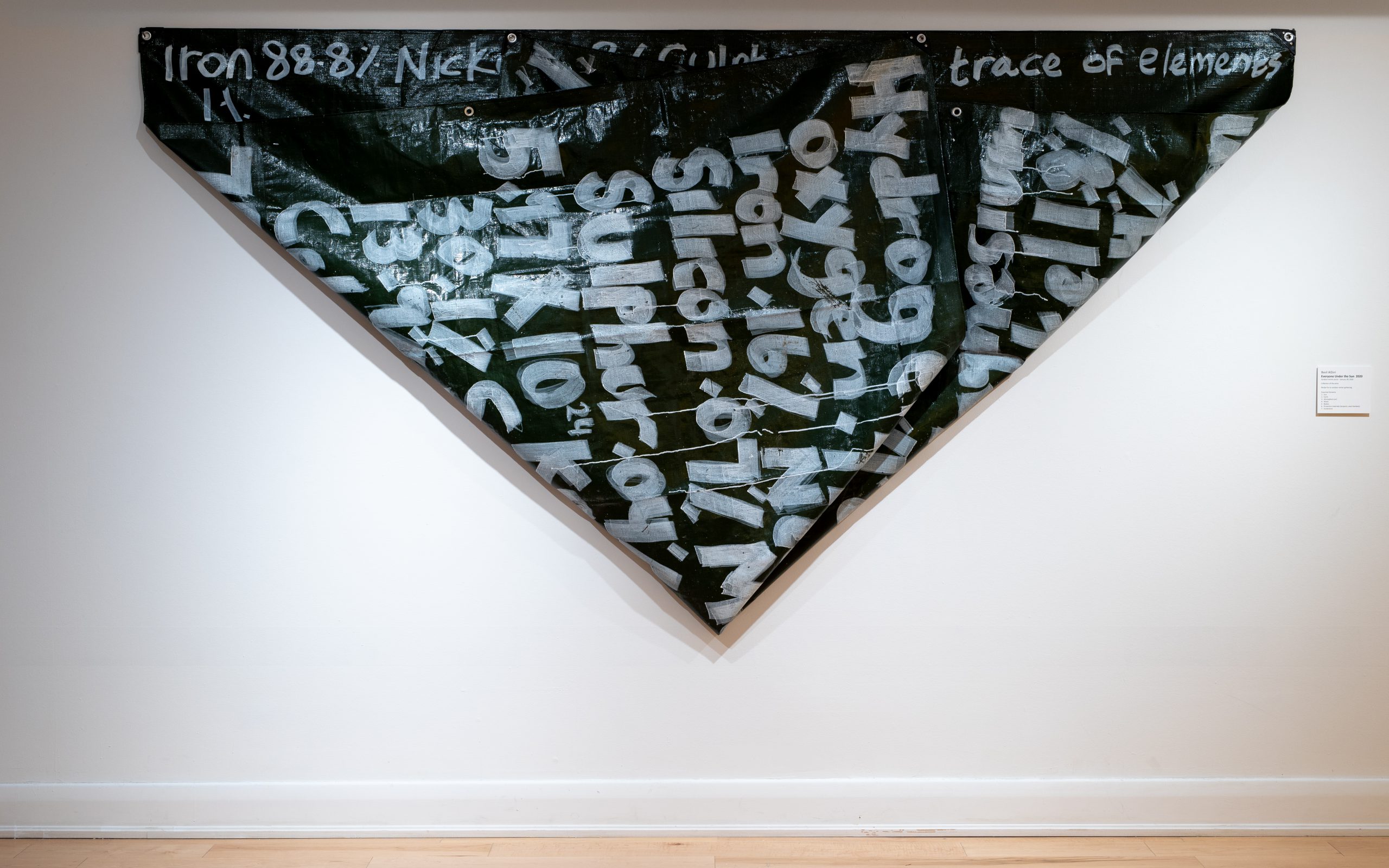
With a Performance by Basil AlZeri:

everyone under the sun
Basil AlZeri

“The sun opens the floorboards to light, the light shafts gradually towards her ankle, moves up her body like a brush, feathery. She watches herself in half light, half dark, and it is this preoccupation with herself that makes someone stop at the window. Though it is not seduction, but a genuine fascination with the sun creeping up her ankle.”

–Dionne Brand, At the Full and Change of the Moon

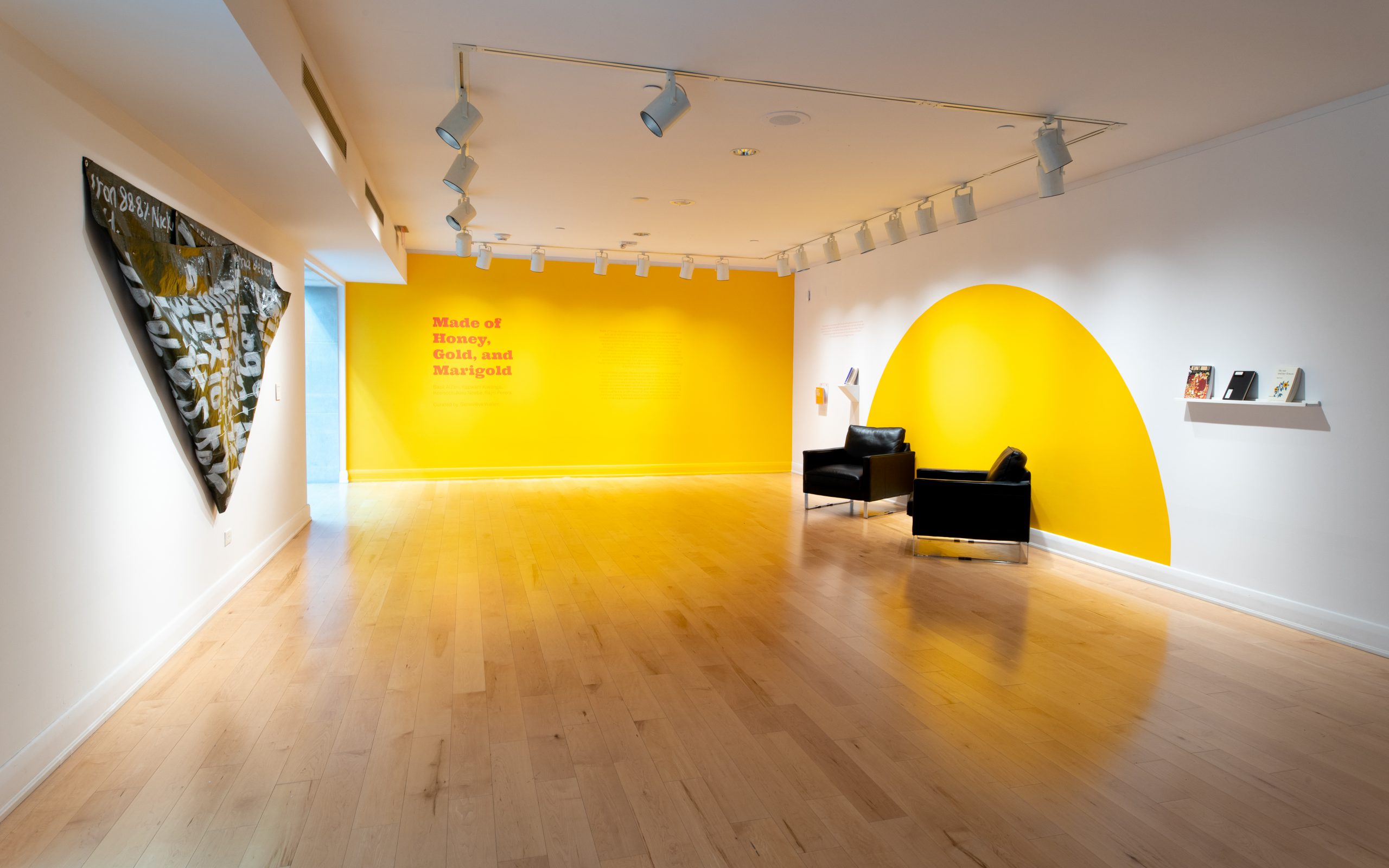
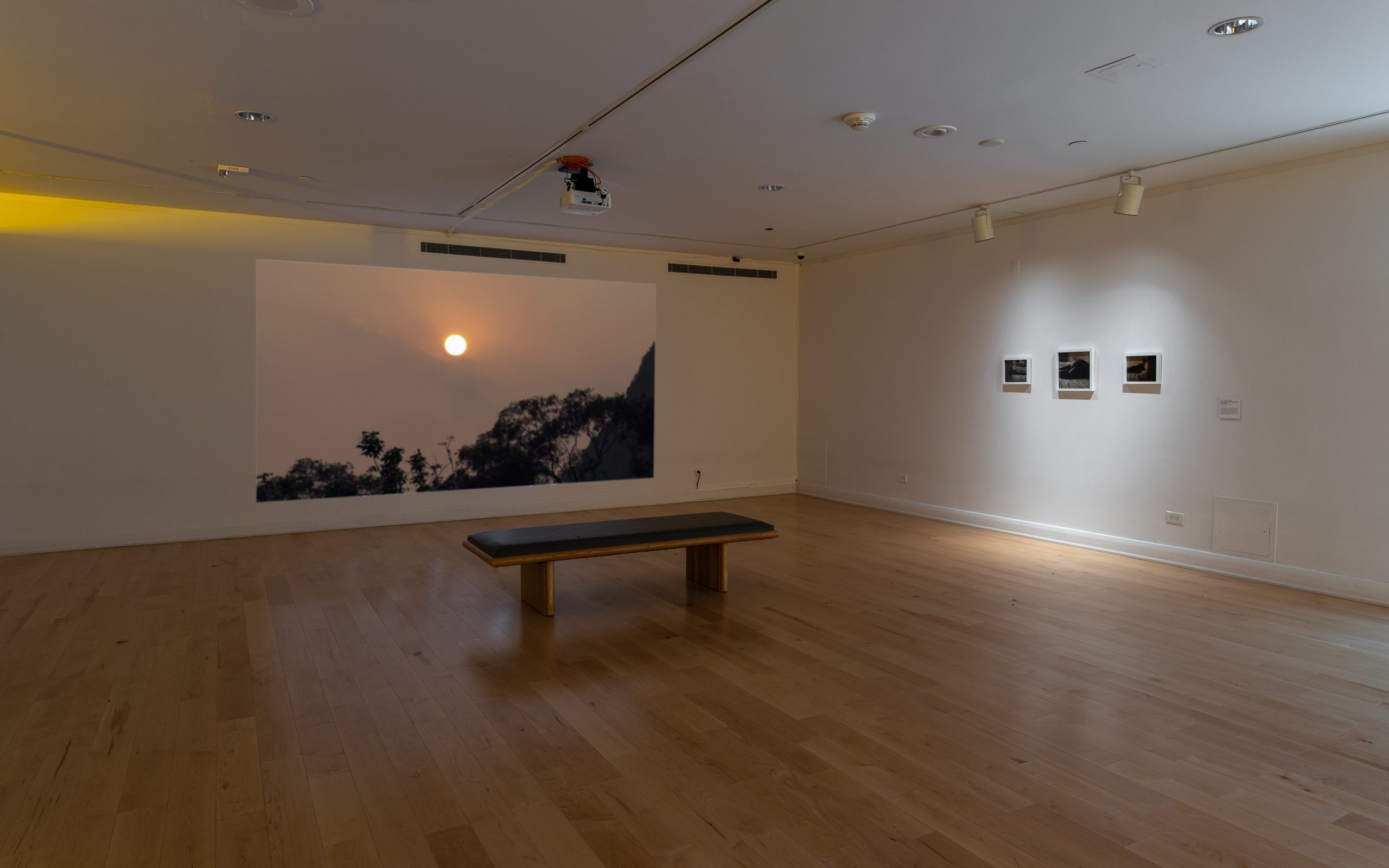
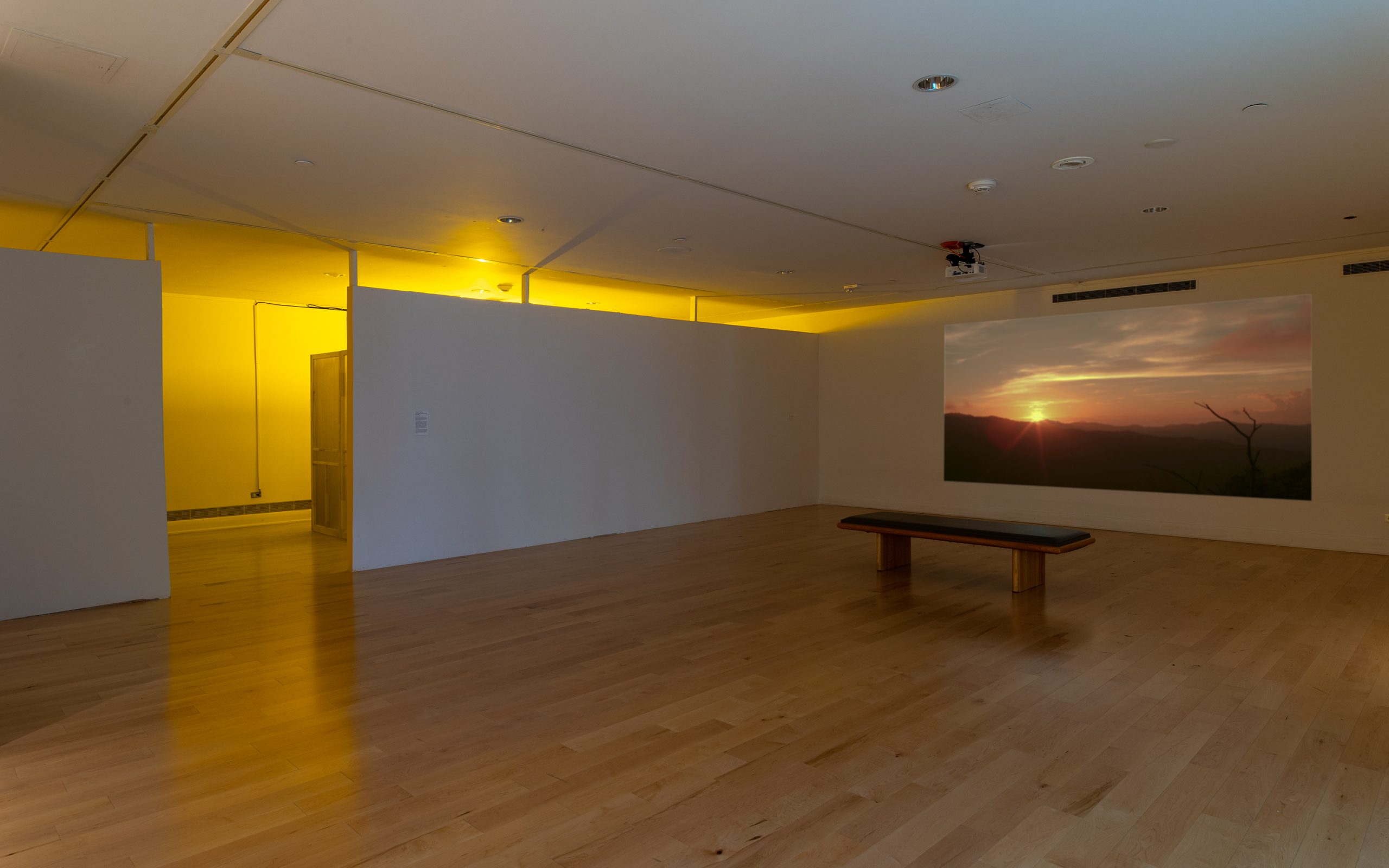
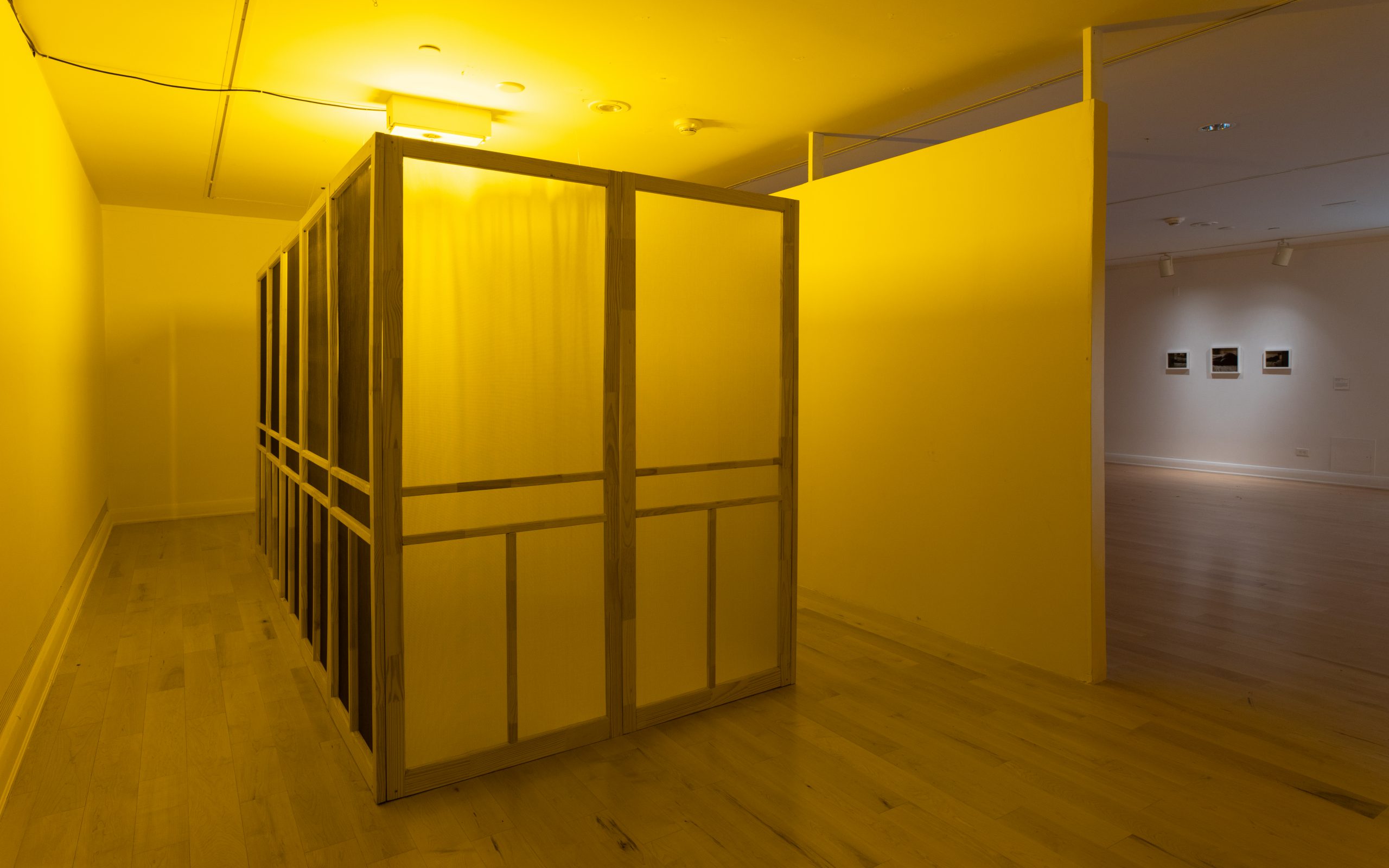
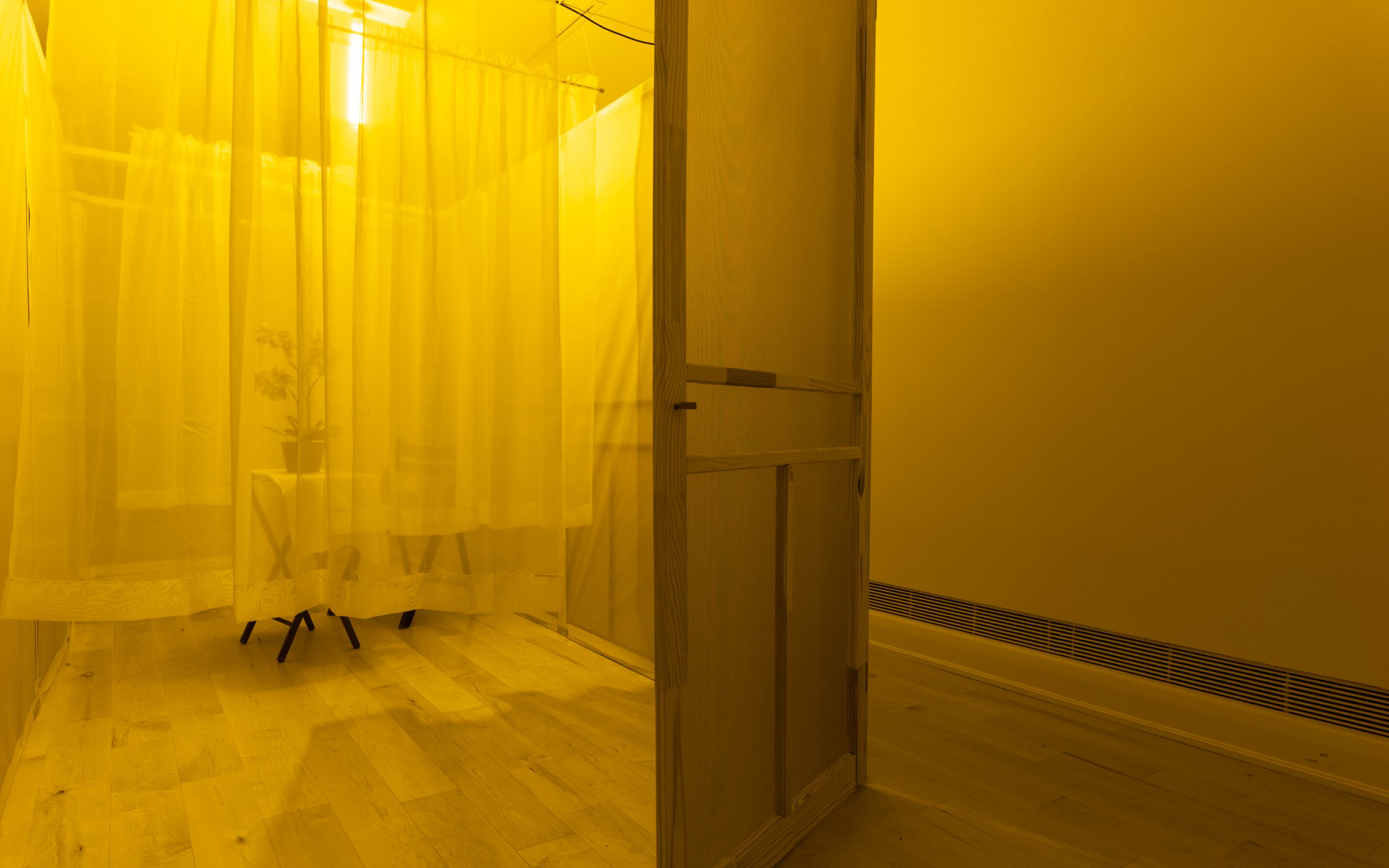
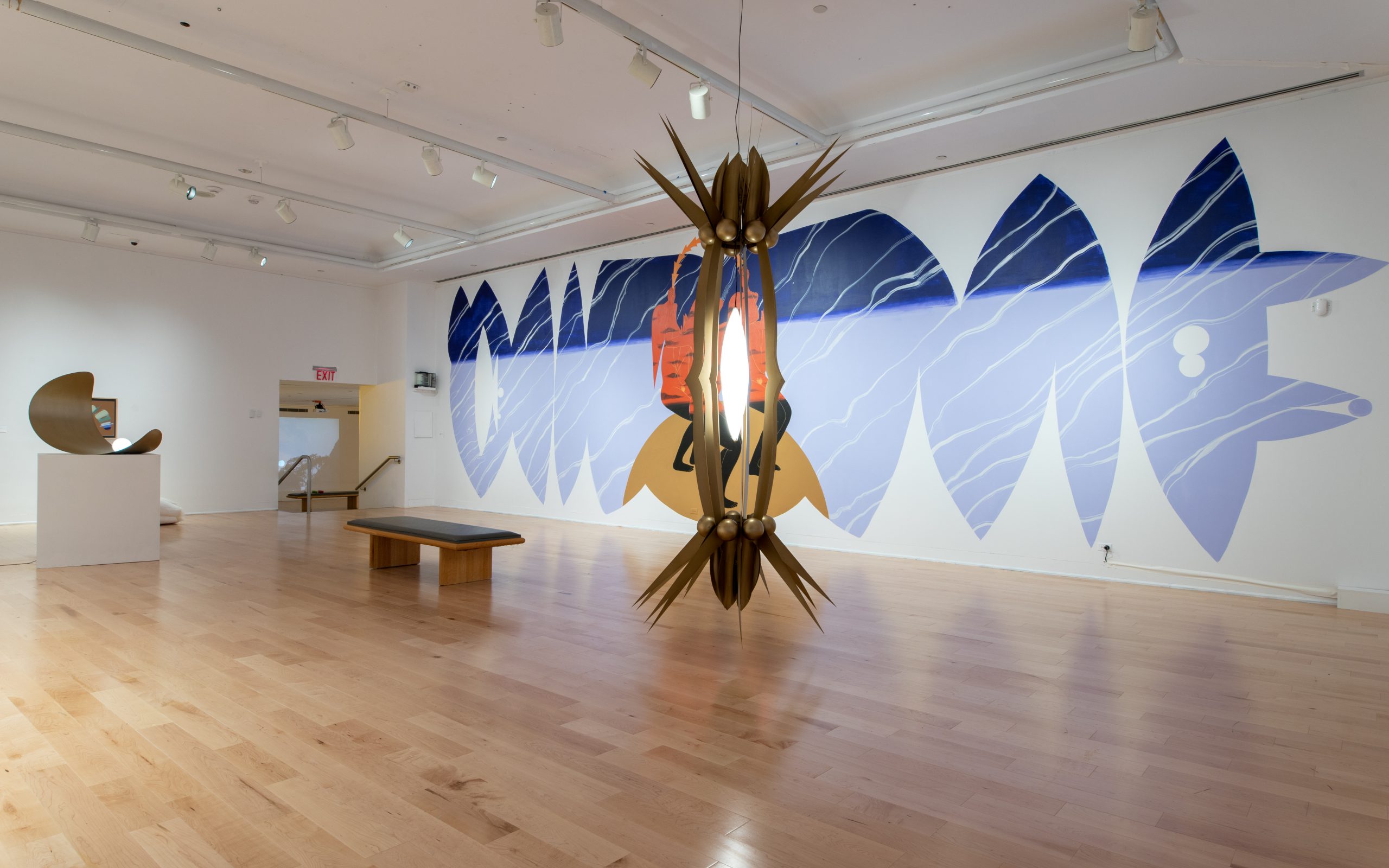
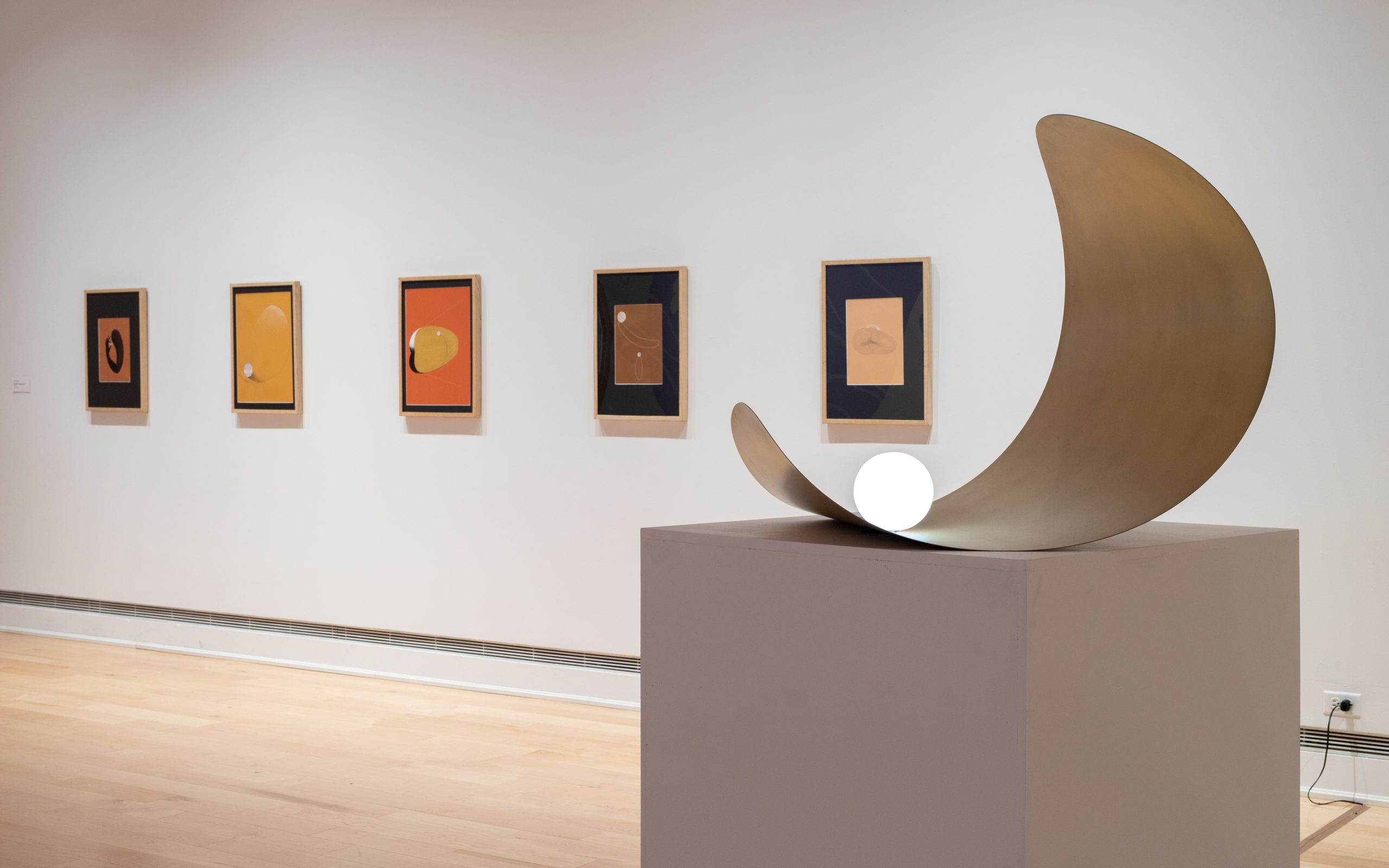
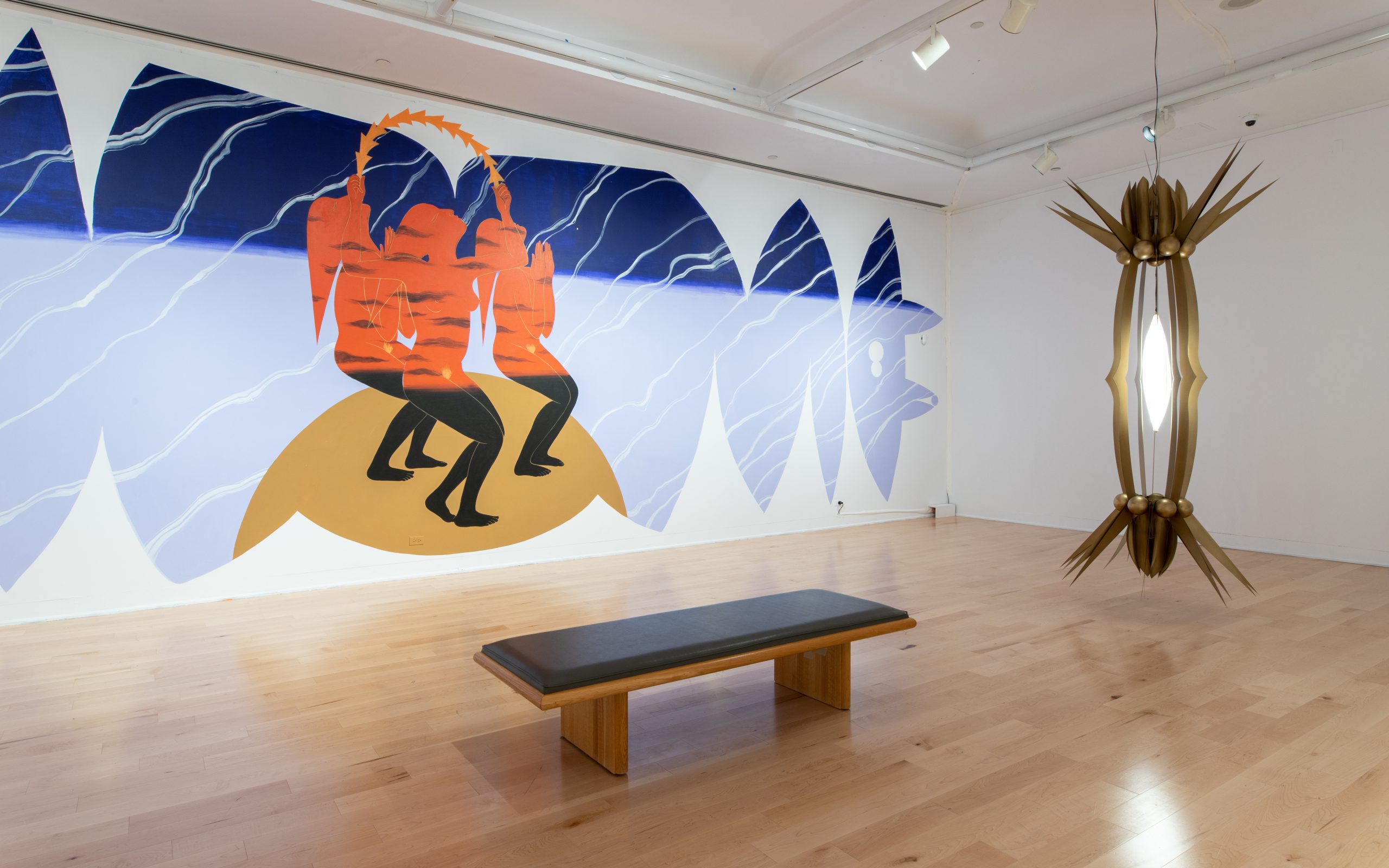
Made of Honey, Gold, and Marigold is a contemporary exploration of the sun, as an activator of sensory engagement, provoking deeper contemplations on sensuality, eroticism, pleasure, and politics of desire. Inspired by Dionne Brand’s descriptions of her young protagonist Maya and her awakening self-awareness, the selected works by Kapwani Kiwanga, Kosisochukwu Nnebe, and Rajni Perera, draw attention to a multilayered sensory ecology that weaves together embodiment, space, and the radiance of the sun. Mundane, yet seducing moments such as the warmth of soaking in the soft ambient morning light or relishing in the golden hues of the magic hour can spark meditations on a specific being-ness that is responsive to the present moment—a quiet unfolding of bodily and spiritual presence. In this exhibition context, the sun is a catalyst providing a language that infuses wonder and awe into the amplitudes of Black and Brown inner lives, substituting oppressive imaginaries for consuming fantasies. Contemporary poets such as Rupi Kaur, Upile Chisala, and Nayyirah Waheed compare the spectrum of melanin’s luminescence to luxurious and sun-like materials such as honey, gold, and marigold. By employing these qualifiers as an affirmation of inner and outer radiance, it also addresses a strong desire to assert a bodily embrace that is expansive while reclaiming melanated people’s cosmic relationship to the sun.


Basil AlZeri is a cross-disciplinary visual artist living and working between Toronto and Guelph, Canada. Basil’s practice involves the intersection of art, education, and food, taking multiple forms, such as performance, interventions, gallery and public installation. Basil examines the socio-political dynamics of the family and its intersection with reproductive/unproductive labour, drawing on the necessities of everyday life and the (in)visibility of ‘work’ as sites of exploration. Basil tries to facilitate a space for empathy through gestures of inclusivity and generosity. Basil presented his work in Amman, Dubai, Halifax, Mexico City, Montreal, New York, Ottawa, Regina, Rome, Santiago, Tartu And Toronto.

Born in Ontario to Tanzanian parents, Kapwani Kiwanga lives and works in Paris. She studied anthropology and comparative religion at McGill University in Montreal, completed the “La Seine” program at the École Nationale Supérieure des Beaux-Arts de Paris, and has worked at the Centre national d’art contemporain Le Fresnoy in Tourcoing, France. She was artist in residence at the MU Foundation in Eindhoven, Netherlands, and at La Box in Bourges, France. Her works have been exhibited by world-class institutions such as the Galerie nationale du Jeu de Paume (Paris), Ferme du Buisson (Noisiel, France), London South Gallery (London), Fondazione Sandretto Re Rebaudengo (Turin), Logan Art Center (Chicago), Power Plant (Toronto), Esker Foundation (Calgary), and Glasgow International (Glasgow). In 2018, Kiwanga was the winner of the Frieze Artist Award and the Sobey Art Award.

Kosisochukwu Nnebe is a Nigerian-Canadian visual artist. An economist by training and a policy analyst by profession, her visual arts practice aims to engage viewers on issues both personal and structural in ways that bring awareness to their own complicity. Her work has been exhibited at AXENEO7, the Montreal Museum of Fine Arts, Place des Arts, the Art Gallery of Guelph, the Nia Centre, Studio Sixty Six, Z-Art Space, Station 16, and the Mohr Gallery in Mountain View, California,. She has given presentations on her artistic practice and research at universities across Quebec, including Laval, McGill and Concordia, and has facilitated workshops at the National Gallery of Canada, the Ottawa Art Gallery, and Redwood City High School in California. She is currently based in Ottawa.

Rajni Perera was born in Sri Lanka in 1985 and lives and works in Toronto. She explores issues of hybridity, sacrilege, irreverence, the indexical sciences, ethnography, gender, sexuality, popular culture, deities, monsters and dream worlds. All of these themes marry in a newly objectified realm of mythical symbioses. They are flattened on the medium and made to act as a personal record of impossible discoveries. In her work she seeks to open and reveal the dynamism of these icons, both scripturally existent, self-invented and externally defined. She creates a subversive aesthetic that counteracts antiquated, oppressive discourse, and acts as a restorative force through which people can move outdated, repressive modes of being towards reclaiming their power.

Geneviève Wallen is a Tiohtiá:ke/Montreal-based independent curator and writer interested in issues of ethnocultural representational spaces in Canada. Wallen’s practice is informed by diasporic narratives, intersectional feminism, intergenerational dialogue, and alternative BIPOC (Black, Indigenous, and People of Color) futurities and healing. Her current research focus is on the notion of longevity as radical resistance. Wallen is an Exhibition Coordinator at the FOFA Gallery. She is also a curator/board member at Younger than Beyoncé Gallery and a member of the ad-hoc collective We Critique, We Curate.


Further Reading


Read Online


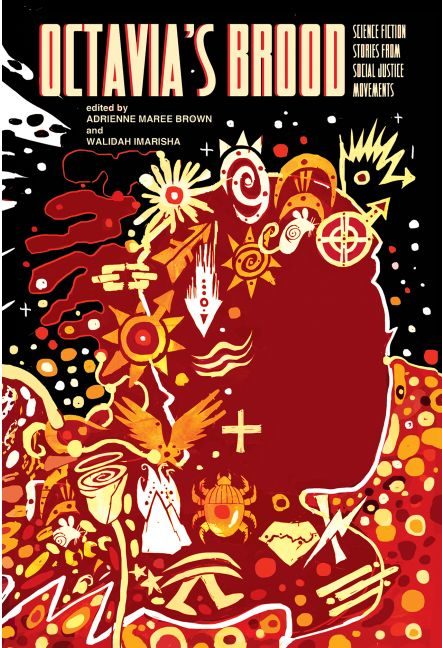
Literature included in this exhibition:


Made of Honey, Gold, and Marigold

Colin Medley: 16 Photographs of Oshawa


[envira-gallery id=”8187″]

Oshawa: A History of Local 222

Opening Reception: Saturday, October 5 2PM – 4PM

Coming to the opening reception from Toronto? We have organized a bus to bring you to and from the opening! Pick up: in front of OCADU at 1:00PM at 100 McCaul Street and will return to OCADU for 4:30. To reserve a spot on the bus: RSVP to [email protected].

For over 40 years, artists Carole Condé + Karl Beveridge have been creating urgent and insightful work that challenges the status quo and brings to light the important issues facing our time. With unwavering attention and unapologetic political analysis, Condé + Beveridge’s work continues to explore the social and environmental impacts of globalization, racial inequality, class struggle, gendered labour divisions, precarity, and the complex struggles of consensus building. In tandem to this practice, they have worked collaboratively with union members and fellow artists, bringing the labour movement and art world into dialogue and in doing so, have transformed them both.

This exhibition presents the photo series Oshawa: A History of Local 222 (1982-83), a comprehensive body of work that traces the history of the autoworkers union in Oshawa from its formation in 1937 through to the mid-1980s. To produce the work, Condé + Beveridge spent two years interviewing and working with members of the Local 222 Retirees Committee. The resulting work, uses intricately staged tableaux to narrate the workers struggle from the perspective of women working in the plant and highlights gender-specific inequalities, including the fight for married women to be able to work and the inclusion of women in the union.

Looking back over the past 35 years since this series was made, we can see the reversal of many hard-won rights, the slow erosion of jobs and the waning strength of the union. With the threat of General Motors of Canada closing the Oshawa plant in January 2020, Condé + Beveridge have returned to work with members of the Local to create a final image in the series. The large-scale photomural pictures members of the union leadership confronting corporate executives and politicians as they stage a burial for the jobs that will be lost at the plant. Working collaboratively with current members of the union, the piece opens up new possibilities for cooperation, solidarity and artistic production, blurring the distinction between art and work, and aesthetics and politics.

Carole Condé and Karl Beveridge
Canadian artists Carole Condé and Karl Beveridge moved to New York City in 1969, and soon were at the centre of the burgeoning conceptual art movement. In 1975, they joined the Art & Language journal The Fox (with Joseph Kosuth and Ian Burn) and picketed the Whitney Museum of Art to protest its lack of inclusion of women artists and artists of colour, while critiquing the apolitical minimalism of Donald Judd. This ferment culminated in a major museum show, It’s Still Privileged Art, at the Art Gallery of Ontario in 1976, just prior to the artists’ return to Toronto in1977.
By the late 1970s, Condé and Beveridge drew a focus on various issues that were urgent within the trade union movement. Their method of working dialogically with their subjects was invented for the landmark 1981 project Standing Up, and has been refined in numerous subsequent collaborations. In the past three decades, over fifty solo exhibitions of Condé and Beveridge’s work have been presented at major museums and art spaces on four continents, including: the Institute of Contemporary Art (London, UK); Museum Folkswang (Germany); George Meany Centre (Washington); Dazibao Gallery (Montreal); Centro Cultural Recoleta (Buenos Aires); Art Gallery of Edmonton; and the Australian Centre for Photography (Sydney).
Equally, and congruent with the artists’ commitment to accessibility, their work has been displayed in a host of non-art and public settings, such as union halls, billboards, bus shelters and bookworks. The artists continue to work and live in Toronto.

body language

The RMG is wheelchair accessible and manual wheelchairs are available. Large Print, Tactile Tours & Audio Description are also available upon request. Service animals may accompany visitors at any time.

This exhibition includes work that can be touched, and ASL interpretation at the opening reception.

Opening Reception: Saturday, October 5, 2PM – 4PM

Body language is comprised of all that is not said during a conversation. It is the intangible and subjective understanding of the expressions, gestures, intonations, temperaments, spatial configurations and feelings during an encounter with another that allow us to make sense of the experience. In much the same way, the works in this exhibition are about an intuitive understanding of another person’s experience and a desire for connection that exceeds the limits of language. Working collaboratively, Oshawa-based illustrator and artist Dani Crosby and London-based multi-media artist David Bobier each produced a new body of work that responds to personal stories of Durham residents.

Collected anonymously through an online survey, participants were prompted with questions intended to inspire personal reflection such as: “What challenges you most on a daily basis?” and “When you first meet people, what do you wish they understood about you that is not immediately noticeable?” The artists then selected twelve stories from the diverse group of participants to translate and represent in different ways through their work.

For Crosby, understanding and visually interpreting these stories of struggle is an important way to build connection and resilience. For each of the twelve selected participants she has created larger-than-life illustrated portraits that capture elements of their stories through vibrant and evocative visual iconography. In one portrait, a female figure is presented with an anvil on her protruding tongue, which curls into knots. Various elements appear almost psychedelic: an open book reveals a passageway lined with bricks and a witch hat sits on top of a poisonous mushroom. Beside them, a swaddled infant is resting against an anthill and a series of ghoulish figures climb up her knee. Although the imagery may not directly represent the stories collected, it clearly articulates the urgency of the emotions and the sensitivity Crosby brings to them.

Bobier’s practice is similarly invested in forging new ways to build connection and understanding. Developing and integrating what he describes as “inclusive technologies,” his interactive sculptural works use multi-sensory experiences to share ideas. To create the sculptures, Bobier began with a line of text or element that stuck out to him from the collected stories, which he would then translate into different forms. In the work vibro-projector, a modified film projector and music box are mounted on top of an antique wooden school desk. Through turning the handle of the music box, a score in braille transcript is converted into vibration and sound as well as dancing visuals from the shadows cast on the wall. Here, the transformation of language from one modality to another opens up new possibilities for communicating in more inclusive and holistic ways, and where one method of understanding is not privileged above another.

Together the works reframe personal stories into sensuous and participatory experiences, allowing for a deeper and more nuanced understanding of the challenges and desires that exist just below the surface.

David Bobier is a self-identified hard of hearing and disabled media artist and is the parent of 2 deaf children. His work has been exhibited internationally and has been the focus of prominent touring exhibitions in Ontario and the Atlantic provinces. Bobier has received numerous grants from Canada Council for the Arts, Social Sciences and Humanities Research Council, Grand NCE, Ontario Arts Council and New Brunswick Arts Council.
Using performance and interactive installation Bobier explores the bridging of methods of communication and language and ways of interpreting or transforming one modality to another. His work is engaged in a multi-sensory approach and experimentation that allows for the transitioning and re-interpreting of content and experience from one medium to another with particular emphasis on the tactile as a form of creative expression. He is the Director of VibraFusionLab in Thorndale, Ontario

Dani Crosby is an artist, commercial illustrator, arts educator and community collaborator based in Oshawa. Art has become many things for Dani. It has become a service she offers, an experience to share in academic settings. But before any of these things it serves as a place to put the parts of herself that had nowhere else to go. Dani recognizes how lucky she is to have this outlet. That is why many of her favourite projects involve working collaboratively with the public to help individuals find a place to put their stories, express their identity and share their experiences.

duet

Presented in partnership with the Art Gallery of Peterborough and the City of Peterborough.

Opening Reception – Friday, June 7, 7PM – 10PM 

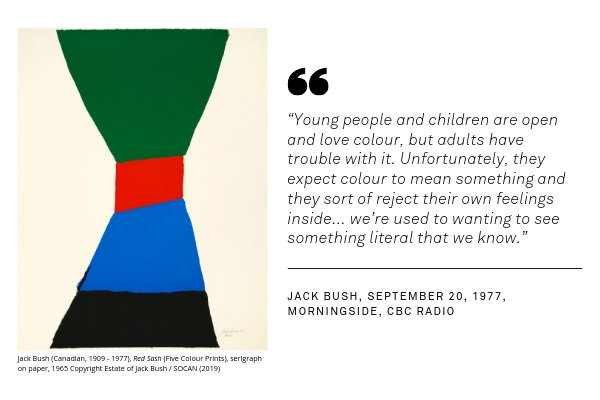
duet brings together work by Jack Bush and Francisco-Fernando Granados to both invoke the aesthetic legacies of modernist abstraction and to initiate a dialogue on contemporary understandings of this period and its visual strategies. By pairing paintings and prints from the mid-twentieth century with site-specific and digital works from a contemporary moment, the exhibition creates a conversation on abstraction that transcends space, time, and medium.

Known for his bold use of colour and iconic compositions, Jack Bush (1909-1977) was a pioneer of post-painterly abstraction and one of the first Canadian artists to gain international recognition. A prominent member of the Painter’s Eleven (1953-1960)who came together through a common commitment to minimalism and abstractionBush helped to solidify the importance of abstraction within the Canadian canon and inspire generations of artists.

As an extension of his interest in form, for the past three years, Francisco-Fernando Granados’ has maintained a near-daily drawing practice informed by the compositional strategies of Jack Bush. Produced on a touch-screen phone, these series of abstract drawings are both an affectionate homage and a quiet subversion. Trained in the history and practice of drawing and painting, Granados was inspired by the National Gallery’s 2014-15 Jack Bush retrospective, an event that closely coincided with the death of his father. The ritual of drawing became folded into a process of mourning and grief that has extended into his everyday life. How does one pay homage? How do we contend with the legacies of those who have come before us?

Grandos’ series towards a minor abstraction and letters are both offerings and provocations. Here, with trained fingers moving across the smooth and familiar surface of a screen, Granados paints to dialogue in a medium that is built for quick exchange. Guiding the abstract compositional impetus away from Modernist concepts of autonomy, the works push towards an open-ended politics informed by his queer and refugee experiences. In duet, the discourse between past and the contemporary is understood as ongoing and reciprocal. The dialogue between Jack Bush and Francisco-Fernando Granados, though displaced by decades, reaches across history in an effort to touch that which seems untouchable, to reshape what seems set.

This exhibition is generously supported by the Ontario Arts Council Exhibition Assistance Grant.

red and transparent AGP logo copy                  PTBO-logo-tagline-black           

The Trees Want to Remain Quiet, but the Wind Won’t Stop

Opening Reception – Friday, May 3, 7PM – 10PM

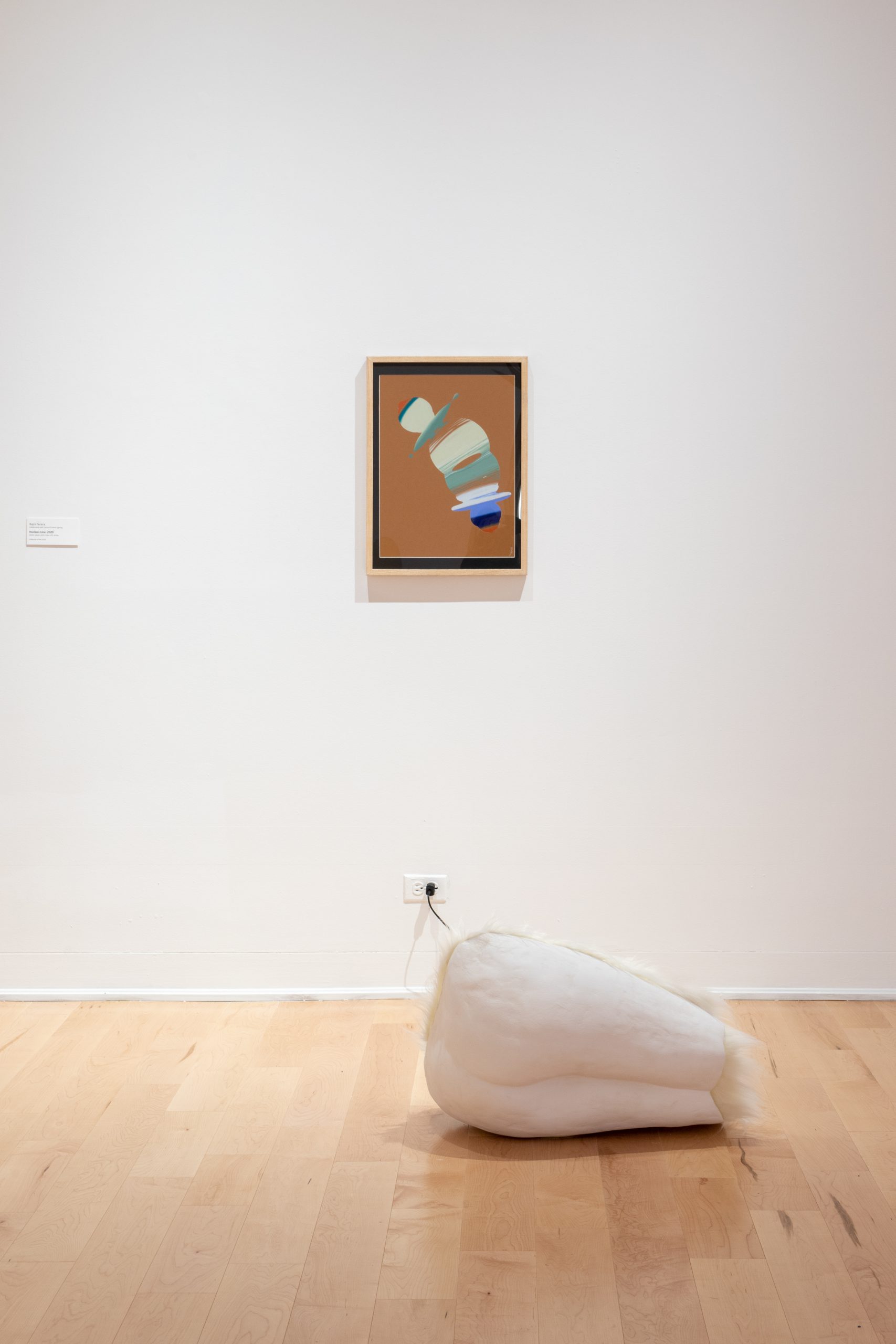
The Trees Want to Remain Quiet, but the Wind Won’t Stop brings together two bodies of work by Montreal-based artist Hua Jin. Exploring the relationship between landscape photography and solitude, the works portray different wooded areas as a means of reflecting on both the timeless nature of landscape photography and the constant cyclical nature of a forest. The eponymous work, The Trees Want to Remain Quiet, but the Wind Won’t Stop consists of eight monitors, each depicting a single tree reflected in water, continuously abstracted by the wind. According to Jin, the word landscape in Chinese is expressed as two characters, 风景, the first meaning wind and the second meaning both scene and light, which suggests not only a location but also how it is perceived. The second body of work Forest similarly plays with perception, depicting an old growth forest in Langley BC as a large panorama stretching over twenty-five feet. The meticulous detail captured in the image shows various stages of decomposition alongside growth and renewal with new buds and small shoots emerging from the verdant undergrowth. Jin’s elongation of time and space in both these works offers an eloquent way to see these landscapes anew.

Home Made Home: Patch Work

Opening Reception – Saturday, May 11, 2PM – 4PM 

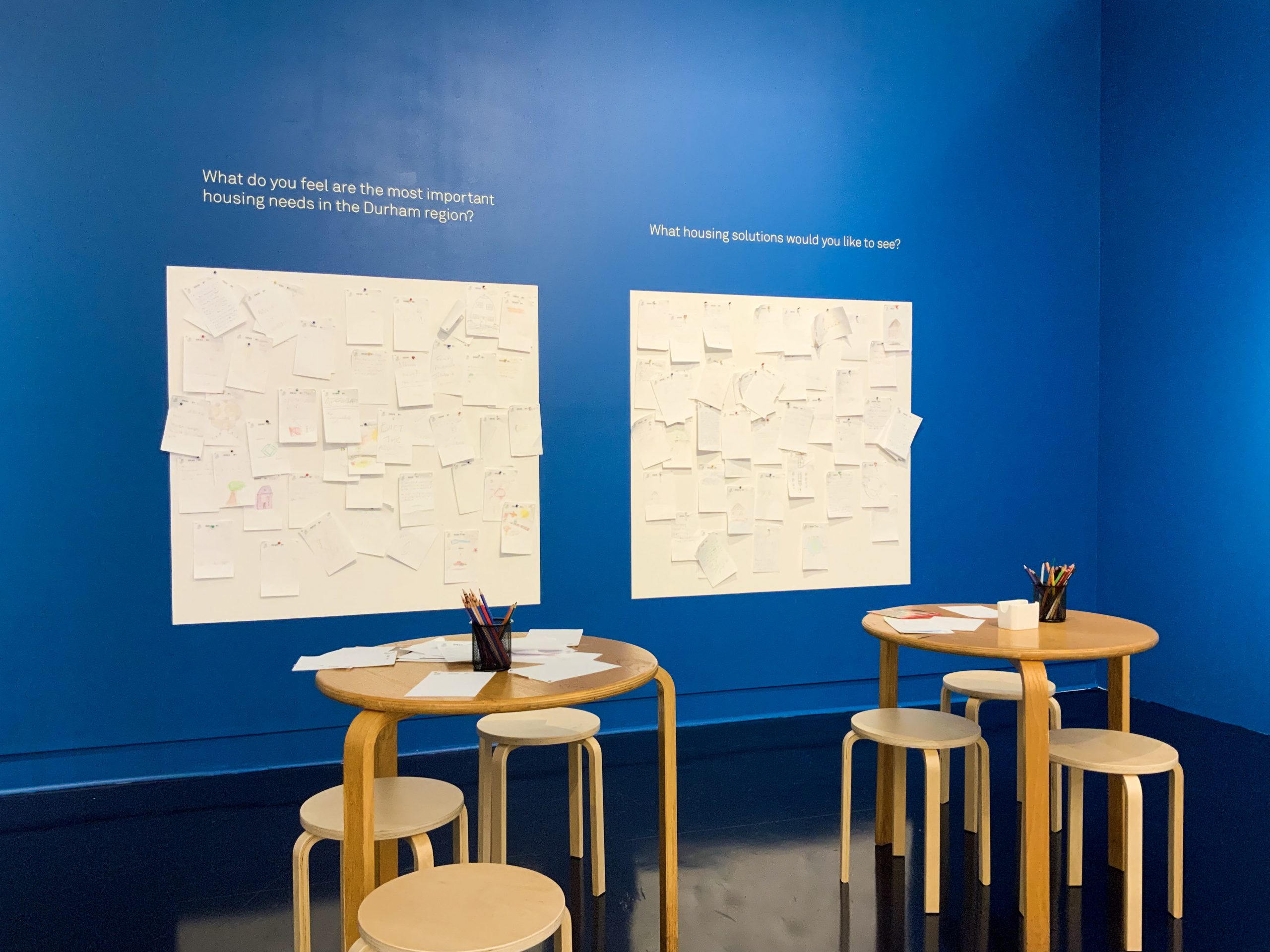
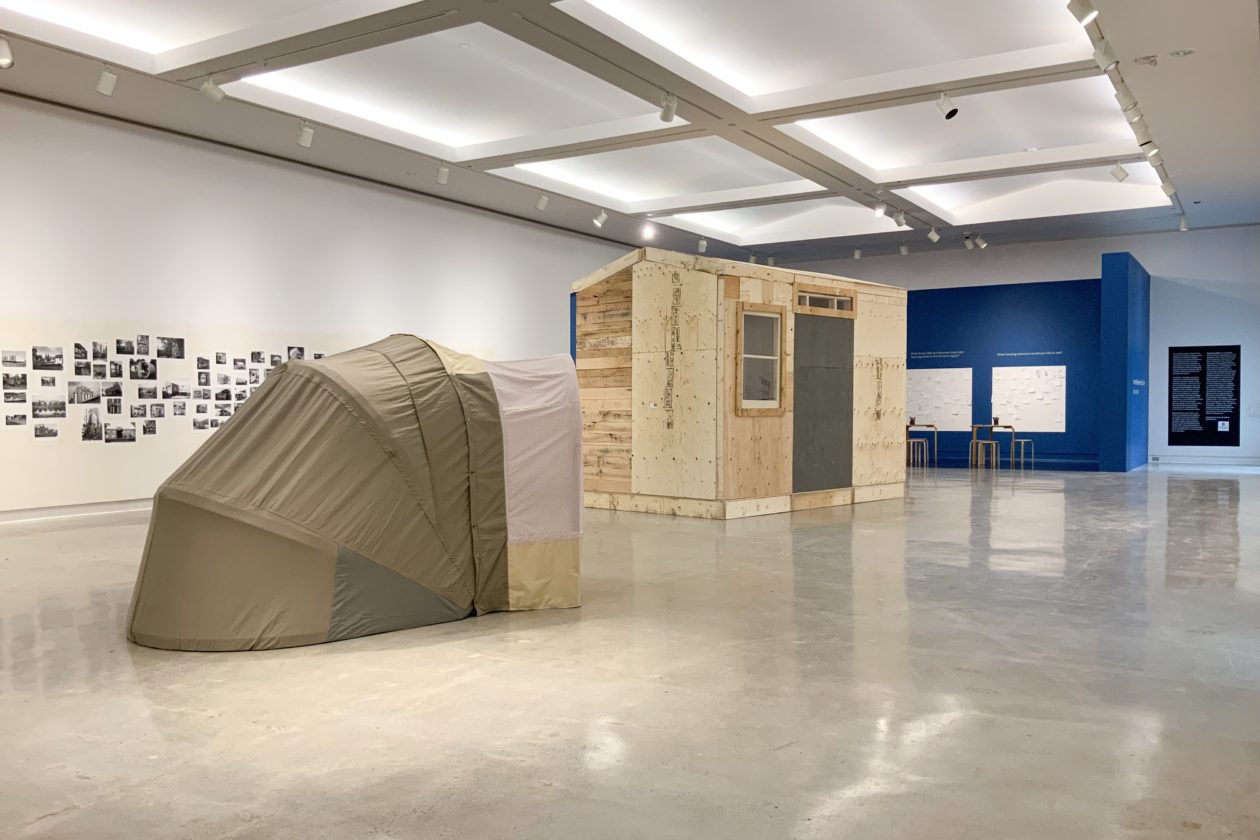
Home Made Home: Patch Work is a new project by Vancouver-based artist Germaine Koh, which explores complex housing issues relevant the Durham Region, and opens a conversation about civic responsibility, housing standards and the potential of alternative building models. For the exhibition, Koh has designed two provisional structures which provide practical solutions for emergency shelter. The first, a modular structure made from recycled materials, and the second, a small-scale building system in the form of a set of reusable panels that can be quickly assembled. Working together with members of the community, each of the panels will be created by various groups offsite and then brought together within the gallery. This framework, much like a patchwork quilt or old-fashioned barn-raising, draws on the skills within the community and provides a structure for individuals to contribute to communal needs. Starting from a DIY ethos, the works in the exhibition seeks to re-imagine housing conditions through models that address specific needs. Other projects by Koh in the Home Made Home series offer more speculative or utopian propositions that envision other possibilities for dwelling and sharing space.

Germaine Koh is a Canadian artist based in Vancouver, in the unceded ancestral territories of the Musqueam, Squamish and Tsleil-Waututh First Nations. Her work is concerned with the significance of everyday actions and common spaces, often adapting familiar objects to encourage connections between people and with the human and natural systems around us. Her current projects include Home Made Home, a project to build and advocate for alternative forms of housing, and League, a community project using play as a form of creative practice. Her exhibition history includes the BALTIC Centre, De Appel, Musée d’art contemporain de Montréal, Para/Site Art Space, Frankfurter Kunstverein, The Power Plant, The British Museum, the Contemporary Art Gallery in Vancouver, Plug In ICA, Art Gallery of Ontario, and the Liverpool, Sydney and Montreal biennials. In 2018-20 she is the City of Vancouver’s first Engineering Artist in Residence.

Download the Patch Work Manual for building the small-scale home as seen in the exhibition space here


Take a Look Inside

Shellie Zhang: The Ties that Bind

As Oshawa began to expand and industrialize in the early 20th century, in 1928, the first Business and Professional Buyer’s Guide was published by Alger Press Limited to highlight “manufacturing, business and professional interests” of the city and to generate continual growth.

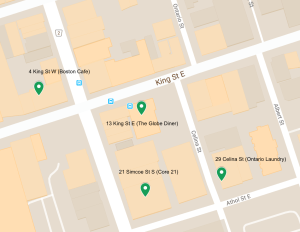
In 1921, Oshawa had a population of approximately 13 000 people. Of that 13 000 people, 18 are listed in the census as being Chinese. There are no people of Asian descent, including Chinese, listed in any of the previous census record. This photo installation mimics a storefront window façade decorated three red endless knots that allude to the Boston Café, Ontario Laundry and the Globe Diner; three early Chinese establishments within a 5-minute walk of Core21. These three businesses were not included in the Business and Professional Buyer’s Guide.

In the foreword of the Buyer’s Guide, the publishers ask readers to bear with them as it is their first time undertaking a document of this nature and that errors of omission may be present. They cite the following lines from Puck’s epilogue in Shakespeare’s A Midsummer Night’s Dream:

“Gentles, do not reprehend,
If you pardon, we will mend.”

map1The impetus for the piece is to pay tribute and commemorate local histories have not been chronicled within the downtown core. What was the experience of owning a business in Oshawa for a Chinese family? What was it like to live as a Chinese-Canadian during Oshawa’s industrial boom? What (if any) forms of community were present for these Chinese-Canadians since they were so few in number? Chinese knots are an old form of decor with connotations of luck associated. One of the many symbolisms behind endless knots is that they link ancestors with omnipresence. This installation pays tribute to the legacies created from these first communities to make this largely unseen history visible.


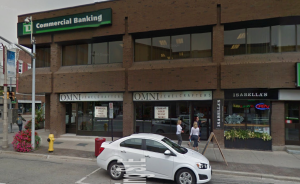
Boston Café (4 King Street E), 1921

boston cafe

bostoncafetoday


Detail from photo of King Street, Oshawa (Ax995.194.1)

The Boston Cafe sign can be seen in the centre, just to the left of the man holding the ‘Go’ traffic sign.

The earliest records show that in the 1921 Canadian Federal Census for Oshawa and the 1921 City Directory

for Oshawa, there were two “nuclear” families living in Oshawa in the 20s and 30s, the Lem family and the Soo family. This Soo family comprised five of the eighteen Chinese people living in Oshawa during that year. They lived on Simcoe Street and Min Soo ran a restaurant called the Boston Café. Directory records show that Soo Min owned the Boston Cafe on 57 King St E until 1930 and then he reappears in 1938 as the proprietor of the Eden Inn on 8-10 Ontario Street. During this time, this part of King street was a ethnically diverse area, with people listed as being Ukrainian, Polish, Jewish, and Russian.

Ontario Laundry (29 Celina St), 1928

laundry2 laundry1


Hockey and Ontario Laundry, Thomas Bouckley Collection.

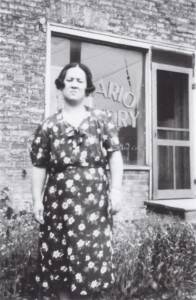
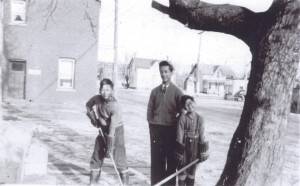
The photo on the left was taken at the back of Ontario Laundry, which was on Celina at Athol. Pictured here are 3 uncles of Brenda Joy Lem (photo source): George (the oldest), Uncle Edward (middle), and Uncle Norm (the youngest). Depicted on the right is a woman in a floral patterned dress, in front of Ontario Laundry, Celina St. at Athol. The woman is described by Brenda Joy Lem as her Grandmother, the photo possibly taken by Brenda’s Aunt. Brenda’s family owned the first hand laundry business in the City.

laundry3


The Globe Diner (13 King Street E), 1921

 s avanti


The Globe Diner, 2503, Thomas Bouckley Collection.

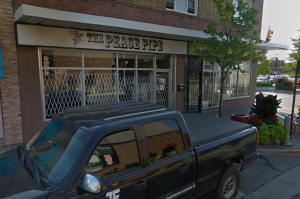
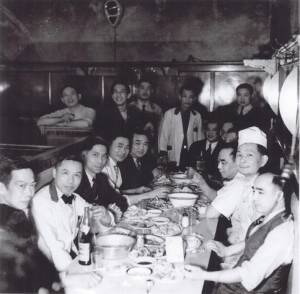
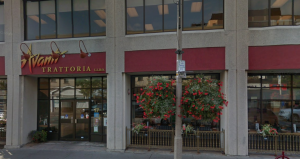
The Globe Diner was located on 13 King Street. In the 1921 Census it shows that this address was a single home rented by  a number of Chinese who were all listed as cooks or waiters, and that the Manager of the Globe Cafe, Lee Chow King (often abbreviated to L.C. King) was the head of household. In the 1928 directory, however, the Globe Cafe is listed as being owned by the Seto Bros. The Seto’s also operated the Waldorf Cafe at 11 Simcoe and later in 1937, the Seto Cafe at 11 Bond Street. In 1985 directory the Globe cafe became the The New Globe Restaurant and is shown as having moved to it’s current location on Athol Street. This photo with the staff members of the restaurant was taken around 1940. Back row, second from left is George Lem, uncle of Brenda Joy Lem. Man in bottom left is the grandfather of Brenda Joy Lem.

Special thanks for Brenda Joy Lem, and Jennifer Weymark and Alex Petrie from the Oshawa Museum for sharing their research and stories. To learn more about the history of early Chinese settlers in Oshawa, consult Brenda Joy Lem’s exhibition Homage to the Heart, and the Oshawa Museum’s ongoing research.


References

Lem, B. and Jansma, L. (2009). Brenda Joy Lem. Oshawa, ON: Robert McLaughlin Gallery.

Weymark, J. (2018). Asian History Month. [online] Oshawa Museum Blog. Available at: https://oshawamuseum.wordpress.com/2018/05/04/asian-history-month/ [Accessed 1 Oct. 2018].

Detail from photo of King Street, Oshawa (Ax995.194.1), Oshawa Museum

Ontario Laundry (2501), Thomas Bouckley Collection, Robert McLaughlin Gallery

Hockey (2502), Thomas Bouckley Collection, Robert McLaughlin Gallery

The Globe Diner (2503), Thomas Bouckley Collection, Robert McLaughlin Gallery


Feminist Land Art Retreat: Free Rein

Opening reception: January 19, 2-4pm

Free Rein is an installation by Feminist Land Art Retreat (FLAR), which reimagines hierarchical frameworks and proposes a vision of a possible future shaped by personal agency and autonomy. Centered around the three-channel video No Man’s Land, the work repurposes tropes of the Western film genre to subvert its typical narrative of a ruthless lone ranger out on the plain. Instead the video follows a number of horses through various landscapes and the women that take care of them, capturing their collaboration and shared pleasure in the labour at hand. The tenderness of their daily rituals reveal an interdependence, one where survival is not synonymous with conquest and expansion, but relies on mutuality and trust. Here, the concept of “Free Rein” is multiple, suggesting at once, the reins of a horse being freed from its rider, freedom from authority and land relationships that are beyond ownership.

Free Rein was first exhibited at the Audian Gallery (part of SFU Galleries) in Vancouver, May 31 – August 4, 2018, curated by Amy Kazymerchyk. The exhibition premiered No Man’s Land: The Trilogy, which was supported by SFU Galleries, the Western Front Media Arts Residency, Canada Council for the Arts, British Columbia Arts Council, and ACUD Gallery. The first chapter of No Man’s Land was presented at ACUD Gallery in Berlin, April 29 – May 28, 2017, curated by Elodie Evers.

Feminist Land Art Retreat (FLAR) was initiated in 2010 with an advertisement. In subsequent years, FLAR has produced promotional material for public circulation such as posters, t-shirts, postcards, temporary tattoos, and more recently performances and exhibitions. Using conceptual strategies and humour to subvert familiar visual forms and methods of information circulation, their work addresses social and cultural paradigms that construct notions of femininity and nature. Recent solo exhibitions include Free Rein, Audain Gallery, Vancouver; No Man’s Land, ACUD Gallery, Berlin; Heavy Flow: The Re-Release, Ginerva Gambino, Cologne; and Duty Free, Studio for Propositional Cinema, Düsseldorf.