RMG Fridays: Origins


By: Stephanie Pollard

RMG Fridays: Origins reminded Oshawa and Durham Region that we live-recognize, learn from, and honour- culture.

As the first event to officially begin the Robert McLaughlin Gallery’s (RMG) 50th anniversary celebrations, Origins felt more like an opening night than get-together. A nervous excitement  buzzing around the main floor had managers, media, artists, and volunteers hustling to settle last minute details, and get ready for a night that would not only pay homage to the gallery’s beginnings (the building sits on recognized Mississauga territory, a branch of the Anishinaabeg Nation), but could signal a change in how Oshawa interacts with its identity .

CEO of the Robert McLaughlin Gallery Donna Raetsen-Kemp, hopes people begin to see the gallery as a resource they can actively claim.
“This is about connecting people (with) art and each other, (and) the gallery being (a) vehicle (for this event) is just a really beautiful example of when that happens, because this is their place, we’re here for the complete community,” she said.

The night began with a special opening ceremony by cultural consultant Kim Wheatley, who is also an Anishinaabe (Ojibway) band member of the Shawanaga First Nation. Wheatley, with two of her three daughters performed a unity song with hand-drumming, the fancy shawl dance, and facilitated a dream catcher workshop respectively. Wheatley thanked RMG for involving Durham Region’s First Nations community in planning Origins.

RMGFridays_Jan2017_PhotosColinBurwell (29)

Image: Colin Burwell, the RMG Media Team


“I’m really proud of the gallery for acknowledging its Indigenous beginnings,” Wheatley said.

Volunteer and community manager Carla Sinclair was also happy with how Origins was supported from beginning to end.

“I’m not part of that (the Indigenous) community, so when I went to plan this event I reached out to lots of different organizations…and it was amazing how many people stepped up to the plate and were so happy to contribute (and) give advice,” she said. Following the opening ceremony, guests enjoyed performances by Cale Crowe and Elsa Jayne, a Pow Wow presentation, and film ‘Indigenous Arts Protocols’ by The Ontario Arts Council.

Origins also hosted special community supporters like the Durham Region Metis Council, the Bawaajigewin Aboriginal Community Circle, the Aboriginal Student Centre of Durham College, and the Oshawa Community Museum. Aboriginal Student Advisor for Durham College Peggy Forbes, hopes that this specific RMG Fridays leads to representation that recognizes Canada’s multi-faceted history.

RMGFridays_Jan2017_PhotosColinBurwell (108)

Image: Colin Burwell, the RMG Media Team

“Most people don’t know about the true history of Canada-our shared history; it’s not ‘mine’ against ‘yours,’ it’s a shared history…so it’s really important that people push for more solid curriculum that includes Indigenous studies,” she said.
Fortunately, the gallery plans to host future events that will showcase the many cultures that call Oshawa home.

“We’re all part of this community, and unless you see yourself celebrated in them, you’re not going to necessarily feel a part of it. I absolutely think that as an art gallery, (which is) supposed to be a leader in forward thinking…in pushing the boundaries a little bit and (seeing) how the community evolves, I think it’s important to celebrate all cultures that exist in our community,” Carla said.


For updates on upcoming RMG Fridays visit www.rmg.on.ca, or their Facebook (@TheRMG), and Twitter (@theRMG) pages.

Simplicity in Complexity: An Interview with Hillary Matt

by: Raechel Bonomo

Artist Hillary Matt has created a conversation about everyday discussions; how we converse with the inanimate objects we encounter daily and more importantly, what they say to us.

The multi-media works hanging in the Robert McLaughlin’s (RMG) Gallery A are a collection of recent, new and site-tailored pieces comprising the artist’s solo exhibition Chances and Dangers. Inspired by the 1881 novel The Portrait of a Lady by Henry James, Matt takes you through the all-encompassing highs and lows of life, similar to those experienced by the novel’s protagonist.

I spoke with Matt about the chances and dangers of her exhibit, what speaks to her and the intricacies of life in both the 2D and 3D form.


Raechel Bonomo (RB):
Take me through your process. How does your work begin?

Hillary Matt (HM): Each work is kind of like a magnet that accumulates all the ideas and feelings I have at the time it is being made. How this begins is tricky to say, as it’s completely intuitive and is kind of always happening. I would say it usually begins with a feeling and that feeling is often a response to the music I am listening to or the stories I am reading or the movies I am watching. This is then followed by Google image searches, visits to Wikipedia, YouTube, Reddit forums and the library. I have referred to this process previously as art-based research and that sounds really professional but I think it is accurate.

RB: How long has this exhibition been in the works?

HM: I have been actively making work for Chances and Dangers since April of 2016, so about seven months. Having this length of time has taught me a lot about how I work. There was many times where I thought I was finished or had planned to be finished and then another idea would come up that seemed really necessary to follow through on. I think this speaks to the fluid nature of how I make sense of this exhibition and my work in general.

RB: How has the novel The Portrait of A Lady influenced this series of work?

HM: The quote from [The] Portrait of a Lady in the exhibition write-up is something I chose to reference because I feel like the sentiment it holds reveals a lot about the guts of the work in the show, which are really quite personal are more or less about the guts of life. The work was already rolling before I became interested in the novel so it didn’t really influence much of it but rather helped me to explain my thinking around it.

RB: What does “chances and dangers” mean to you?

HM: To me, chances and dangers is a poetic descriptor of the ups and downs of life. The line comes from the quote I used in the exhibition text which is a conversation between Isabel, the main character in the novel, and one of her suitors. She is realizing that happiness and suffering are inextricable; they are in a sense one in the same. To avoid the chances and dangers of life would be to avoid happiness, too. As humans I think we can all relate to Isabel’s realization.

RB: Your work plays on the simplicity and, simultaneously, the complications of life. How do you believe this comes through in your work?

HM: It fascinates me that you perceive my work in that way. I think perhaps the only thing that simplifies my work is its flatness, the ability for all parts to exist and interact on the same plane. After that things get pretty complicated. I guess using the text from the novel is a way to point out what it all boils down, these existential questions, which may in some way simplify things for people.

RB: How would you describe the relationship between 2D language (signage) and your work?

HM: Formally, I think most of the work in Chances and Dangers reflect a conversation between two-dimensionality and three-dimensionality. I am interested in flatness as a metaphor for how we interpret time, space and language. So much of how we represent and know our world is in 2D: photography, newspaper, film, painting, drawings, and yet we are 3D beings. I am always trying to engage with that notion in my work.

RB: What do you believe is the difference between sign and art?

HM: I believe there is a big difference between sign and art and by suggesting a comparison of the two with this exhibition I am trying to drawing attention to the possibility of language being just a pictorial symbol. As an artist, I struggle to use words to describe what my work is about, why I make it, or the most confrontational question: What does it mean? Breaking down and abstracting language and the written word is a way for me to confront the authority and meaning that language usually holds.

RB: You used various objects in a mixed media setting throughout this exhibit. What are some of the objects in particular used in the work?

HM: I used a piece of polished break-form steel that I retrieved from a local scrap metal yard as a support to hold up the two large-format prints in donno if it’s real but it’s what I feel, 2015. To me this work resembles some kind of ceremonial hanging banner you might find in the back of a place like the Lion’s Club. Dually, I imagine the piece of steel as the spine of a book and each print as a page in my diary. In another work titled score, 2016 I use a found towel rack presumably from the 90’s judging by its decoration that I repainted pink. I imagine the rungs of the rack as lines on a sheet of paper or on a page of sheet music. The objects I have created out of paper weave in and out. Other work in the exhibition uses textiles, a motorcycle mirror, and a plastic cable wire cover. Because I studied sculpture/installation I am forced to consider the implications of the materials I use. In using found objects I am forced to consider their past life, their role in consumer culture, and I value the challenge they present.

RB: What is one thing you hope people take away from your exhibition at the RMG?

HM: I hope viewers are inspired and take away something that is useful to them.

How Do People Find Them?: Stephanie Pollard on the Value of RMG Fridays

They’re artists in Oshawa…as in ‘GM town’ Oshawa?
But they’re based in Toronto right?
No?!
So where do they get support for their work?
How do people find them?
(Do they even have an Instagram account?)
Who comes out to see their work, do they know where to find them?

RMG Fridays is where artists and art lovers get together to experience and share the local creativity buzzing at home.
On the first Friday of each month at the Robert McLaughlin Gallery (RMG) in Oshawa, a quiet 72 Queen St. comes to life by welcoming a stream of admirers that moves easily to and from the displays of local artists and businesses.

“We’re showing visitors what Oshawa has to offer, in Oshawa,” said RMG’s volunteer manager Carla Sinclair. “People can ask the artists questions, talk to business owners, and get a great night out with family and friends-minus the expensive drinks and parking.”

Jay Dart was October’s First Friday artist with his ongoing creation of the land Yawnder, a place where inspiration lives and takes shape.
“Yawnder is my mental landscape. When people are going into that creative space, they go somewhere-their ideas come from the back of their mind that they can’t quite describe. It’s a little abstract and for me, that is Yawnder,” he said. The exhibit gives visitors a chance to take a walk in Dart’s Yawnder through the story’s main character Jiggs, as well as discover their own Yawnders by creating idea geists and including them in the exhibit.

Not far from Yawnder in the gallery’s lower level, local filmmakers showcase their work as part of RMG Fridays’ Friday Film Feature. Councilwoman-turned community activist Amy McQuaid-England took viewers to the South Patch community garden, one of the too-few practical steps taken to address the lack of access to fresh, locally grown food for residents living in Oshawa’s high needs areas. The decision to switch from politics to filmmaking seems to align with McQuaid-England’s focus on bringing sustainable and lasting change to her community, as the short film became the bronze winner at the 2016 International Film Awards.
Business-wise, Isabella’s Chocolate Cafe and the Auto Workers Community Credit Union (AWCCU) had displays where audiences could make their financial goals known, or sample an array of Yawnder themed baked treats respectively.

Creative manager of the AWCCU Meghyn Cox emphasized that each time local supporters – whether in the arts or otherwise-get together, the larger community reaches new levels.

“It’s about bringing people together and making things happen in Oshawa, Durham-it just gets bigger from there. The more we’re involved with community, everything gets better,” she said.

Be sure to check out the next RMG Friday on December 2, from 7-10 p.m.

The RMG takes on the Mannequin Challenge

Heard of the mannequin challenge? It’s a hot social media trend where groups hold a pose for an extended amount of time while someone navigates around the “mannequins”. We thought we’d take it on… RMG style.

The Process of Imagination: An Interview with Jay Dart

by: Raechel Bonomo

How many times have you gone to write a story or paint a picture to find yourself staring at a blank screen or canvas for what seems like eternity?

This process of an artists struggle to grasp a familiar but unique concept within their work is the underlying theme of Jay Dart: Greetings from Yawnder!, exhibiting at the Robert McLaughlin Gallery.

In order to further explain his creative process, Dart formulated words such as “Yawnder”, which describes a mystical place where ideas are born. This imaginative world sets the scene for the exhibit where we follow Jiggs, Dart’s lumberjack-esque alter ego, through lands riddled with Geist Trees and Foredad Clouds. These mythical elements seeded in Dart’s mind are brought to life through not only his illustrations, but through installation, allowing you to embody Jiggs as you walk through alongside the protagonist.

Viewing this exhibit left me in my own state of Yawnder, inspiring me to dig deeper into the artist himself and what creative process means in its most primitive and natural essence.

Raechel Bonomo (RB): What is your first artistic memory?

Jay Dart (JD): I drew a lot as a kid. I had a lot of time to myself. I often recall the floor plans that I made for imaginary estates and mansions – probably influenced by the blueprints that my dad had lying around. Those were some of my first paracosmic pieces.

RB: Has creativity been something you’ve struggled with or something that has always come naturally to you?

JD: There have definitely been times when the airwaves were silent. And quite often these days, I’m too busy to go over Yawnder. But it’s always been apart of my life. Lots of sketchbooks filled with ideas over the years. Nowadays, when I get time to work on a drawing, I have a log jam of ideas that are just waiting to get done.

RB: Explain your creative process, how do you reach your Yawnder?

JD: This is your toughest question for me to answer. Inspiration strikes all the time… driving to work, playing with my kids, listening to music, surfing the internets. I make a lot of scrawls in notebooks, sketchbooks and sticky notes. When it comes time to make a drawing, usually for a looming deadline, then I look over my scrawls and figure out how to translate them into an image. Sometimes, I use an old photo as a starting point and turn that world into my own. Other times, it’s like something I’ve never seen before so I have to rely completely on my imagination to create the scene. One thing’s for certain, there will be lots of erasing cuz if the line ain’t just right, erase er’!

RB: Have you always wanted to be an artist?

JD: These are the things that I remember wanting to “be”… ninja, hockey player, animator, photographer, filmmaker, art director, artist. In most of those cases, art is the common denominator.

RB: I read you’ve created more than 200 illustrations in the Wanderer of Yawnder series, when did you start this series and what initially sparked it?

JD: I began drawing again a few years after graduating from art school following many years of neglecting the medium I spent so much time with growing up. I believe my drawing of Barry the Mannalo, circa 10 years ago, set me on this path towards Yawnder. Following that, I was inspired by antique photos, my watercolour test swatches and the landscapes of north Durham. These are just some of the many influences that got planted in my mind and eventually grew into the various elements in the Wanderer of Yawnder series.

RB: Who is Jiggs and how do you and the viewer relate to him?

JD: Jiggs is my alter-ego, my muse and the main character of the WoY series. He’s a real good guy and very open to sharing his thoughts. He spends a lot of time by himself so he appreciates any visitors whether you’re a wonderer, an acquirer, a lumberer, an inspirer or a referrer.

RB: There are a lot of beards in this exhibition. What do they represent to you and why are they so prominent throughout your work?

JD: Whether you’re in the middle of the woods or the Stanley Cup Playoffs, a noble beard can represent a time of intense experience. But they can also represent a fashionable trend. For Jiggs, the magical mystery beard was the first idea that came to mind when he procured a geist from the Yawnder Lights. He wore the beard and contemplated the spirit that it bequeathed him. Eventually, he realized that this idea was too easy and he dug deeper, literally, into the ground and planted his beards to see what would grow.

RB: You discuss taking yourself away from technology and into more of a simplistic process of creating art, why is this and how do you feel it benefits you work? How does it hinder it?

JD: I just feel most comfortable with a pencil as my medium but it does work with my intention to tell a timeless tale relating to the nature of inspiration and creation. However, I’m very much interested in the ways that current technology affects the way creators make and share their work; this is a major theme of this series. Thus, I refer to photos from the past when settlers were forging their way on the frontiers of new found lands (to them at least) but I introduce magic realism elements that allude to cloud computing and social networking. To me, these innovations seem to present just as many challenges as opportunities. But I’m still learning.

RB: What are you hoping RMG visitors take away from your exhibition?

JD: Inspiration.

Interview with Art Lab Artist in Residence, Karolina Baker

You can see Karolina Baker in the Art Lab September 21, 2016 – October 30, 2016. 

Reception: RMG Fridays, October 7, 7-10pm
Artist Talk: October 16, 1-3pm

Capturing Whitby sound, Tuesday 2pm.

Capturing Whitby sound, Tuesday 2pm.

RMG: Please tell us a little about yourself

Karolina: I was born and raised in Ottawa and moved to Toronto in the late 90s. I made my way to Whitby because my husband had a job at the Oshawa airport and I’ve been here since. I’ve always had an artistic current running through my life. I studied acting in Toronto for ten years while freelancing in the film production world. I’ve always maintained that accidentally walking into the 2001 Biennale in Venice, Italy was a true aha moment for me. I was there for a wedding and we had a few days to discover the islands. Unbeknown to me, a whole section of the city was mapped out into these massive art installations. To see art on such a large scale was mind blowing and extremely exciting because it felt like I found my kind. I know that sounds funny, but I really felt like I found a group of people, despite my lack of Italian, who spoke my language and understood the ideas in my head. Since then I knew I had to create my ideas. Now add in four kids and it is a bit more difficult to tap into my creative current! Right now my time is primarily taken up by my kids, but when inspiration and time collide, I am thrilled to make my ideas come to life.


RMG: Why did you apply to the Art Lab artist in residence program?

Karolina: My studio space is in my house and where ever I can make my ideas happen. The Art Lab residence program is a gem of an opportunity for me to approach it like a job, leave my house everyday and go to “work”. I’m a stay-at-home mom, so there are always things to do around here and I seldom allow myself to work on my art projects.


Screen capture of book trailer video shot for author Nerys Parry’s Man and Other Natural Disasters. Published by Enfield & Wizenty.

Screen capture of book trailer video shot for author Nerys Parry’s Man and Other Natural Disasters. Published by Enfield & Wizenty.

RMG: What will you be creating during your residency?  What can visitors expect to find in the Art Lab?

Karolina: I want to record sound and manipulate it. I’ve done audio for short videos I’ve shot, but I haven’t worked in sound alone.  I’d like to record sounds, manipulate them, loop them and amplify them. What sounds will people stay and listen to? I’ll have my laptop, speakers, a recorder and microphone. My initial proposal was to record my daily surroundings, but I would also like to record voices and items in the lab. Having said all that, it is a lab so maybe I will have to let go of my ideas and go down the rabbit hole. I will plug in my speaker into the common room across from the Art Lab and play my experiments. I will write my daily thoughts on the wall so people can follow my journey. I understand it will be hard for people to look in the window to “see” what I am doing, so I welcome any visitors into the lab, to listen and have a chat. We can always learn from each other and that is exactly what I want to do with the art lab; discover a new way to communicate my ideas.


RMG: What inspires you? Is there a particular artist’s work that has inspired your practice?

Karolina: I don’t text or use my cell phone (my husband would add here that it is because I usually don’t know where it is). I do not like anything to take me away from observing. I am a fierce observer of life around me: patterns, old things, kindness, quietness, order, underdogs, movement and colours.

Artist Janet Cardiff absolutely inspires me. I discovered her in 2001 and she has resonated with me since. I walked through one of her sound installations at the Power Plant in Toronto and visitors were sitting listening to her piece, crying, drawing, dancing, meditating. It was remarkable to see how moved people could be by someone’s idea. Douglas Coupland is another Canadian artist I love to follow. I love his artistic diversity. He writes, makes films, visual art, public art and observations. He uses anything he can to convey his idea and he’s an observer.


Curator’s Choice – Robert Bourdeau

While the Canadian photographer Robert Bourdeau now uses digital technologies in shooting his images, he began in analogue – that is, film. In 2015, the RMG received a donation of twelve outstanding photographs by this Kingston-born artist.

Like the slow food movement, Bourdeau’s practice is all about the slow and considered shot. Not only does he spend his time finding the perfect location, but the shutter speed of his large format camera is slowed considerably allowing for incredible detail in the resulting image.

Of the works given, I was particularly drawn to his 1975 photograph Yorkshire, England. Bourdeau has taken the photograph from a distance, overlooking the horizontal striations that delineate ownership of land. It’s the timelessness of the work that is particularly striking—this gold-toned print could as easily been taken in the late 19th century and speaks to generations of people who have lived on and worked the land.

Linda Jansma, Senior Curator

The Power of Imagination

This fall, we are asking our viewers to experience a world created by the imaginations of contemporary artists. When you walk through the front door this season, you will enter a world created in the minds of some of the most engaging emerging artists in Canada today.

So, we ask, what is the power of imagination? Does it make you envision a world of Elsewheres and Magical Mystery Beards, as in Jay Dart’s Greetings from Yawnder! Does it allow you to disrupt the status quo and express individual experience, as in The Images in Our Heads? Does the freedom of the imagination transport you to a far away land, as in Robert Bourdeau’s Edge of the Visible, or does it take you right back home, as you experience Canadian landscape in Land, Sea & Air?

Imagination is key to our exhibitions as it is essential to the artist’s practices. By imagining alternate spaces, we can create new realities with which to forge identity and experiment with new ideas.

When you visit, we hope you will allow your mind to wander and be open as you experience the installations. You will have the opportunity to be both the viewer and the story-teller as you inhabit worlds filled with creativity and fueled by the most powerful material in the artist’s studio: imagination.

Volunteer Profile – Steven Bland

A retired teacher, Steven Bland has been volunteering with the RMG as a tour guide, gallery attendant, community outreach facilitator and research assistant since 2013.

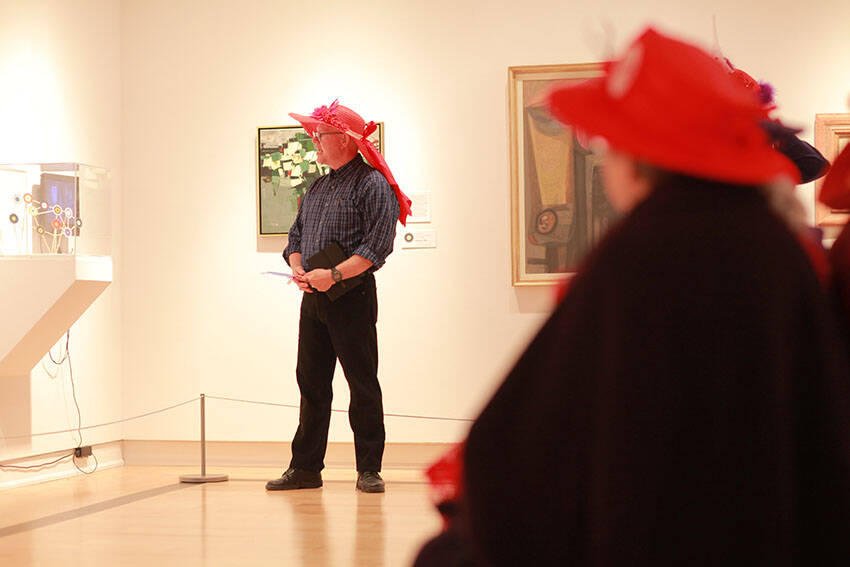
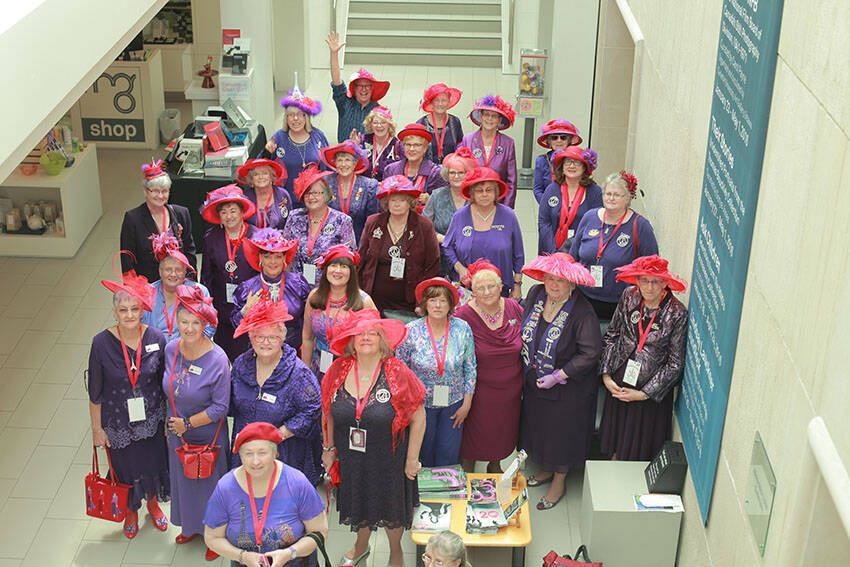
Dynamically guiding schools and private groups, Steven goes above and beyond for visitors.  When touring the “Red Hat Ladies”, he took it upon himself to create his own Red Hat, adorning the brim with flowers and a scarf.  As gallery attendant for our “Pride” celebration, Steven accented our usual ”Ask Me” buttons to include rainbow ribbons and created comprehensive booklets with exhibition information for newer volunteers.

steven bland

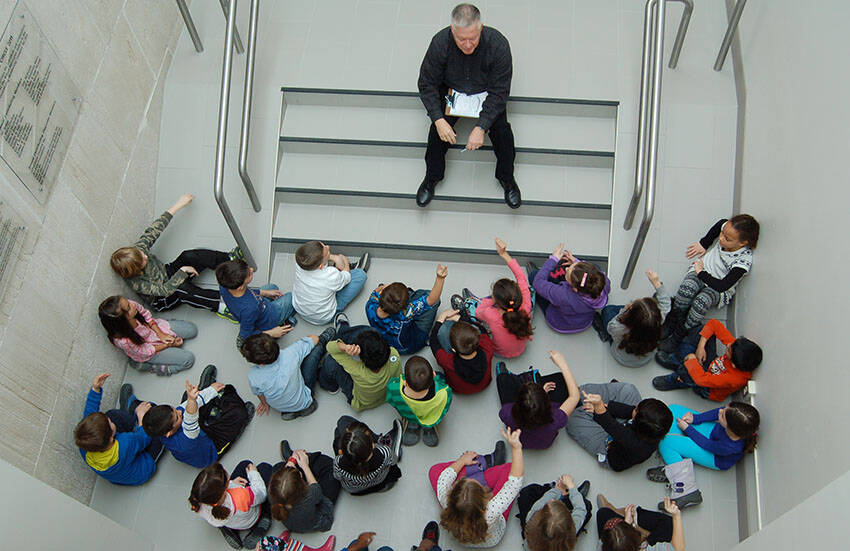
Steven Bland gives a tour

Steven ran a gelliplate workshop for volunteers, creating materials for our art tent at the annual “Tree Lighting” ceremony.  He developed a project and donated supplies to our Art Express tent at Oshawa’s annual Peony Festival. While facilitating projects, he promotes gallery programs and events; A vital component in engaging the public and broadening our reach as an organization.

group of people

The Red Hat ladies Tours

His newest project teams up our Senior Curator and Manager of Community and Volunteer Development.  Steven will research and interview community members who have witnessed the gallery’s evolution over the past 50 years.  This aims to engage and educate the public about the gallery’s impact on artists, citizens and local history in celebration of the RMG’s 50th Anniversary in 2017.

school tour

Steven Bland with school tour

Steven’s energy, enthusiasm and continued support means we can reach beyond staff resources and engage citizens on a higher level, serving our statement of purpose: The Robert McLaughlin Gallery is dedicated to sharing, exploring and engaging with our communities through the continuing story of modern and contemporary Canadian art.


Meet Carla Sinclair, our Manager of Volunteer and Community Development

Today we sat down with Carla Sinclair, the RMG’s Manager of Volunteer and Community Development to find out more about her role and what she gets up to each day. You probably recognize Carla as your host of RMG Fridays – say hello next time you see her in the RMG Shop.

The RMG: What’s a typical day like for you?

Carla Sinclair: My day looks very different day to day depending on which part of my role I am working on. I manage our volunteer program, plan RMG Fridays, the gallery’s monthly community event as well as manage our gallery shop.

Between internal staff meetings, volunteer interviews, community engagement, consignment artist acquisitions and a number of cultural advisory committees/professional development associations, meetings can often fill up many of my days. Some days are quieter allowing me to spend hours on my computer sending emails, doing research, paperwork, and planning. If I am hosting an RMG Fridays or representing the RMG at a cultural event, I get to be social and interact with the community. The flexibility of my job caters to my multi-faceted personality. I love the diversity in my role!

The volunteer umbrella involves responding to volunteer requests, booking interviews, meeting with and assessing which department best suits new recruits, managing and posting new volunteer opportunities and keeping track of hours worked. As a member of multiple volunteer associations, I attend monthly meetings that provide professional development opportunities in the industry of volunteer administration. Thinking of new ways to incorporate the many skills that walk through the doors here at the RMG is always a priority.

RMG Fridays

RMG Fridays: Wonder Women

Planning RMG Fridays involves looking at curatorial schedules and building an event around exhibitions set to open or tour each month. I often choose a theme and try to connect all of the activities that are going on during an RMG Fridays: Live music, short films, exhibition tours, studio activity, community partners, food vendors. I love to add cultural elements that engage our audience by bringing in local theatre groups to perform a teaser of their show, a dance company, spoken word poet – just about anything that showcases the incredible local talent we have here in Durham and beyond! Booking musicians is typically the first element, and when possible this happens 4-6 months in advance. Sometimes artists reach out to me, other times I get suggestions from community members. I also try to find talent by attending local music venues, open mics and cultural events.

Short films for our Friday Film Features screening room at RMG Fridays get submitted through our website. These are viewed internally and 1 or 2 films are chosen to screen every 15 minutes throughout the evening. For food vendors, they are local, independent restaurants or caterers who put together a table of delicious eats to sell in the lobby, giving local entrepreneurs a chance to engage with the community and showcase their business. I typically contact them individually but encourage anyone interested to reach out to me as well.
carla

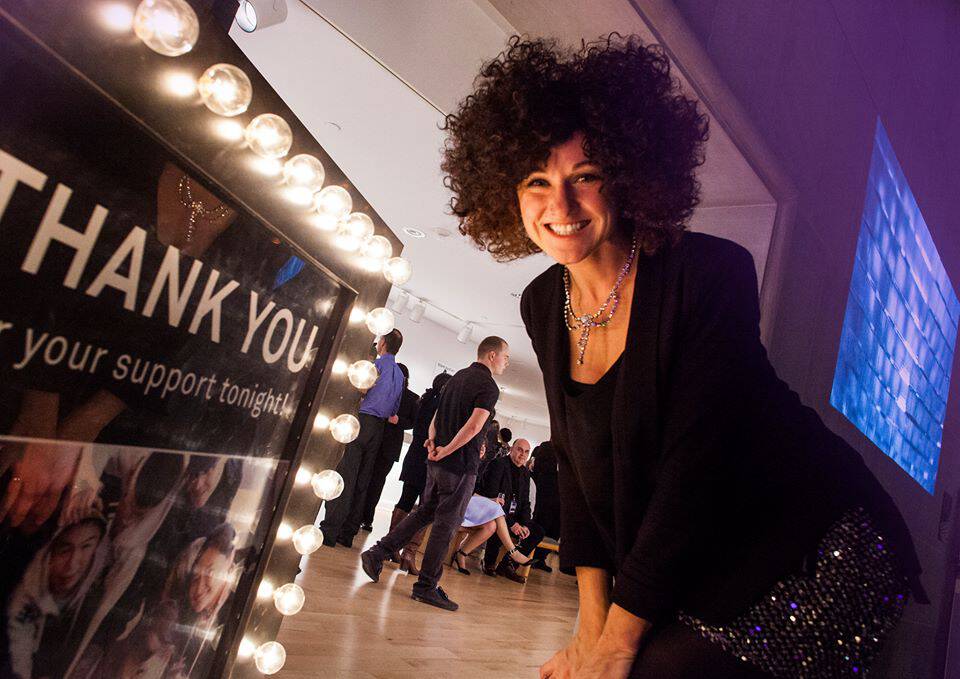
Carla at RMG Exposed 2015

Community partners come from a variety of sources, some send requests, others are contacted based on the mandate of their organization and how it ties in to our event theme. After the details are nailed down, the next task is submitting the information to our Marketing Manager for promotional print materials and booking volunteers to help run all of the components of the evening. We typically have 8-15 volunteers behind the scenes making RMG Fridays happen, in tandem with our incredible audio engineer, DJ Lynz and dedicated RMG staff. When the big day comes, I spend the afternoon and early evening setting up tables, chairs, AV equipment, signage, printing schedules, shopping for supplies, greeting performers and partners. I then hold a meeting with our event volunteers at 6:30pm before doors open. The rest of the night involves hosting the event on stage. I, along with my colleague and co-host welcome guests, introduce the musicians, performers, and partners while sharing all of the awesome things happening in the building that evening!

The gallery shop is another component of my role including retail management, volunteer management (our friendly sales associates are all volunteers!), merchandising and researching consignment artists. Over the past year we’ve shifted the shop vision to include primarily Canadian consignment artists. This means I have to find talented artists whose work suits our local market. Some artists approach me, others I research, or find by planning volunteer outings with shop associates to canvas art shows/studios for promising candidates. Within the shop role is a lot of paperwork; Daily sales sheets, monthly shop deposits, quarterly consignment inventory and payouts as well as general correspondence. I host a monthly shop volunteer meeting to update our associates on new product, hear customer feedback and to build community amongst our volunteers.
voluteers

RMG Shop Volunteer Trip

RMG: How did you get into this field?

CS: Having worked at the Nelson and District Arts Council, in on-air broadcast radio, teaching film programs and as a partner at Empty Cup Media, I’ve always invested my career in the arts and culture. One of these roles was producing video projects for The Robert McLaughlin Gallery, where I came to know the inspired team of staff that run this incredible space. The sense of community fostered here compelled me to be a voice in Oshawa’s expanding creative culture.

RMG: What skills or training do you need for your job?

It’s such a mixed bag, but I’d say…

  • Excellent written and communication skills
  • Creative thinking
  • Computer proficiency
  • Eye for merchandising and attention to detail
  • Organizational skills
  • Ability to recognize individual talents and abilities
  • Public speaking
  • Event management
  • Ability to teach and explain tasks well
  • Excellent social skills
  • Avid interest in being active in the cultural community
  • Strategic planning
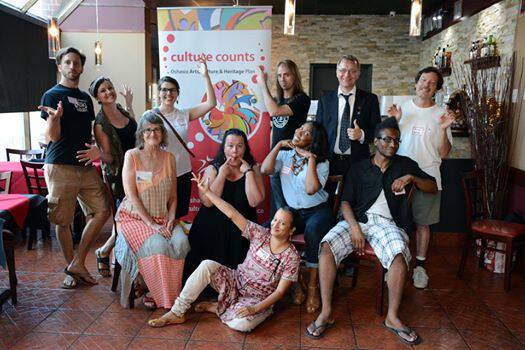
group of people

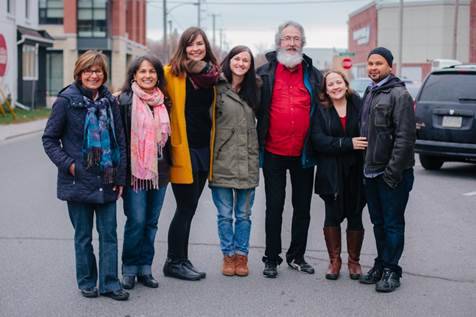
Culture Meet Up

RMG: What’s your favourite part of your job?

CS: RMG Fridays! If you haven’t already been out to this awesome monthly event, I encourage you to come to the next one. Bands, artist talks and local partnerships create an atmosphere unlike any other you will find in Oshawa. I love the crowd it attracts and see it as an accessible, creative hub for entertainment, education and networking.

RMG: What are 5 things you couldn’t live without in your job?

CS: My top 5 are:

  1. Charity Republic – Volunteer database software
  2. Post it notes
  3. Google
  4. Coffee
  5. Amazing Volunteers
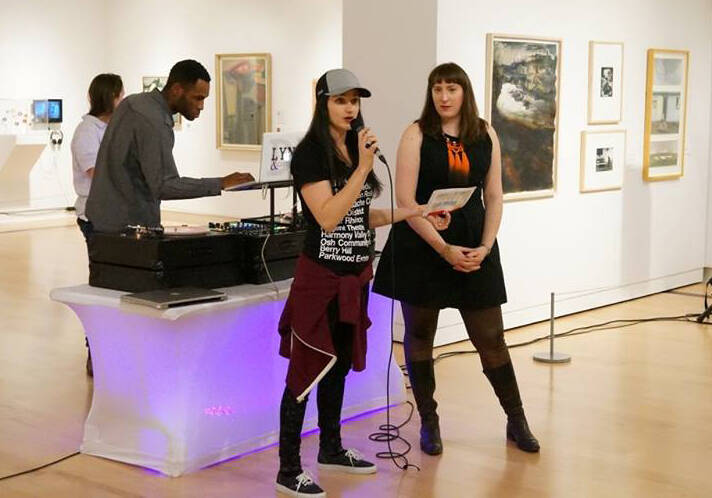
two women

RMG Fridays: HipHOpera

RMG: What do you get up to outside of the RMG?

CS: Outside of work at the gallery, I make films with Empty Cup Media. Our team has been working on a web series over the past couple years which means I’m heading to South Africa in October 2016 to film one of the latest episodes! I also spend time with my squishy faced pug Gryffin, have joined an adult ballet class after recently retiring from 5 years of roller derby, and love checking out local live music at Oshawa’s Memorial Park or The Moustache Club.